






In an era defined by global fragmentation, the frontlines of international conflict are no longer mapped solely across distant, muddy trenches or contested borders; instead, they have quietly migrated onto the ordinary, rain-slicked streets of British towns and cities. For the average citizen, national security once felt like a sterile, abstract concept discussed behind closed doors in Whitehall, but the reality of modern espionage, foreign surveillance, and state-backed intimidation has brought these global power struggles directly to the home front. Dissidents who fled oppressive regimes abroad to seek sanctuary in the United Kingdom now find themselves looking over their shoulders, while independent journalists, community leaders, and local congregations live with the unsettling knowledge that foreign hostile actors are actively operating in their neighborhoods. The subtle but persistent threat of foreign state-sponsored interference has begun to erode the fabric of daily life, transforming peaceful communities into silent battlegrounds where foreign governments attempt to settle scores, silence dissent, and project their hostile influence. Recognizing that the nation’s existing legal defenses have fallen dangerously behind the sophisticated, hybrid tactics of modern statecraft, the British government is staging a major legislative intervention designed to reclaim public safety and national sovereignty. This shifting landscape is characterized by a disturbing convergence of cyberwarfare, physical sabotage, localized arson, and targeted assassination plots, all orchestrated by hostile foreign regimes that exploit the open and democratic nature of British society. As public anxiety grows alongside these covert activities, the British state is moving decisively to signal that it will no longer allow its territory to be treated as a playground for foreign intelligence agencies or their ideological proxies. The human cost of this vulnerability is measured not just in disrupted plots, but in the pervasive sense of fear felt by vulnerable diaspora groups who deserve to live in peace, free from the terrifying reach of the regimes they left behind.
To confront this quiet but malignant threat, the UK government has formally introduced the groundbreaking National Security (State Threats) Bill, a piece of legislation that represents a massive overhaul of the country’s defense capabilities against foreign interference. This sweeping new framework is specifically engineered to grant British authorities the robust, tailored tools they need to target, dismantle, and prosecute foreign state-linked organizations operating within their borders. Under the proposed legislation, Home Secretary Shabana Mahmood will be vested with the expansive executive authority to officially designate entities as hostile foreign agents or organizations responsible for “foreign power threat activity.” This designation is not merely symbolic; it carries severe, life-altering legal consequences designed to choke off the financial lifelines and operational support systems that these foreign networks rely upon to function safely. Under the strict terms of this new parliamentary bill, anyone found guilty of supporting these designated organizations, facilitating their operations, or knowingly accepting funding from them could face severe criminal charges carrying prison sentences of up to fourteen years. This represents a significant escalation in the state’s punitive response, shifting the focus from treating state-sponsored acts as isolated, domestic crimes to prosecuting them as direct, existential threats to national security. By establishing this clear legal barrier, the government aims to create a powerful deterrent that will starve hostile state-linked groups of the local collaborators, logistics networks, and funding sources they need to carry out their missions. The bill signals a structural shift in Britain’s legal posture, acknowledging that protecting the public requires proactive measures to intercept foreign plots in their infancy rather than simply reacting to tragedies after they occur on British soil. For families who have felt unprotected under past political administrations, this bill represents a beacon of hope that their physical safety will finally be prioritized over cautious diplomatic hand-wringing.
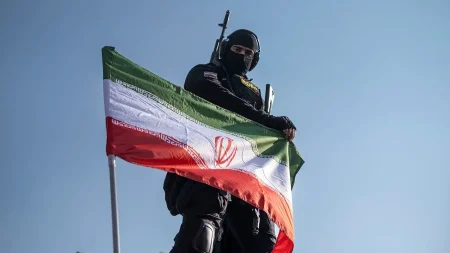
At the heart of this urgent legislative push is a growing and deep-seated concern over the escalation of hostile, state-backed activities linked directly to the Islamic Republic of Iran and its powerful military wing, the Islamic Revolutionary Guard Corps (IRGC). British intelligence services have been sounding the alarm with increasing urgency, revealing a chilling rise in the audacity and frequency of Iranian operations directed at targets within the United Kingdom. MI5 Director General Ken McCallum recently delivered a sobering assessment of this domestic threat landscape, revealing that his security agency had successfully tracked and disrupted more than twenty potentially lethal plots backed by Iran over the course of just a single year. This represents an unprecedented surge in hostile state activity, contributing to a staggering thirty-five percent increase in the workload of MI5’s domestic state-threat investigations. These statistics represent a terrifying human reality for the journalists, activists, and ordinary citizens who find themselves in the crosshairs of Tehran’s intelligence apparatus, particularly those associated with independent Persian-language media outlets. These individuals live with the constant, exhausting pressure of knowing that their professional work or political activism makes them prime targets for state-sanctionended kidnapping, cyber-harassment, or physical violence. The IRGC’s reach is no longer a distant geopolitical concern; it is an active, threatening presence inside British cities, demanding a specialized and aggressive counter-strategy that goes far beyond traditional police work. By giving the government the authority to formally outlaw state-linked entities like the IRGC, the bill seeks to dismantle the infrastructure that allows foreign operatives to stalk, threaten, and endanger British residents with relative impunity. It sends a powerful, unequivocal message that those who speak truth to power will be protected by the very state they now call home, standing firm against intimidation.
The urgency of this legislative action has been further underscored by a series of alarming, local incidents that have brought the reality of foreign subversion into the heart of British communities. Counterterrorism police have recently launched intensive investigations into a series of deeply unsettling arson attacks targeting Jewish community centers and businesses, with investigators actively probing potential links to state-sponsored ideological groups coordinated by Iran. These acts of localized violence, wrapped in the guise of hate crimes, have sent shockwaves through the British Jewish community, leaving families feeling exposed, alienated, and terrified in their own neighborhoods. Beyond the Iranian threat, British authorities have also been wrestling with a wave of covert activities linked to other formidable geopolitical adversaries, leading to high-profile arrests and convictions of individuals acting as espionage agents for Russian and Chinese intelligence agencies. These cases reveal a coordinated, multi-front campaign by hostile states to infiltrate British institutions, monitor political dissidents, and acquire sensitive economic and defense secrets. The psychological impact of these operations on local communities is profound, as the boundaries between international espionage and community-level safety become increasingly blurred. When community spaces, places of worship, and local businesses are targeted by proxy forces acting on behalf of foreign dictatorships, the threat ceases to be an academic debate and becomes an immediate crisis of public safety. The National Security Bill is a direct response to this multi-faceted campaign of subversion, aimed at restoring a sense of security and demonstrating that the state will defend its citizens against foreign-backed violence. It acknowledges that the preservation of democracy requires protecting the physical spaces where diverse communities live, pray, work, and express themselves without fear, reinforcing the collective bonds of society against foreign disruption.
Critics and legal experts have long argued that Britain’s existing legal toolkit is dangerously obsolete, leaving a massive gap that hostile states have been more than willing to exploit to their advantage. For decades, the UK’s robust counterterrorism framework was designed primarily to combat non-state actors, such as decentralized extremist networks like Al-Qaeda or ISIS, which operate outside the formal structures of sovereign governments. However, this traditional legal system has proven utterly ill-equipped when dealing with organizations like the IRGC, which are officially recognized organs of a foreign state and hide behind diplomatic immunity, state sovereignty, and legal ambiguities. Labour MP Luke Akehurst, a prominent and vocal advocate for stronger parliamentary action against Iranian state-sponsored aggression, has illuminated this profound structural failure, noting that the IRGC occupies a unique and highly dangerous position in modern geopolitics. Because the IRGC operates as an official state actor, the UK’s existing terrorism proscription regime could not easily be applied to it, creating an absurd situation where state-backed operatives faced fewer legal hurdles than independent terrorist groups. This legal loophole has essentially allowed foreign states to execute operations on British soil with a level of protection that non-state actors could never hope to enjoy. The new bill seeks to completely close this critical defensive gap, building a brand-new legal architecture designed specifically to address the unique challenges of state-sponsored proxy warfare. By recognizing state actors as a distinct security threat, the legislation empowers the judicial system to treat state-sponsored sabotage, surveillance, and political intimidation with the same severity as non-state terrorism. This paradigm shift will permanently disarm the legal technicalities that hostile foreign nations have weaponized to escape accountability, ensuring justice is served regardless of diplomatic status.
As the National Security (State Threats) Bill moves toward parliamentary approval, officials anticipate that it could be officially enacted and implemented as early as next month, marking a pivotal turning point in British national security strategy. In its initial rollout phase, the government plans to take a measured, highly targeted approach, with officials expecting to issue a limited number of high-priority designations within the law’s first year. This deliberate strategy is designed to ensure that the new legal powers are applied with maximum precision, minimizing potential diplomatic blowback while building a rock-solid, legally unassailable precedent for future enforcement actions. Ultimately, the legislation represents far more than just a bureaucratic reorganization or a new set of judicial guidelines; it is a profound reaffirmation of Britain’s commitment to protect its citizens and uphold the democratic values of an open society. In a world where the lines between peacetime diplomacy and covert warfare are continually fading, this bill provides a necessary shield for diaspora communities, journalists, and everyday citizens who have spent years living in the shadow of foreign authoritarian reach. By taking a stand against state-sponsored intimidation, the United Kingdom is signaling that the safety of its residents is non-negotiable and that the rule of law will always prevail over foreign aggression. As this new legal era begins, there is a tangible sense of hope that these measures will finally restore a deep, lasting feeling of security to the British public, ensuring that the country remains a safe haven for free speech, political freedom, and peaceful coexistence. It stands as a testament to the belief that every individual, regardless of their origin, deserves to live in a society where safety is a guaranteed right, not a privilege, allowing all people to look forward to a brighter, safer future.