





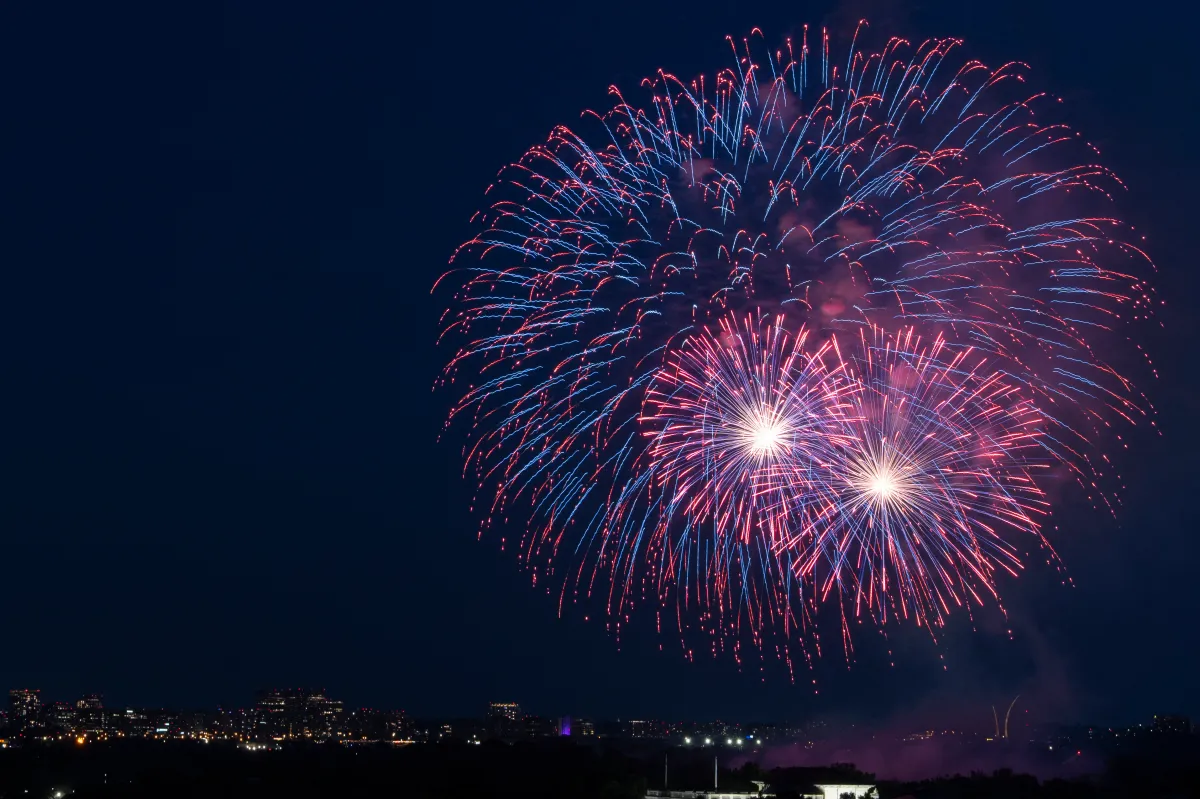
For generations of families across the United States, the Fourth of July is defined by a familiar, comforting sensory tapestry: the sweet, smoky aroma of backyard barbecues, the collective gasp of crowds gathered under summer night skies, and the sharp, nostalgic scent of sulfur drifting on a warm evening breeze. It is a time of deep-rooted tradition, with nearly half of all American adults regularly attending public displays and nearly a third lighting their own fireworks to celebrate Independence Day. Yet, as this year’s holiday approaches, that long-standing excitement is being met with a quiet, unsettling anxiety. Across several states, including Oregon, Washington, Texas, New Mexico, Colorado, Idaho, and Nebraska, a changing climate and parched landscapes are forcing a sobering realization: the very sparks we use to celebrate our history are increasingly threatening our future.
This tension is felt nowhere more acutely than in Utah, a state currently serving as the epicenter of this seasonal crisis. Announcing unprecedented statewide restrictions, Governor Spencer Cox did not mince words, warning that the state is facing extraordinary wildfire conditions characterized by extreme, unpredictable fire behavior that is shocking even the most battle-hardened first responders. This is not a matter of mere caution; it is an active battle for survival, with massive blazes like the 40,000-acre Iron fire northwest of Eureka and the colossal 70,000-acre Cottonwood fire near Beaver tearing through the landscape. The Cottonwood blaze, in particular, has torn through communities with such ferocity that officials fear it may already be the most destructive wildfire in the history of the Beehive State. Under the sky-darkening smoke of these emergencies, governor-led directives have empowered state and local officials to halt private fireworks displays in vulnerable areas, prioritizing human life and land preservation over holiday revelry.
The physical exhaustion of Utah’s firefighters is matched only by the emotional weight carried by its residents. Whole neighborhoods have been forced to pack their lives into suitcases under sudden, terrifying evacuation orders, leaving behind homes they may never see intact again. What makes this crisis especially painful is the human element behind the destruction: more than three-quarters of the wildfires burning this season were ignited not by uncontrollable acts of nature like dry lightning, but by human activity. When a landscape is starved of moisture by historic drought, a single careless spark from a match, a campfire, or a recreational firework can transform dry brush into a roaring wall of flame in mere minutes. Confronting this reality, Governor Cox spoke to the heavy hearts of his constituents, admitting that the decision to limit celebrations was incredibly difficult, but noting with quiet resolve that while Utahns cherish their holiday customs, this year must be different to prevent further tragedy.
Further south, communities in New Mexico and Texas are grappling with similarly perilous conditions, navigating their own balance between tradition and safety. In New Mexico, the state forester took decisive action earlier this year by banning personal fireworks across non-municipal and non-Tribal lands covered in dry timber and flammable brush, redirecting the public toward safe, professional displays monitored closely by local fire departments. Meanwhile, in Texas, where a statewide ban was not implemented, Governor Greg Abbott renewed fire-weather and disaster declarations across numerous vulnerable counties. Recognizing the imminent danger of a dry summer breeze, localized officials in places like Liberty, Caldwell, Floyd, and Live Oak counties step up to the plate, enacting strict fireworks restrictions of their own in unincorporated areas to protect ranches, homes, and dry pastures from accidental ignition.
This localized, grassroots approach to public safety is mirrored across the rest of the West and Midwest, where states are relying on the shared responsibility of their citizens rather than sweeping statewide bans. In Colorado, counties like Mesa, Garfield, and Summit have implemented stringent Stage 1 or Stage 2 fire restrictions that effectively prohibit personal pyrotechnics, knowing all too well how quickly a mountain breeze can carry a spark into the canopy of a dense forest. Further northwest, Oregon and Washington are appealing directly to the civic duty of their residents, issuing urgent safety reminders and asking neighbors to diligently check local ordinances before lighting anything. In Idaho’s Ada County, local leaders preemptively declared a severe fire threat to protect vulnerable zones, while across the dry panhandle of Nebraska, municipal leaders have established their own varying restrictions to ensure their communities do not go up in smoke.
Ultimately, these rising restrictions are shifting the way we think about patriotism and community care during our national holidays. Rather than viewing these regulations as a loss of freedom, many are beginning to see them as a profoundly patriotic act of protection—an agreement to look out for the safety of our neighbors, the preservation of our public lands, and the lives of the exhausted firefighters working sleeplessly on the front lines. The spirit of the Fourth of July has never truly been about the noise of the explosions or the bright flashes in the sky; it is about the resilience, unity, and shared destiny of the people who gather together under those skies. As we adapt to a hotter, drier world, finding safer ways to celebrate—whether through drone light shows, community-supervised displays, or simply gathering with loved ones under the stars—ensures that our most cherished traditions can endure without leaving ashes in their wake.