





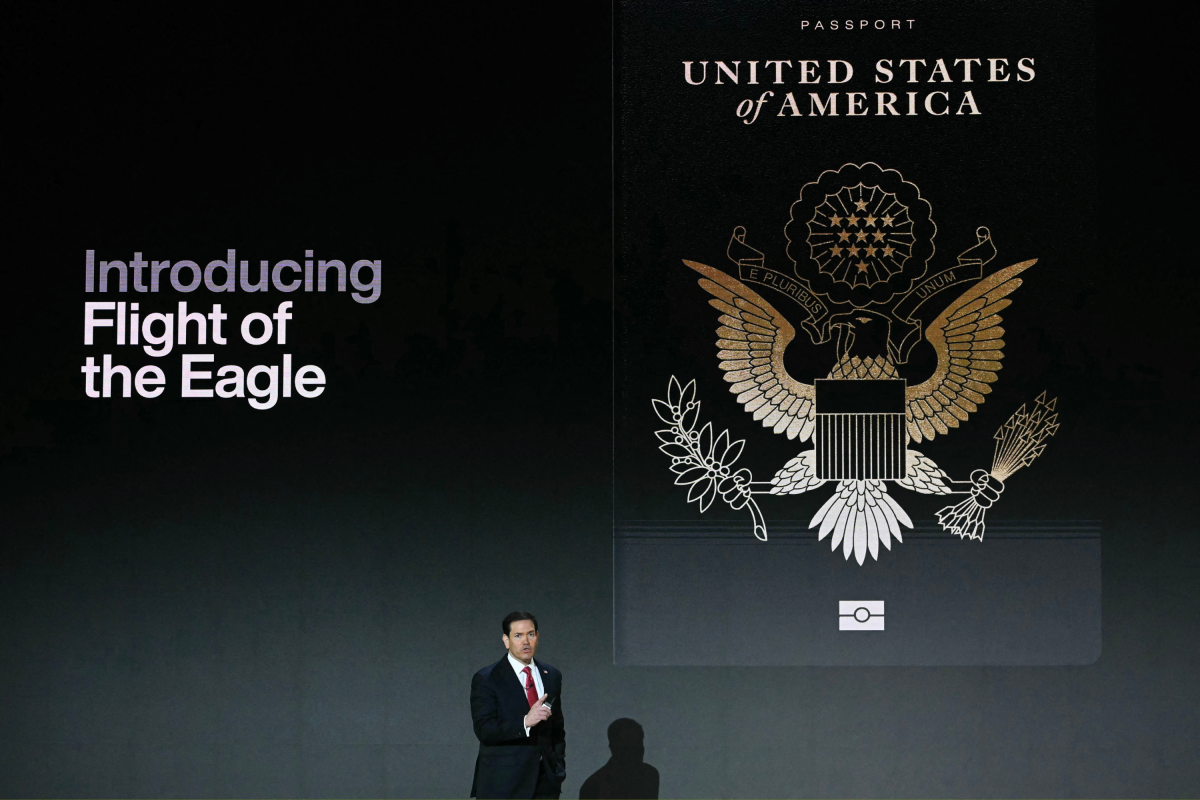
For anyone who has ever gone through the old American passport process, the memory is rarely fond. You had to print out forms, gather official documents, find a place that would take an acceptable photo, schedule an appointment, wait in line, and then spend weeks or even months wondering where your application had disappeared to. It often felt like a bureaucratic maze designed in another century. That is why the recent announcement from the U.S. government feels like such a breath of fresh air. Speaking at President Donald Trump’s America.gov event on September 29, Secretary of State Marco Rubio unveiled two major changes that could fundamentally reshape how Americans get their passports. First, the government is launching a fully online application process that will allow citizens to complete their first-time passport application entirely from home. Second, Rubio showed off a striking new passport design, expected to roll out in 2028, that he described as “beautiful” and “uniquely American.” These changes are part of a larger push by the Trump administration to modernize government services through a new AI-powered platform called America.gov, which is being pitched as a “single digital point of entry” for accessing federal services. For millions of Americans, this could mean the end of the dreaded paperwork marathon and the beginning of a much simpler, more human-friendly relationship with the government.
The biggest and most practical change is the new online application process. According to Rubio, starting next year, first-time passport applicants will be able to apply entirely online through America.gov. No more printing forms, no more in-person appointments, no more waiting rooms, and no more relying on third-party services that charge fees to help you navigate the system. Instead, applicants will log in through login.gov, a secure government portal that already stores some of their personal information. From there, they can upload a passport photo taken from their own device, preview how it will look on the actual passport, submit the application, and pay securely online. The State Department even demonstrated the process, showing how a user can take their own photo at home, adjust it if needed, and see exactly how it will appear on the finished document. Rubio made a point of celebrating this change with a little humor, noting that Americans would no longer have to deal with what he called the “drugstore hostage photo” experience. He also highlighted the real-time tracking feature, which will let applicants see exactly where their application is in the process and when their new passport will arrive. The goal, he said, is for the “vast majority of Americans” to be able to apply for a passport or passport card through the online platform by the end of 2027. For anyone who has ever felt stuck in government limbo, this kind of transparency is genuinely exciting.
But the online application is only half of the story. Rubio also unveiled the next generation of the U.S. passport, a redesign that he says celebrates American history and identity. The new passport, which has been dubbed the “Flight of the Eagle,” makes the American eagle the central theme throughout the entire document. The eagle has always appeared on the passport cover, but in this new version, it takes on a far more prominent role. The cover itself features a larger, more golden Great Seal—the official national emblem of the U.S. government—along with a more visible rendering of the words “United States of America.” Inside, the pages are filled with imagery from major moments in American history, from the American Revolution and westward expansion to the raising of the flag on Iwo Jima and NASA’s Artemis missions, which symbolize America’s continued push into space. Perhaps the most delightful feature is an animation effect: when you flip through the pages, the eagle appears to take flight. It is a small touch, but it turns a normally dull government document into something almost magical, like a flip-book for adults. Rubio described the design as a celebration of strength and freedom, and it is clear that the State Department wanted to create something that feels both modern and deeply rooted in national pride.
To understand why this redesign matters, it helps to look at the recent history of the U.S. passport. The last major redesign was introduced in 2021, following a 2016 update to the overall format and security features. That means the 2028 passport will arrive only seven years after the previous version, which is a relatively short gap in the world of government documents. This rapid pace of change reflects a broader effort to keep U.S. passports ahead of counterfeiters and fraudsters, while also improving durability and usability. Passports are among the most trusted identity documents in the world, and the U.S. government clearly wants to keep it that way. The new design also fits into a longer tradition of using travel documents to tell a national story. Earlier editions have combined security enhancements with imagery meant to express American identity, and the upcoming “Flight of the Eagle” passport will sit alongside commemorative editions like the 2026 Patriot Passport. This is not just about making the document look nice; it is about reinforcing the idea that a passport is more than a travel document. It is a symbol of citizenship, a reflection of history, and a representation of the country to the rest of the world.
For travelers, the practical benefits of these changes are likely to be felt long before the new design arrives. The shift to online applications could eliminate many of the most frustrating parts of the passport process. In-person appointments, printed paperwork, and expensive third-party assistance services may become things of the past for most people. Rubio argued that the old system created opportunities for outside companies to profit from a process that should have been straightforward in the first place. With the new system, applicants will have better visibility into what is happening with their application, including estimated delivery dates and real-time status updates. Rubio made a memorable point when he said that Americans have historically had better tracking for their fast food takeout orders than for their passport applications. That is a fair criticism, and it is one that the new platform seems designed to fix. It is also worth reassuring travelers that existing passports will remain valid until their expiration date, as long as they are not damaged or invalidated. The State Department has made it clear that older passport designs can still be used for international travel while they are valid. And despite the new look and the new application method, international travel requirements are not expected to change. The redesign is about updating the document’s appearance and presentation while maintaining the high security standards that make U.S. passports so respected around the world.
Taken together, these changes represent one of the most significant updates to the U.S. passport system in years. On one side, there is a fully digital application experience that promises to make the process faster, easier, and more transparent. On the other side, there is a redesigned travel document that officials say reflects 250 years of American history and the enduring spirit of the nation. It is a combination of practical convenience and symbolic meaning, and it speaks to a larger ambition within the Trump administration to modernize the way Americans interact with their government. America.gov is being positioned as a single digital entry point for government services, and the passport overhaul is one of its flagship projects. If the online application works as promised, it could set a new standard for how federal agencies deliver services. And if the new passport design lives up to the early descriptions, it will give Americans a document they can carry with pride. Of course, the real proof will come in the details—how smoothly the online system works, how secure the new passport proves to be, and how well the rollout goes over the next few years. But for now, there is reason to be optimistic. The days of the “drugstore hostage photo” and the mysterious application black hole may finally be coming to an end. The future of the American passport looks brighter, more beautiful, and far more user-friendly than ever before.