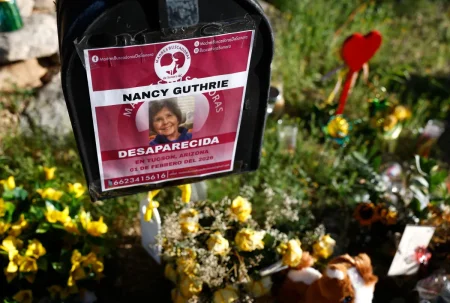






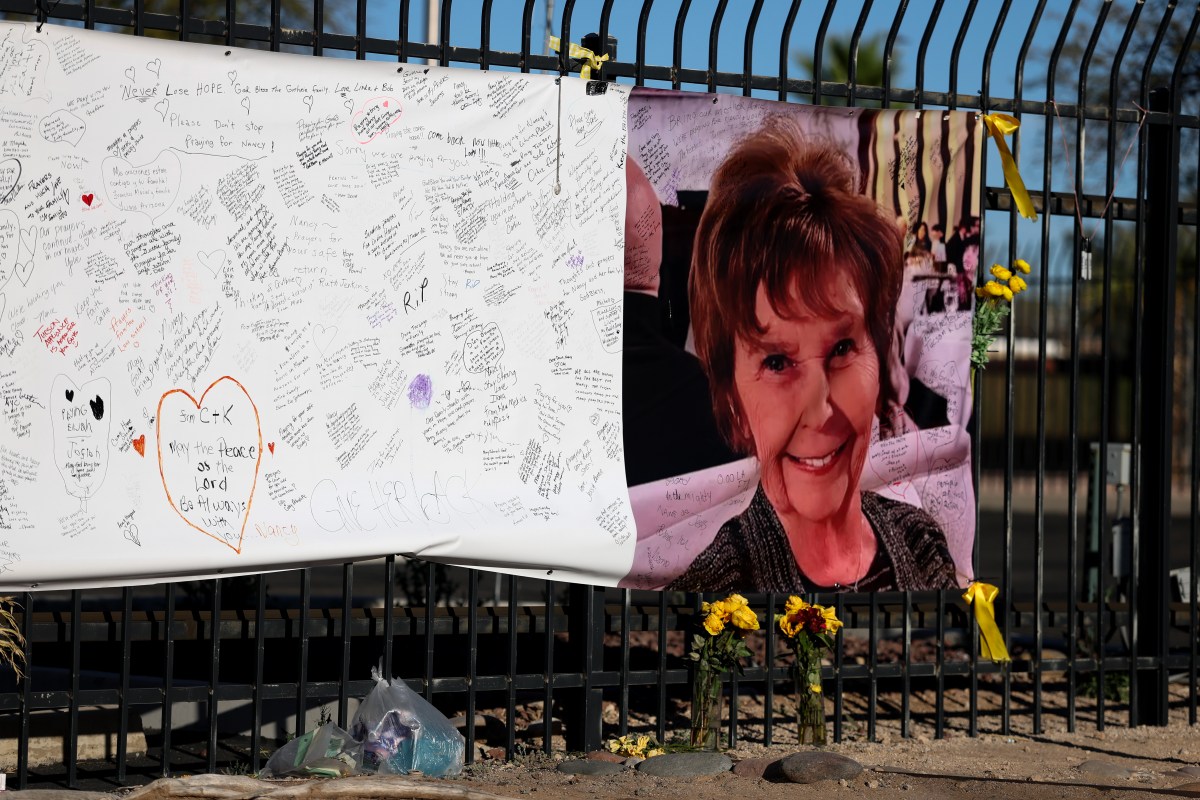
Nearly eight months have passed since Nancy Guthrie, the 84-year-old mother of Today show host Savannah Guthrie, disappeared from her home in Tucson, Arizona. Since that late January morning when she was last seen, her family and investigators have been trapped in a strange and painful limbo—no answers, no body, no clear explanation, only an ever-deepening sense of loss. Then, this week, a new wave of hope and dread arrived in the form of a ransom note. But according to former FBI agent Jennifer Coffindaffer, the note is not what it seems. Coffindaffer, who has become a familiar voice in discussions about the Guthrie case, spent an hour on Tuesday morning dissecting the note and the strange electronic conversation that followed it. The message had been sent to a woman named Lauren Serpa, who said she had met Guthrie years earlier under deeply personal circumstances. Serpa, clearly shaken, reported the note to authorities. The Pima County Sheriff’s Department initially acknowledged the development and then, after further review, issued a blunt statement: the text message is not credible. For the family, for the community, and for anyone following the case, that news is a double-edged sword. It means the note offered no real path to finding Nancy. But it also means that someone, somewhere, has been willing to exploit the worst kind of tragedy for personal gain—and that cruelty only adds another layer of pain to an already heartbreaking mystery.
The ransom note itself was elaborate, even theatrical. According to Serpa’s Facebook post, the message arrived on Sunday night and claimed that Guthrie was alive in Mexico. The sender instructed Serpa to send six bitcoins—roughly $500,000—to a cryptocurrency wallet via a QR code, and only then would Guthrie be returned to the United States. Instead of ignoring the demand, Serpa engaged. She texted back, and the ensuing exchange stretched on for hours. She asked for proof that Guthrie was still alive. The sender obliged by sending a video, but Serpa quickly recognized it as the product of artificial intelligence. The person behind the messages also claimed that the Mafia was involved, which only deepened Serpa’s suspicion. By the end of the conversation, she was convinced the entire ordeal was a scam, and she contacted law enforcement. Yet there is a human dimension to this strange and unsettling story that should not be overlooked. Serpa was not a close friend of Nancy Guthrie. She was someone who had been shown a single, unexpected act of kindness by Guthrie nearly twelve years earlier. Serpa’s husband had died from a brain aneurysm, and at a farmer’s market, Guthrie offered her warmth and comfort during one of the darkest moments of her life. That memory stayed with Serpa. It is what made her stop and pay attention to the message. It is also what made her vulnerable. The scammers who sent the note did not need to know Nancy Guthrie personally. They only needed to know that there were people who loved her, or who remembered her kindness, and who might be desperate enough to believe.
Coffindaffer, drawing on her decades of investigative experience, laid out three powerful reasons to be skeptical of the note. First, the requested form of payment—untraceable cryptocurrency—is a hallmark of modern extortion schemes, not a genuine ransom demand from a criminal organization holding a missing person. Second, the “proof of life” offered by the sender was clearly generated by artificial intelligence, both in the video sent to Serpa and in an image that surfaced in a separate incident. Third, and perhaps most tellingly, Coffindaffer revealed that she herself had received a nearly identical ransom note in April regarding Guthrie’s disappearance. At the time, she chose not to publicize it. She felt it would not be appropriate to amplify what she believed to be a hoax, and instead she contacted the FBI. But the similarities between the note she received and the one sent to Serpa were unmistakable. Both demanded bitcoin. Both included a QR code for payment. Both tried to support their claims with AI-generated images that purported to show Nancy Guthrie, but which were, in her words, definitely not her. Coffindaffer said she strongly believes the same criminal network is responsible for both attempts. The fact that the scammers reused the same tactics, the same style, and even similar fabricated imagery suggests a coordinated effort to prey on public sympathy and the family’s desperation. “We know this isn’t her,” Coffindaffer said, “but I believe strongly that it’s the same criminal network.”
The official response to the latest note has been careful, measured, and consistent with the reality of an ongoing investigation. The Pima County Sheriff’s Department, which has been working the case alongside the FBI’s Guthrie task force, initially confirmed that it was made aware of the new possible ransom note. A public information officer acknowledged that investigators were aware of social media commentary surrounding the note and were looking into its credibility. Soon after, however, the department issued a firmer statement: after further review, investigators determined that the text message was not credible. The statement also contained an important warning to the public. Scammers, it said, may attempt to take advantage of the tragic situation, and anyone who receives any communication related to the case should get in touch with authorities. This is not merely procedural language. It is a recognition that high-profile disappearances attract not only genuinely helpful tips but also opportunists and predators. The emotional vulnerability of family members, friends, and acquaintances can be weaponized. In the digital age, the tools of cruelty are easier than ever to deploy—cryptocurrency wallets, QR codes, AI-generated videos, and untraceable messaging. For investigators, this adds an extra burden. Every lead must be evaluated, every message investigated, every claim sifted through. But time spent debunking scams is time not spent on the actual search. Still, the statement ended with a reaffirmation: the Nancy Guthrie investigation remains active and ongoing.
Amid all the technical analysis and the grim reality of attempted extortion, the human story at the center of the case remains the most important part. Nancy Guthrie is not a fictional character in a true-crime drama. She is a mother, a grandmother, a longtime resident of Tucson, and a woman whose family has been living through every family’s nightmare for months. Her daughter Savannah, known to millions of viewers as the anchor of the Today show, has had to balance public composure with private anguish. The disappearance of an elderly parent is uniquely devastating—there is the fear that they are alone, confused, hurt, or worse, and there is the agonizing lack of closure. Ransom notes, even false ones, reopen wounds. They force the family to consider possibilities that may be too painful to imagine. They also generate new waves of media attention, which can be both a blessing and a curse. Publicity can generate tips, but it can also attract the kind of predators who follow tragedy like vultures. Coffindaffer’s decision to remain silent about her own ransom note until now speaks to that tension. She understood that giving attention to a hoax could distract from the real investigation. But she also understood, as a former agent and as a person familiar with the case, that the public deserves to know about the pattern. The extortionists are not just committing a crime against the Guthrie family; they are polluting the stream of information that might eventually lead to answers.
Coffindaffer’s final message to the public was one of caution and vigilance. Anyone who receives a similar message should not send money, no matter how convincing it might appear. Instead, they should contact law enforcement immediately and let trained investigators evaluate the claim. Scammers are often sophisticated, but they are also repeat offenders; they reuse language, images, and techniques, and that repetition can expose them. Coffindaffer said plainly that the people behind these messages need to be found and at least identified. They may not be responsible for Nancy Guthrie’s disappearance, but they are responsible for adding cruelty to an already sorrowful situation, and they should not be allowed to do so without consequence. The search for Nancy Guthrie continues, and the investigation remains very much alive. Perhaps the answer will come from a credible tip, a memory from a neighbor, or a small detail that has not yet been fully appreciated. Until then, the best thing anyone can do is to keep the case in the public eye without falling for the lies that circulate around it. Authentic leads are precious; fabricated ones are damaging. In a country that has been following this story with concern and compassion, the hope is that the truth, when it finally emerges, will bring the Guthrie family the resolution they deserve. Until that day, the memory of Nancy Guthrie—and the kindness she showed to people like Lauren Serpa—remains a reminder that behind every missing person report is a real life, a real family, and a love that no ransom note, real or fake, can ever extinguish.