





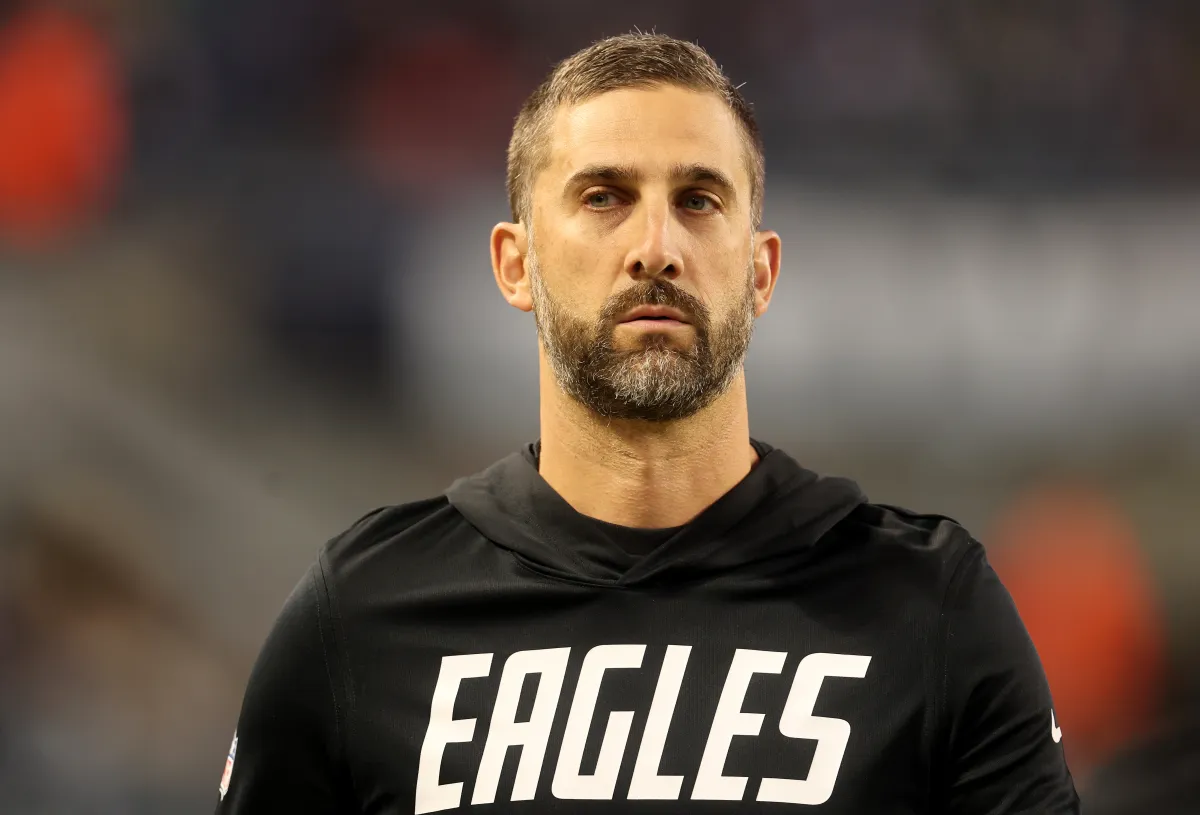
Monday night football has a way of magnifying every choice, every glance, every breath on a sideline. The Philadelphia Eagles were at home, facing the Chicago Bears, and somehow things had gone wrong in a way few could have predicted. Down 20-7 with just three and a half minutes remaining in the third quarter, the Eagles had the ball at their own 49-yard line. It was fourth down and one. One yard. That was all that stood between Philadelphia and a fresh set of downs, a flicker of hope, and a chance to claw back into a game that was slipping away. The crowd wanted a push. The offense wanted a shot. The coaching staff, though, seemed to hesitate. Head coach Nick Sirianni made the kind of decision that no coach wants to make—the one that looks obvious in the moment and absolutely disastrous in hindsight. Rather than go for it, rather than trust his big men up front and his quarterback in a short-yardage situation, Sirianni took a delay-of-game penalty and then punted the football away. It wasn’t just a strange tactical move. It was a moment that deflated a building, energized the opposing sideline, and left everyone wondering if the Eagles had lost something more than a possession.
The decision unfolded in a way that felt almost uncomfortable to watch. A fourth-and-one near midfield is normally the kind of scenario teams dream about—especially for a team like the Eagles, who have one of the league’s most devastating short-yardage weapons in the “tush push.” But Sirianni, speaking afterward, referred to it as a “long one,” suggesting the distance wasn’t as simple as the yard marker suggested. Perhaps the geometry of the play, the angle, the situation, or the fear of giving Chicago a short field clouded his judgment. So he chose the safe route. He let the clock tick, accepted the five-yard penalty, and sent the punt unit onto the field. In that moment, he wasn’t thinking about momentum or belief. He was thinking about avoiding disaster. But football is a game of emotion as much as execution, and punting in that spot sent a message to the players, the fans, and the Bears: this team wasn’t ready to take a risk. If the Eagles had converted, they would have had a golden opportunity to trim the lead to six points and shift the psychological weight of the game. Instead, they handed the ball back to Chicago, hoping the defense could manufacture something that the offense seemed unwilling to chase. It was coverage as strategy, fear as philosophy, and the Eagles paid the price for it.
What followed was a strange, chaotic sequence that only made the decision hurt more. The defense did their job, forcing the Bears into a three-and-out, as if to say, “We’ll give you another chance—go take it.” And perhaps that’s what made the next drive so painful. Quarterback Jalen Hurts suddenly appeared to feel extra pressure, as if the stalled drive had gotten inside his head. Instead of operating with patience and rhythm, the offense pressed. The urgency that had been missing earlier turned into recklessness. With the ball on the Chicago 46-yard line, facing a fourth-and-five with just 27 seconds left in the third quarter, Hurts forced a pass into a tight window and paid for it with an interception. It was the kind of throw that happens when a quarterback knows his team has let opportunities slip away and desperately tries to make up for all of them at once. The interception didn’t just end the drive. It broke the game open. The Bears took over with new life, and they methodically went to work. Over eight plays, they consumed more than eight minutes of clock, driving 40 yards with punishing efficiency, and eventually punched it in with a quarterback sneak from veteran backup Case Keenum. The touchdown made it 27-7, and the game was effectively over. The scoreboard read a final margin that felt like something worse than just twenty points—it felt like a statement about who this Eagles team was, at least for one night.
Nick Sirianni’s postgame remarks were the raw, unpolished words of a man thinking out loud, caught between self-justification and regret. He admitted that in hindsight, he probably should have gone for that fourth and one. He didn’t sugarcoat it. “Didn’t like that decision,” he said, his words carrying the weight of a night he would replay over and over. He explained the thought process—being down two scores, not wanting to give Chicago a short field, the awkwardness of the distance—but even as he spoke, he seemed to realize how hollow those reasons sounded. “As I look back at that, I probably should have went for it there,” he admitted, adding, “Hindsight, I feel like I should have went for it on the fourth and one and a half.” It’s rare to hear a coach be so transparent about second-guessing himself. There was something human in that moment, something universal about the ache of realizing you chose caution when courage was required. But he also made a point to defend his decision to go for it on the fourth-and-five later in the game, saying he liked that aggressive call. The distinction was telling. He was willing to risk a longer conversion deeper in opponent territory, but not the shorter one near midfield. It was a math problem that didn’t add up emotionally, and in football, those choices have a way of haunting you far more than the ones that simply fail on physical execution.
Looking beyond one decision, Monday night revealed a deeper truth about the Eagles’ early season. This wasn’t just a bad loss to a Chicago team led by a third-string quarterback. It was a continuation of a worrying pattern. The Eagles had barely escaped their first two games—a narrow win over Washington, another close call against Tennessee—and for much of this night, they looked like a team that hadn’t yet found itself. The Bears outgained Philadelphia in total yards, 375 to 248. The Eagles lost the turnover battle, three to zero. Those aren’t the numbers of a team that simply had bad luck. They’re the numbers of a team that was outplayed, outcoached, and outhustled at nearly every crucial moment. A gritty team might have overcome one of those deficits, but not all of them together. The absence of discipline, the hesitance at key moments, and the inability to convert when it mattered all pointed to an identity still being formed. Sirianni’s decision to punt was a symptom, not the root cause. The root cause was a lack of confidence in the moment—a feeling that the magic of last season had been replaced by a strange, heavy pressure to live up to expectations.
Now the Eagles must move forward. They face the Los Angeles Rams in Week 4, and the week ahead will be filled with questions about turnover chains, tush pushes, and coaching philosophy. But ultimately, Monday night was a human story about the cost of hesitation. It was about a coach who, in one split-second decision, let fear outrank instinct. It was about a quarterback who felt the weight of that hesitation and tried to fix everything with one throw. It was about a team that, for all its talent, still needs to learn how to trust itself when the game hangs in the balance. Sirianni’s willingness to own his mistake is a good start. Accountability matters in sports, and few things are more human than standing in front of a microphone and admitting you got it wrong. But the Eagles don’t need just words. They need to rediscover the aggression that made them dangerous, the faith that one yard can be gained, and the courage to live with the consequences of their choices. Football is a game of inches, but more than that, it is a game of conviction. And on a chilly Monday night in Philadelphia, the Eagles lost sight of both. The season is still young, and redemption is possible, but the memory of that punt will linger until they prove they’re willing to risk something again. That’s the human part of the game—not just playing the odds, but believing in the people around you and in yourself. The Eagles will be tested again. The question is whether they’ll be brave enough to pass.