




Paragraph 1: The Shattered Morning Calm
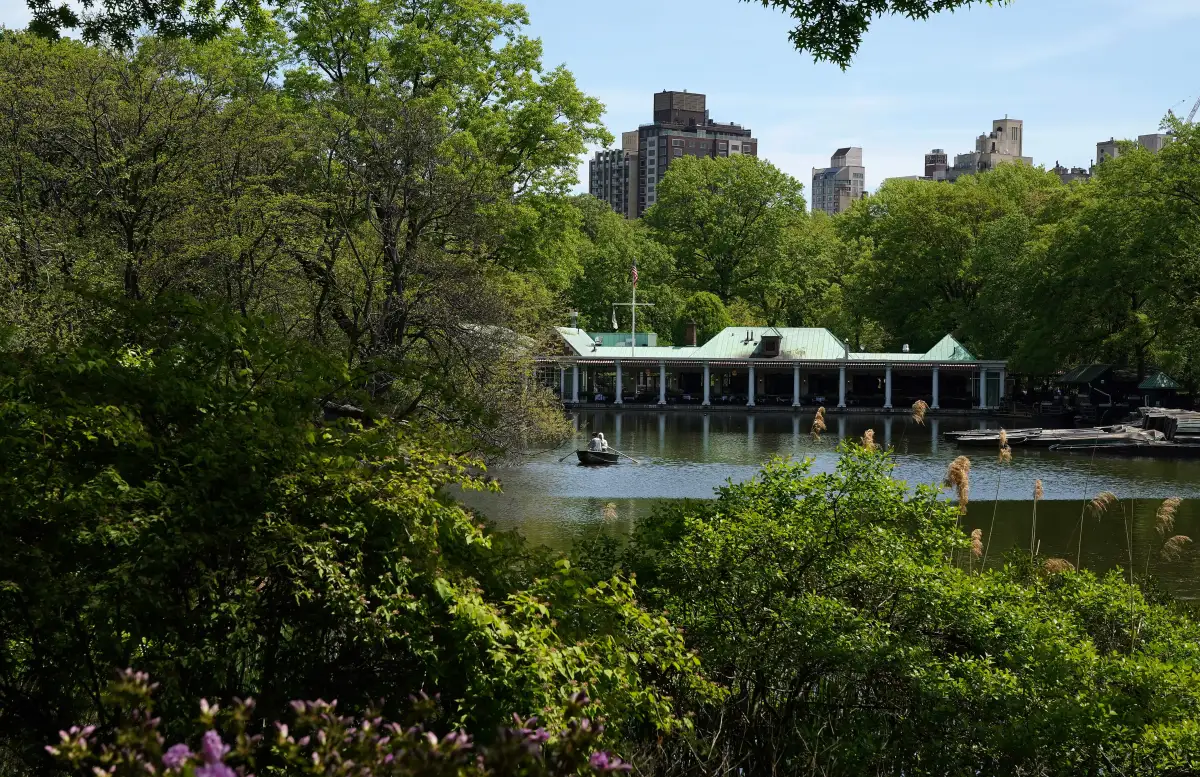
The first light of a Sunday morning in Central Park, a ribbon of emerald green threading through the steel and glass of Manhattan, usually promises a kind of bucolic reprieve. Joggers trace their familiar loops, dog walkers exchange nods, and tourists snap photos of the famous Loeb Boathouse, its Victorian charm a relic of a quieter era. But on that particular morning, the serenity of one of the park’s most visited landmarks—tucked near the winding East Drive and the tree-lined perimeter of East 74th Street—was violently ruptured. At approximately 9:43 a.m., a 911 call crackled through dispatch, reporting an unconscious person. When officers arrived, the idyllic tableau had been replaced by a grim discovery: a 63-year-old woman lay unresponsive, her body bearing unmistakable signs of severe head trauma. She was pronounced dead at the scene. The initial frantic dispatches suggested a stabbing, a report that the New York City Police Department later retracted, clarifying instead that the woman had been brutally beaten. The chilling detail that she was found barefoot, her skin and clothes stained with the city’s dirt, painted a haunting picture of vulnerability and struggle against the backdrop of one of the world’s most celebrated public spaces. Within hours, the serenity of the park gave way to a growing media scrum, yellow tape fluttering around the boathouse, and a dawning realization that this hallowed ground had been stained with the oldest of human tragedies—a senseless, fatal act of violence.
Paragraph 2: The Victim’s Anonymous Tragedy
In the immediate aftermath, the victim remained a ghostly figure, a woman of 63 whose identity was withheld by authorities pending the agonizing notification of her family. The sparse physical details—barefoot, covered in dirt, discovered near a path favored by cyclists and strolls—insinuated a narrative of profound disarray and sudden, desperate violence. One cannot help but wonder about her story. Was she a lifelong New Yorker who had traversed these paths for decades, finding comfort in the park’s ancient oaks? Or perhaps a newcomer, brought to the city by hope or circumstance, seeking a moment of peace before the chaos interrupted her life forever? The absence of her name in early reports rendered her a universal figure of tragedy: a soul whose existence was tragically cut short, leaving behind an abyss of questions for loved ones who would soon receive the life-shattering knock on their door. The initial report of a stabbing, swiftly amended to head trauma, speaks to the chaotic nature of the scene that first responders faced—a situation so brutal that even the method of death required forensic clarification. Investigators believe she was struck with a stick, a crude and brutal weapon that transforms a simple tree branch into an instrument of fatality. This detail humanizes the attack on a visceral level, stripping away the cold, clinical jargon of police reports and revealing the stark, messy physicality of the violence that unfolded on the hallowed green. Until her name is released, she remains an emblem of every vulnerable person walking our streets, and the profound injustice of a life ended not by illness or accident, but by the deliberate hand of another.
Paragraph 3: The Suspect’s Shadowy Persona
The swiftness of the arrest provided a focal point for the public’s outrage and need for answers. Jonathan Robles, a 36-year-old man, was charged with murder and criminal possession of a weapon. The calibre of the charge—felony murder—underscored the severity of the allegations. Yet, Robles is not a faceless demon but a man whose trajectory into this terrifying moment remains obscured. The most telling detail lies in his listed address: 330 West 36th Street, which corresponds to the Barbour Hotel. This is not a conventional hotel for tourists; it is a single-room occupancy residence operated by Praxis Housing Initiatives, a nonprofit dedicated to providing supportive housing and case management for some of New York City’s most marginalized individuals—those who have experienced chronic homelessness, are living with HIV/AIDS, battling Hepatitis C, struggling with severe mental illness, or grappling with substance-use disorders. This address does not implicate the organization, nor does it excuse the alleged crime, but it humanizes Robles in a deeply unsettling way. It places him among a population that often slips through the cracks of a hyper-wealthy city, a demographic wrestling with systemic failures, inner demons, and the daily fight for survival. His decision to surrender to detectives—rather than fleeing or forcing a standoff—is a human detail that hints at a man possibly consumed by remorse, confusion, or mental duress, requiring a trip to the hospital for evaluation before facing the judge. It forces us to ponder the fragile boundary between societal outcast and perpetrator, and the complicated, often invisible web of support that can so tragically fray.
Paragraph 4: The Labyrinth of Unanswered Questions
As the Manhattan District Attorney’s office prepares its case, the investigation remains an open labyrinth of unanswered questions that continue to plague the public consciousness. Police have disclosed a striking lack of detail surrounding the motive; the retraction of the initial stabbing assessment only deepens the mystery of what exactly transpired in those final, fatal moments. Did the woman and Robles know each other, crossing paths in the marginalized corners of the city? Or was this a random, explosive act of violence committed against a stranger for reasons that may never be rationally understood? The charge of “criminal possession of a weapon” in relation to a stick—an object found naturally in any park—raises complex legal questions about intent and forethought. Was the stick a weapon of opportunity, snatched up in a fit of rage, or was it deliberately procured? The absence of publicly available court records and the silence of the NYPD on the evidentiary chain reveal a case still in its infancy, piecing together fragments of forensic data, witness testimony, and digital footprints. We are left wondering if there were surveillance cameras capturing the attack, or if the victim’s barefoot state signifies a longer, more harrowing journey through the park before her demise. The arraignment, delayed by his hospital visit, has yet to provide the legal theatre where these facts will eventually be aired, leaving the public suspended in a limbo of speculation, grief, and a desperate need for coherence in the face of inexplicable brutality. The true narrative of that Sunday morning remains locked, waiting for the judicial process to slowly, painfully pry it open.
Paragraph 5: The Historical Resonance of Violence in the Park
To understand the shockwaves this killing has sent through New York City, one must confront the sheer scale and symbolism of Central Park itself. Spanning 843 acres, stretching from 59th to 110th Streets, this engineered wilderness designed by Frederick Law Olmsted and Calvert Vaux is an oasis of green within the concrete grid, drawing millions of visitors annually. It is a place of first dates, family picnics, and marathon finishes—a psychological bedrock of the city’s identity. Yet its history, while predominantly peaceful, carries the shadows of infamous violence that have seeped into national memory. The 1989 assault and rape of the “Central Park Jogger” led to the wrongful convictions of the Central Park Five, a case that became a watershed moment for race, media, and criminal justice in America before the true culprit was found. Then there is the 1986 “Preppy Murder” case, where 18-year-old Jennifer Levin was found dead in the park, leading to the sensationalized trial of Robert Chambers, a case that captivated the tabloid era with its lurid details. These historical precedents haunt the present moment, reminding us that the park, for all its beauty, is not immune to the ills of the city that surrounds it. They serve as grim archetypes for how such tragedies ripple outward, igniting conversations about safety, class, and mental health, and underscoring the stark contrast between the idyllic landscape and the inherent unpredictability of human nature that can flourish even in the most curated of gardens.
Paragraph 6: The Aftermath and a City’s Reflection
Ultimately, this latest tragedy near the Loeb Boathouse is more than a headline; it is a profound social commentary on the state of urban life. As police continue their investigation, the city collectively mourns the loss of a woman who was someone’s mother, friend, or neighbor, and grapples with the fate of a 36-year-old man whose life was seemingly derailed long before this fatal encounter. The Barbour Hotel, with its mission of supportive housing, stands as a testament to the ongoing struggle to integrate the most vulnerable into society, and Robles’ arrest casts a harsh light on the limitations of such safety nets. We are forced to confront uncomfortable questions: Does systemic failure breed violence? How does a city balance compassion for the mentally ill with the public’s right to safety? The police’s revelation that homicides in the park are relatively uncommon offers cold comfort in the face of this singular tragedy, yet it also highlights the anomaly of this event. As the sun rises again over the boathouse, casting long shadows across the path where the woman fell, the city’s resilient heart beats onward. The joggers will return, the tourists will snap their photos, but the ghost of this untimely death will linger, a stark reminder that peace is fragile, and that the line between sanctuary and tragedy can be tragically, terrifyingly thin.