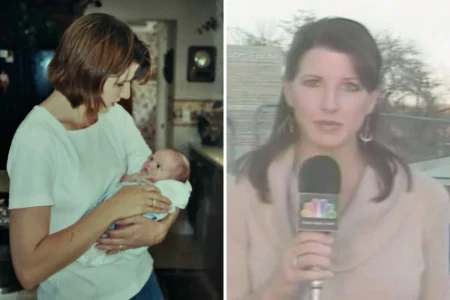






Kevin Waite never had the chance to know his mother as an adult, and that is a loss that never really leaves him. He was only ten years old when Carolyn died from cancer, but the impression she left on him was so deep that she remains his favorite person decades later. “I only had 10 years with my mother, so all my memories of her are from when I was a kid,” Waite, a musician, told Newsweek. There is something heartbreaking in that sentence, but also something tender. He remembers Carolyn as “larger than life”—a woman who was beautiful, smart, and endlessly creative, a lover of arts and crafts, cats, and practical jokes. She delighted in pranking her brothers and sisters, and they delighted right back. Their home was full of laughter, and at the center of it all was a mother who could make ordinary moments feel magical. When you lose a parent at that age, the mourning becomes strange: you grieve not just the person, but all the future moments you will never share—birthdays, graduations, weddings, grandchildren. Waite has carried that grief like a quiet undercurrent through his life. But he has also carried his mother’s love, and nowhere is that love more vivid than in the story of their last Christmas together.
Carolyn’s illness started quietly, or perhaps it only seemed that way in a child’s memory. Waite remembers his mother going through chemotherapy, watching her change slowly from the vibrant, creative woman he adored into someone who looked unfamiliar. “I loved her, but sometimes I was scared to be in the same room with her because she didn’t look like my mom anymore,” he wrote on Threads, where his story touched hundreds of strangers. There is so much honesty in that confession—the guilt of being afraid, the confusion of loving someone whose body is changing, the desperate hope that she would somehow “live forever.” As a child, Kevin believed his mother was invincible. Even as she grew sicker, there was a part of him that couldn’t quite accept that the disease might win. Carolyn remained his favorite person even when she was weak, even when her hair fell out, even when the house took on the heavy stillness of illness. She still laughed, still found ways to be her creative self, still loved her boys fiercely. But there was no mistaking that something was very wrong. And underneath the fear and the hope, the whole family was quietly bracing for what no one wanted to say out loud.
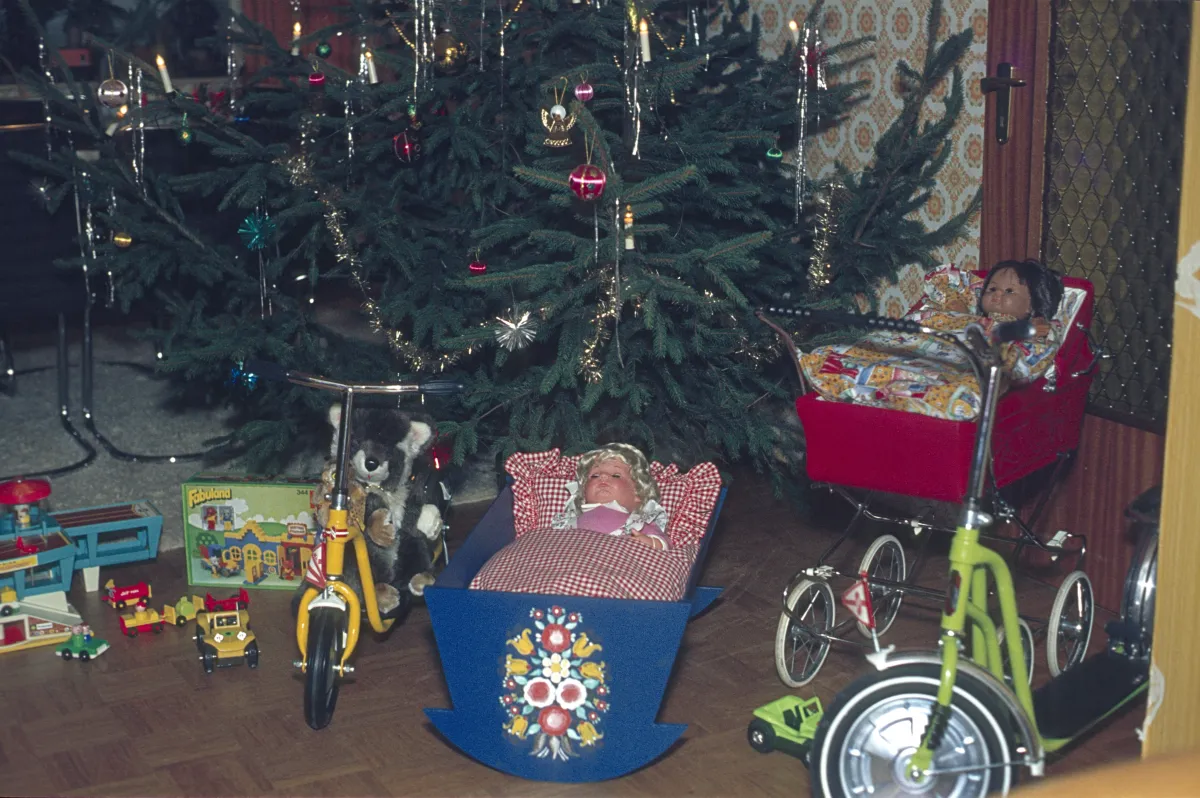
As Christmas 1979 approached, Kevin’s parents sat him and his brother down with a gentle warning. There wouldn’t be much for Christmas this year, they said. The words were offered with kindness, an attempt to lower expectations, to protect the children from disappointment. But Kevin and his brother didn’t really care about presents. All they wanted was for their mom to get better. So on Christmas morning, Kevin slept in, with no sense of anticipation, and nearly forgot what day it was. He shuffled into the living room without expectations, still heavy with worry and fatigue. And then he stopped. The entire room was filled with presents. Bicycles. A drafting table. Star Wars playsets. More gifts than he could count, spilling out from under the tree and piling high in every corner. “I couldn’t believe my eyes,” he wrote. It felt like a dream, as if the Christmas magic he had feared was lost had somehow returned in the most overwhelming way. He could see that his parents must have spent months planning and saving, quietly working to create a moment of pure joy in the middle of so much sadness. At the time, he didn’t quite understand how or why. He just knew that his mom had somehow given them a Christmas that would stay with him forever, and that she was smiling the way she used to before she got sick.
Later that day, Kevin found himself alone with his mother. She looked at him with that knowing tenderness mothers reserve for their children, and she told him the truth. It wasn’t Santa who had brought all those gifts. It was her. She had been secretly saving money for months, putting aside a little at a time, determined to give her boys one really great Christmas. She wanted him to know that she had done it all herself—not to take away the wonder of Christmas, but to show him something even more important. Two weeks later, Carolyn was gone. The loss was sudden in its finality, even though it had been building for so long. Kevin was left to put the pieces together, to look back on that morning and understand the weight of what his mother had done. She had been dying, and she chose to spend her remaining strength and resources not on herself, but on her children. “That last Christmas with her, even though she took the time to tell me there was no such thing as Santa Claus, her act of surprising my brother and me with so many presents showed me she really was Santa Claus after all,” he told Newsweek. Because Santa is not a man in a red suit. Santa is the fierce, unyielding love that makes a dying woman plan a perfect Christmas morning for her boys.
For a long time after Carolyn died, Kevin hated Christmas. The season that had once been filled with her laughter and creativity now only reminded him of the unbearable weight of losing her. The lights, the music, the smell of baking—everything tangled together with grief. But as the years passed, something shifted. He grew up, became an adult, and eventually became a father himself. And suddenly he saw that last Christmas through different eyes. He understood what his mother must have felt as she wrapped each gift: the ache of wanting to give her children a memory of joy that would outlast her, the quiet desperation of a mother racing against time, the deep satisfaction of knowing she had succeeded. “What my mom did for us reminded me of what Christmas should be: magical,” he said. “I’ve tried to create some of that same magic for my own children.” He doesn’t want to outrun the grief anymore. Instead, he honors it by doing what his mother did—showing up, creating moments of wonder, pouring love into the people who matter most. Her death left a deep cut that has resonated throughout his life, both good and bad. He is acutely aware that his mother will never meet his children, and that she would have adored them, and they would have adored her right back. But he carries her with him every day, especially at Christmas.
When Waite shared his mother’s story on Threads, he never expected the response. Hundreds of strangers reached out with kind words, condolences, and stories of their own losses. “I’m so sorry. Your mom loved you very much,” one person wrote. “What a fabulous mother you had,” said another. The outpouring touched him deeply. “It was nice to see,” he said. “I felt good about sharing something about mom and keeping her memory alive.” Grief experts agree that talking about the deceased is one of the most important ways children learn to process loss, and organizations like Barnardo’s encourage parents and caregivers to be open and honest with grieving children, helping them understand that death is not a taboo subject but a part of life. Kevin’s story embodies that wisdom. By telling us about his mother, by carrying her love into his own parenting, he has kept Carolyn alive in the only way that really matters. She may not have been there to watch him grow, but he grew in her light. She may have died before she could meet her grandchildren, but they know her name and her story. And every Christmas, when Kevin watches his own children open their presents, he remembers a sick woman in a living room full of gifts, smiling because she had done the one thing she wanted most in this world: she had made sure her boys knew they were loved. That is the true magic of the season. It isn’t about presents or Santa or decorations. It’s about love that crosses the boundaries of life and death, love that keeps giving long after we are gone, love that turns a dying mother’s last act into a lifelong source of comfort and strength.