





There’s something about the Philadelphia Eagles right now that doesn’t quite add up. On paper, they’re 2-0, which is exactly where every NFL team wants to be at the start of a season. But if you’ve been watching, you know: this feels like the least convincing 2-0 team in the league. The Eagles opened their season by narrowly edging out the Washington Commanders, a team that still hasn’t won a game, and then they needed a late comeback in Week 2 to get past the Tennessee Titans, another squad that’s still searching for its first victory. There’s no such thing as an ugly win in the standings, of course, and the players will tell you they don’t apologize for winning. But there’s a difference between winning because you executed and winning because you survived. Right now, Philadelphia looks like a team that’s surviving. The offense hasn’t clicked the way everyone expected. The defense has shown flashes but also stretches of alarming vulnerability. And the concern at the center of it all is that the Eagles are walking a tightrope, one misstep away from the narrative flipping completely. It’s the kind of start where fans should feel relieved, but instead they feel anxious, and that subtle emotional shift matters. You can almost hear the collective exhale in Philadelphia whenever a game ends, not because of joy, but because disaster was narrowly avoided. That’s not a sustainable way to live in the NFL, and everyone inside the building knows it.
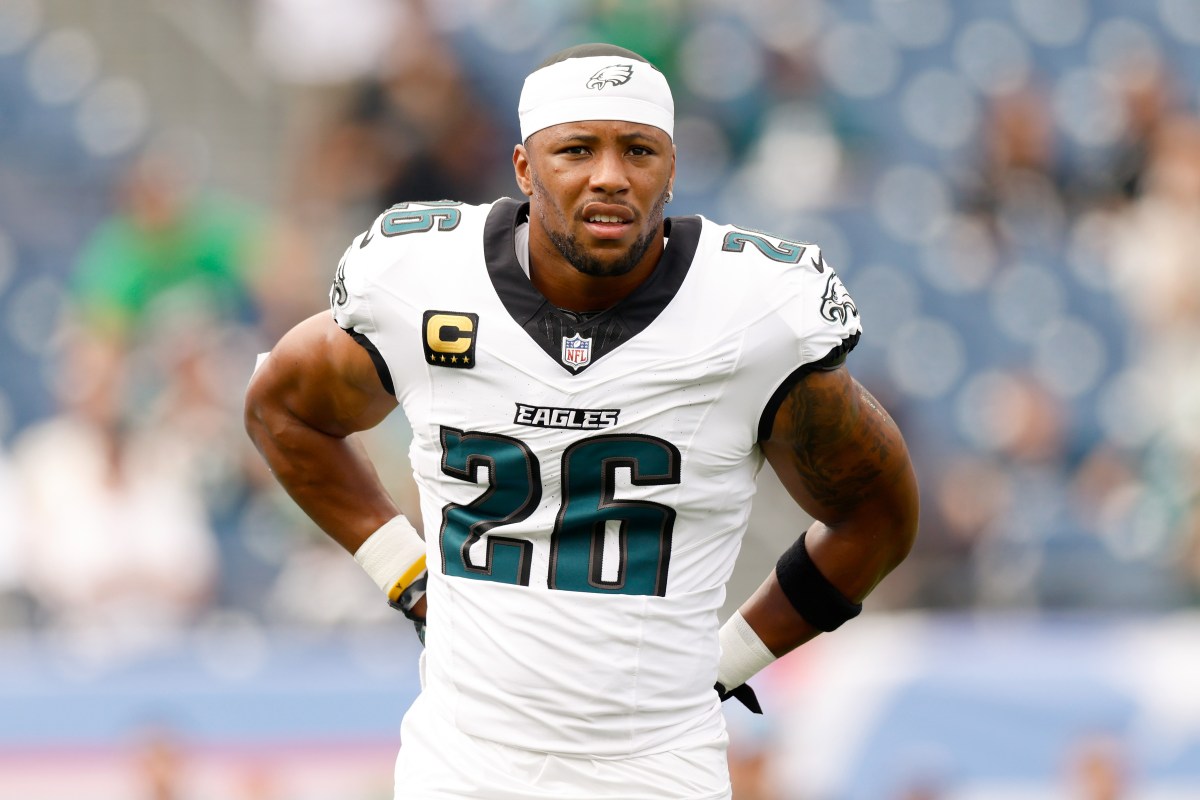
The most immediate fear, however, has nothing to do with the overall state of the offense or the defense. It’s about Saquon Barkley. On the first play of the Titans game, Barkley took a hit that left him with what the team called a stinger, a nerve injury in the neck and shoulder area that can range from mildly uncomfortable to seriously concerning. The moment he went down, you could feel the entire city of Philadelphia hold its breath. Here we go again, right? Because if anyone in the league has earned the right to be paranoid about injuries, it’s Barkley. He did manage to return later in the second half, which was a good sign at the time, but his stat line was nearly invisible: just nine rushing yards on four carries. For a player who’s supposed to be the engine of the Eagles’ ground attack, that wasn’t enough to make anyone feel secure. So when the news hit that Barkley was scheduled for an MRI this week, there was a quiet dread surrounding his status. But then the results came back, and, for the first time in a while, the football gods smiled on Philadelphia. Barkley returned to practice on Thursday, and according to Jeff McLane of The Philadelphia Inquirer, he expects to play in Week 3, a primetime Monday Night Football matchup against the Chicago Bears. That’s the kind of news that can shift the entire emotional temperature of a fan base.
Now, if you know Barkley’s history, you understand why every little twinge feels like a potential tragedy. This is a player who has dealt with ankle sprains, knee sprains, groin sprains, and just about every other soft-tissue injury you can imagine over the course of his NFL career. He’s been through the rehab grind, the questions about whether he’s fragile, the whispers that maybe his body just wasn’t built to carry a heavy workload for 17 games. But here’s the thing about Barkley: he keeps getting up. He keeps putting in the work, keeps showing up, keeps fighting for every yard, and that stubborn resilience is part of why he’s so beloved by his teammates and coaches. Over the last couple of years in Philadelphia, he’s actually been relatively durable, appearing in 16 games in each of the past two seasons. That’s not a small achievement for a running back with his mileage. The stingers that plague football players are usually not the kind of injuries that keep you sidelined for multiple weeks, but with a player like Barkley, there’s always a temptation for the organization to err on the side of caution. He’s an All-Pro. He means everything to the offense. The Eagles are undefeated. Why push it? Why risk a longer-term issue for the sake of one Monday night in September? And yet, all signs point to Barkley being a full go against the Bears. That’s not just a practical decision. It’s a psychological one. The Eagles need their star. More importantly, Barkley needs this game.
Because, let’s be honest, the matchup on Monday night is practically a get-well card for a struggling running game. The Bears defense has been absolutely gashed on the ground in their first two games. In Week 1, the Carolina Panthers backfield ran for 125 yards on 22 carries, averaging a robust 5.7 yards per attempt. That’s not a fluke, either. In Week 2, Aaron Jones of the Minnesota Vikings went for 105 yards on 23 carries, averaging 4.6 yards per attempt. Those aren’t elite offensive lines. Those are simply competent running games finding huge holes against a Chicago front that hasn’t been able to hold the line of scrimmage. For Barkley, who has yet to eclipse 100 rushing yards this season, this is the kind of opportunity he’s been waiting for. He’s too talented and too prideful to be satisfied with nine yards on four carries. He knows what he’s capable of. He knows what this offense looks like when he’s rolling, when defenders are second-guessing themselves, when the threat of his big-play ability opens up passing lanes for the rest of the offense. Monday night under the lights, with the whole football world watching, is exactly the stage he thrives on. You can already picture him bouncing through a hole, breaking a tackle, and turning a simple handoff into a 40-yard highlight. That’s not just a hope. It’s almost an inevitability if the Bears continue to play the way they’ve been playing.
But beyond the numbers and the matchup advantages, there’s a bigger story unfolding here, one about identity and trust and the fragility of a season. The Eagles were supposed to be a juggernaut. They were supposed to make life miserable for defensive coordinators with a dominant offensive line, a dynamic receiving corps, and a backfield featuring Barkley that could control the clock and wear down opponents. Instead, they’ve been scraping by, relying on late-game heroics and hoping their stars can save them. That kind of football can work in September, but it’s not a formula for a deep playoff run. The return of a healthy Barkley doesn’t fix everything, but it changes the energy. When you know you can hand the ball to a guy who can turn a broken play into a touchdown, you play with more confidence. When you’re an offensive lineman and you know you’re blocking for someone who makes you look good, you play harder. There’s a human element to this game that analytics sometimes miss. Players feed off each other’s presence. Barkley walking onto the field for pregame warmups in that familiar green jersey sends a message to the Bears, to the crowd, to the entire league: the Eagles are not going to roll over. They’re not going to let an early-season scare define them. They have their best weapon available, and they’re ready to let him loose.
In the end, this is a story about resilience, both for a player and for a team. Barkley has been through so much in his career, from the unrealistic expectations that came with being a high draft pick to the devastating injuries that could have broken a lesser spirit. Every time you think he’s down, he finds a way back. And the Eagles, for all their flaws and all their unconvincing victories, are still undefeated. That should count for something. They have a chance on Monday night to quiet the doubters, not just with a win, but with a performance that looks like the team everyone expected them to be. Barkley’s return won’t guarantee that, of course. The offensive line still needs to block better. The defense still needs to get off the field on third down. The coaching staff still needs to find a rhythm that’s been missing. But having a player like Saquon Barkley back in the fold makes all of those problems feel more manageable. There’s a reason the city of Philadelphia holds its breath whenever he goes down, and there’s a reason they celebrate when he rises. It’s because he represents hope, the hope that this season can still be special, that the early struggles are just a prelude to something better. So when he steps onto that field on Monday night, it won’t just be about nine yards or a hundred yards. It’ll be about proving that the heart of this team is still beating, and that the least convincing 2-0 team in the NFL is still very much alive.