






In the quiet aftermath of a weekend that should have been filled with football cheers and reunions, the University of Mississippi campus is now draped in a different kind of silence—one marked by grief, unanswered questions, and the fragile process of mourning two young lives. On Thursday, the university identified the students as Aidan Hamilton, a freshman from Colorado, and Robert Strang, a junior from Georgia. Authorities continue to investigate their deaths separately, and while packaged kratom products were recovered during both investigations, officials have repeatedly and emphatically cautioned against drawing any conclusions. The presence of kratom does not mean the substance caused or contributed to either death, investigators say, and no confirmed link has been established between the substance and the tragedies. The families asked for privacy during the earliest days of the investigations, and the university honored that request before releasing the names. In the void of official answers, speculation has spread, but law enforcement has urged patience, reminding a grieving campus and a watching nation that toxicology results take time and that assumptions can cause further harm. For now, the community is left with the hardest part of loss: the not knowing, the waiting, and the quiet ache of walking past empty chairs and darkened doorways.
The days that followed have been heavy with visible sorrow and tangible unease. Students have reported a heightened sense of vulnerability, and conversations that once revolved around classes and weekends now turn to substance use, overdose prevention, and the fragility of life. In a telling gesture of concern, Narcan dispensers across campus were reportedly emptied in the days after the incidents, a quiet but powerful sign that young people are reaching for tools to protect one another even as they grieve. Fraternities and sororities placed black ribbons outside their chapter houses, small symbols of collective mourning that now catch the light at odd hours of the day. University leaders have offered condolences and reminded students that counselors and support resources remain available, but grief does not follow a schedule, and the campus is moving through it in waves. The circumstances surrounding the deaths remain largely unknown to the public. One student was found in Stewart Hall after emergency responders were dispatched to a report of a possible overdose; the second student was found at a separate location in Oxford. Authorities have shared few additional details, and the Lafayette County Metro Narcotics division has stated publicly that it has no confirmed information indicating that kratom or any other substance was a contributing factor in either death. They have asked residents and media alike to avoid speculation until toxicology reports are completed, and that request carries the weight of a community trying to honor two lives without reducing them to headlines. The deaths occurred after a high-profile football weekend that brought thousands of visitors to Oxford, but the city now feels smaller, quieter, and more tender, as if the crowds have given way to a shared awareness that life can change in an instant.
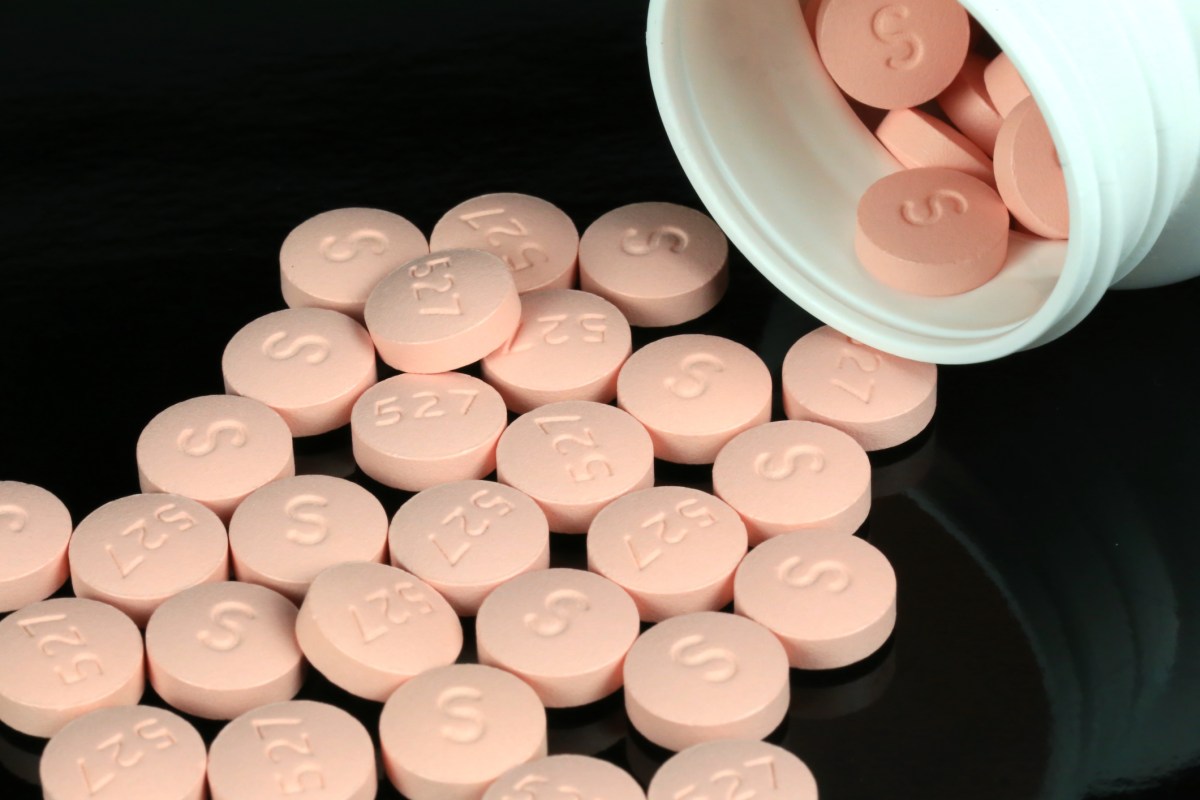
As those who loved Aidan and Robert wait for answers, the conversation has inevitably turned to kratom—a substance that many Americans have never heard of and others use daily for pain, anxiety, or energy. Kratom comes from Mitragyna speciosa, a tropical tree native to Southeast Asia, and is sold in powders, capsules, tablets, teas, concentrated extracts, and liquid shots. Its effects are dose-dependent: lower amounts tend to produce stimulant-like effects, while larger doses can be sedating. The Food and Drug Administration has long warned consumers about kratom, and the Drug Enforcement Administration classifies it as a drug of concern. Yet research remains limited, and the substance exists in a gray zone of American drug policy—legal at the federal level, banned in some states, regulated in others, and increasingly popular among younger adults. According to health authorities including the Mayo Clinic, reported side effects include nausea, vomiting, constipation, weight loss, dizziness, confusion, liver problems, and elevated blood pressure, while more serious cases have been associated with respiratory problems, seizures, and severe poisoning events. Experts also caution that not all kratom products are the same. Some newer products contain highly concentrated levels of 7-hydroxymitragynine, commonly known as 7-OH, and researchers have warned that these concentrated formulations are not simply stronger versions of traditional kratom leaf. They represent a markedly different exposure, with distinct potential risks including opioid-like respiratory depression, tolerance, dependence, and withdrawal. Meanwhile, use has grown in recent years, with research from the University of Michigan and Texas State University finding that more than five million Americans report lifetime use and that those who use kratom are more likely than nonusers to report substance-use and mental-health issues. That statistic does not assign blame to Aidan or Robert, and it should not be read as an explanation of their deaths. But it does illuminate a broader reality: many young people are navigating pain and wellness in a landscape where the safety of widely available products is not always clear.
The legal map for kratom in the United States is a patchwork of conflicting approaches, and it is shifting in real time. Federally, kratom remains legal, but eight states fully prohibit it: Alabama, Arkansas, Connecticut, Indiana, Louisiana, Tennessee, Vermont, and Wisconsin. In those states, possession, manufacture, or sale can bring criminal penalties ranging from misdemeanors to felonies. Tennessee became the newest state to enact a ban when Governor Bill Lee signed a measure known as “Matthew Davenport’s Law,” named after a 27-year-old who died after mixing kratom with prescribed medicines; the law took effect on July 1, 2026, making knowing possession a misdemeanor while imposing felony penalties for manufacturing or selling the substance. Other states have chosen regulation rather than prohibition. More than thirty states have adopted some form of the Kratom Consumer Protection Act, which generally imposes age restrictions, labeling requirements, testing standards, and limits on certain concentrated compounds. States including Arizona, Georgia, Kentucky, Nevada, Oklahoma, Oregon, Texas, Utah, and Virginia permit kratom sales under these regulatory frameworks rather than outright bans. One of the most notable developments came in Rhode Island, which became the first state to reverse a kratom ban, moving to a regulated model that permits sales to adults twenty-one and older while requiring laboratory testing, product labeling, and restrictions on synthetic additives. The legal landscape could continue to change quickly. Michigan lawmakers are considering legislation that would move the state into the banned category, while lawmakers in Georgia, South Carolina, Washington, and several other states are debating proposals ranging from tighter regulations to outright prohibition. At the federal level, regulators are reviewing potential restrictions on concentrated 7-OH products, though natural kratom remains unscheduled. All of this legal complexity can feel overwhelming, especially for a grieving campus looking for answers. But it also matters, because the rules governing kratom vary not just from state to state but even from county to county. Kratom is generally legal in Mississippi for adults, but Lafayette County adopted a local ban in 2021, and because the University of Mississippi sits within Lafayette County, residents there face local restrictions despite kratom remaining legal elsewhere in much of the state. That contradiction is a reminder that policy is often reactive, uneven, and slower than the realities it tries to address.
The question of whether kratom is an opioid is both simple and complicated, and it is central to how people understand its risks. Kratom is not officially classified as an opioid under federal law, but pharmacologically, the answer is more nuanced. The plant’s primary active compounds—mitragynine and 7-hydroxymitragynine—interact with many of the same opioid receptors targeted by prescription opioids, heroin, and fentanyl. That receptor activity is part of why some people use kratom to manage chronic pain or to ease opioid-withdrawal symptoms, and it is also why critics argue that the same biological activity creates a potential pathway to dependence. Medical researchers generally distinguish between traditional botanical kratom and highly concentrated 7-OH products, which may have stronger opioid-like effects and potentially greater risks than conventional kratom powder or leaf products. This distinction has become increasingly important as federal regulators scrutinize concentrated products; in 2025, the FDA recommended scheduling certain concentrated 7-OH products, arguing that they pose heightened risks to consumers. But for the families of Aidan Hamilton and Robert Strang, pharmacology is not an abstract debate. It is the texture of their worst days, the language of unanswered phone calls, the reason they are waiting for toxicology reports that may or may not explain the inexplicable. It is also a reminder that the substances people use are rarely the whole story of their lives. They were students, sons, friends, people with favorite songs and late-night study sessions, people who laughed and struggled and hoped. Reducing them to a legal debate or a public-health warning would be a disservice to their memories. At the same time, the broader conversation is not just about kratom; it is about the ways young people are trying to cope, the pressures they carry, the systems that do or do not catch them when they fall, and the collective responsibility to speak honestly about substance use without stigma. If you or someone you know is facing mental and substance use disorders, support is available through SAMHSA’s National Helpline, a free, confidential, 24/7, 365-day-a-year treatment referral and information service in English and Spanish at 1-800-662-HELP (4357).
For now, Oxford is a campus holding its breath. Classes continue, meals are served, music plays from dorm windows, but there is a heaviness beneath the ordinary, a sense that something irreplaceable has been lost. The black ribbons have faded in the sun, but the grief has not. Students are checking on one another in new ways, asking harder questions, paying closer attention. Parents are calling more often, and some are having conversations they never imagined having about kratom and overdose prevention and the quiet dangers of a world where legal does not always mean safe. The investigations into Aidan Hamilton’s death and Robert Strang’s death remain open and separate, and toxicology results may take weeks or longer. Officials have asked for patience, and patience is hard when every unanswered question feels like an open wound. But the waiting is also an act of respect, a refusal to jump to conclusions, a commitment to let the evidence speak even when speculation would be easier. In the meantime, the families grieve privately, the community mourns publicly, and the rest of the country watches with a lump in its throat, because these two young men were somebody’s whole world, and now they are names in a news story that will fade but not for those who loved them. The kratom debate will continue. Laws will be argued, bills will be signed, and experts will debate the science for years to come. But in the end, what matters most is not a substance but the people who are no longer here to tell their own stories. The best response to a tragedy like this is not certainty—it is compassion. It is the willingness to sit with discomfort, to support the grieving, to protect one another, and to demand a world where young people have the help they need before it is too late. That is the real work. That is the legacy that Aidan and Robert deserve, and that is the only way any of us can make sense of a loss that makes no sense at all.