






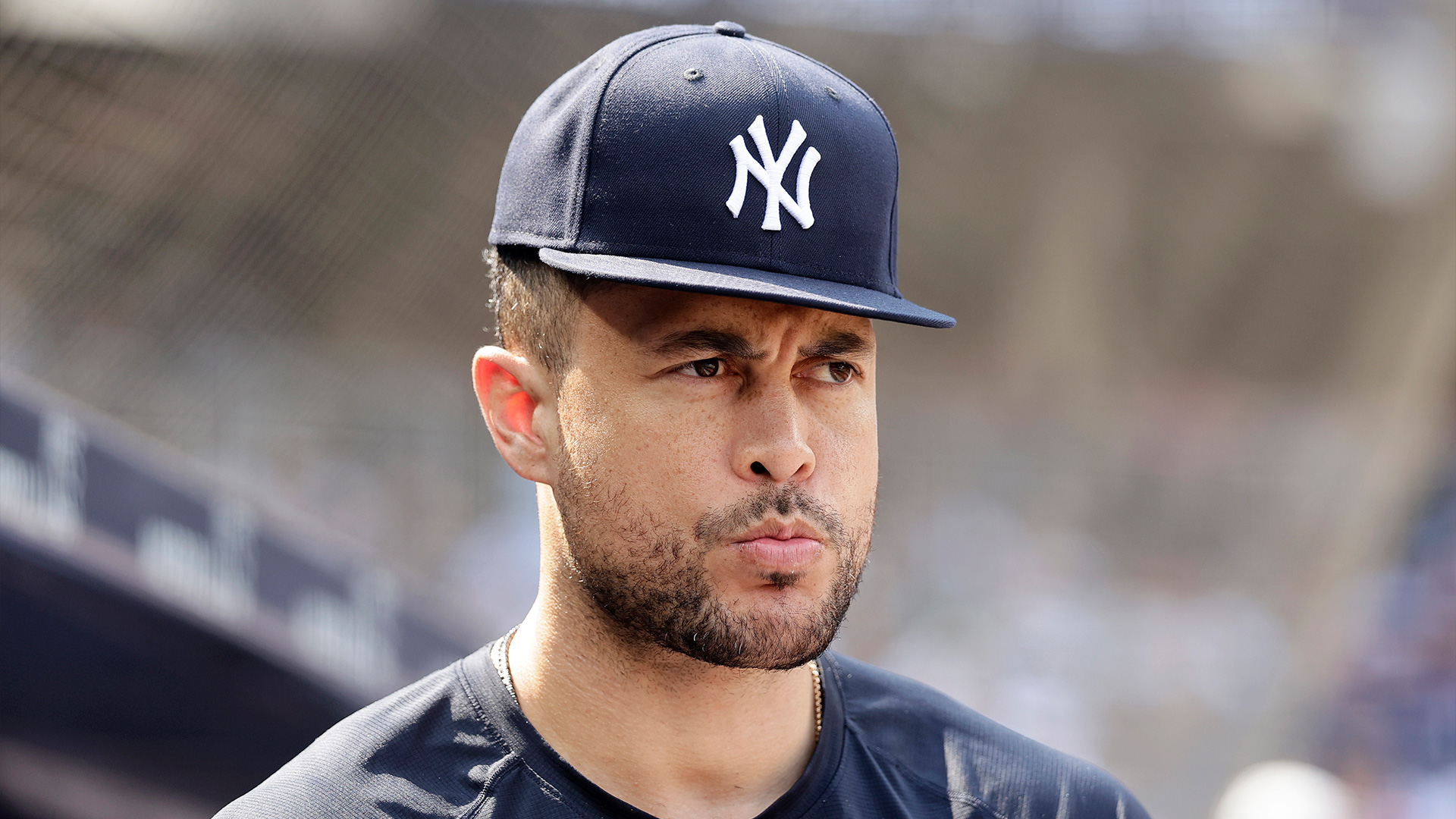
The air in Bridgewater, New Jersey, on Wednesday afternoon carried the faint, melancholic scent of end-of-season baseball—wet grass, musty dugouts, and the lingering humidity of a fading summer. At TD Bank Ballpark, the home of the Double-A Somerset Patriots, the stands were largely empty, but a different kind of electricity crackled through the field. This wasn’t a typical minor-league workout; it was a live, desperate audition for a spot on a postseason roster that could define a dynasty. In the heart of it, Giancarlo Stanton stood in the batter’s box, a monumental figure whose sheer physical presence—6-foot-6, nearly 280 pounds of sculpted power—seemed to warp the space around him. For the first time since April 24th, when his season was violently derailed by strains in both calf muscles, Stanton was doing the thing he was born to do: facing live pitching. He took six, maybe seven at-bats, and in one of them, he connected with a pitch that sent a towering drive over the outfield fence. The sound—that violent, percussive crack of wood meeting leather—echoed through the empty concourses, a phantom roar for a player who has been a ghost in the Yankees’ clubhouse all summer. Trainer’s watches were synchronized, heart rates elevated, as he jogged the bases, his gait nowhere near the explosive sprint of his prime, but functional, purposeful. Trent Grisham, an outfielder who had been shut down with a tight right hamstring on September 4th, ran alongside him at times, both men existing in a liminal state between injured reserve and redemption. The scouts in the stands didn’t need to write anything down; they knew the story. The silence between pitches was punctuated by the soft thud of balls into gloves, but the imagination of every person watching was screaming. This was a preview of a possible miracle, or possibly the last gasp of a career built on herculean feats and haunted by inevitable decay.
Stanton’s 2024 season had started with a promising, almost defiant flicker of his old dominance. Through those first 24 games, he was hitting a solid .256, driving in 14 runs, and launching three home runs that sent shivers through opposing dugouts. He looked, for a fleeting moment, like the fearsome monster who had terrorized National League pitching for a decade, the 2017 NL MVP who once launched a 504-foot blast into the stratosphere. But on April 24, the clock struck midnight. A pull, a searing tightness in both calves—a cruel, bilateral attack on a lower body already carrying the scars of a thousand sprints and swings—forced him out of the lineup. The diagnosis, dual calf strains, was a body blow. It wasn’t just one injury; it was both legs, a total shutdown of the kinetic chain that powers his devastating swing. The subsequent five and a half months were a Sisyphean ordeal: endless hours of physical therapy, riding stationary bikes while his teammates fought in the humid summer sun, painful alignment work, and the grinding monotony of a rehab calendar. The mental toll was immense; he watched from a luxury box, a god reduced to a spectator. While Stanton was away, the Yankees navigated a chaotic season of extreme highs and lows, battling for the AL East crown, experiencing streaks of brilliance and frustrating slumps. They watched their beloved captain, Aaron Judge, suffer a strained right calf just as the season was closing, a devastating blow that left the lineup feeling toothless. With Judge and Stanton both out, the Bombers lost their two most feared sluggers, leaving the offense to the valiant but insufficient efforts of a supporting cast. The team’s postseason berth was secured through grit and pitching, but their path was precarious: they were expected to host the Boston Red Sox in a best-of-three Wild Card Series starting Tuesday, with all three games in the white-hot crucible of Yankee Stadium. The irony was thick enough to cut with a knife: a franchise built on the mythos of Ruth, Gehrig, Mantle, and Judge, was now reduced to holding its breath over a 36-year-old whose body parts have given out more often than a used car. For the fans, the thought of facing Boston without their two biggest bats was a horror story; the presence of Stanton, even at 70% efficiency, would shift the entire geometry of the Boston pitching strategy.
In the quiet corridors of the Yankees’ clubhouse, manager Aaron Boone—his voice ravaged by a nasty cold that seemed to mirror the season’s churn—offered a pragmatic, utterly human prognosis. “Putting them on the outskirts of the conversation,” he rasped, the words floating in the air like a fragile spider’s thread. Boone’s tone was the cautious, weary cadence of a field general who has seen too many promising rehabs collapse in the final sprint to allow himself to dream fully. He knows the cruel mathematics of baseball: a player returning from a five-and-a-half-month decompression doesn’t just flip a switch and become a force. The explosive acceleration required to chase a wild pitch, the split-second reaction to a slider in the dirt, the resilience of soft tissue under the extreme stress of a playoff atmosphere—it’s a brutal world. “You’re looking more at a pinch-hit scenario,” Boone admitted, the words landing with a thud. Yet even that morsel of possibility ignited a bonfire of excitement across the team’s passionate fanbase. Fans who had spent the summer mocking the “injury-prone” slugger suddenly scoured social media for blurry videos of his batting practice, dissecting each swing frame by frame. The strategic calculus for Boone is agonizingly layered. In a best-of-three matchup against Boston—a rivalry that makes every pitch feel like a knife fight in a phone booth—using a rusted, untested Stanton in a high-leverage spot is a gamble of epic proportions. A single, violent swing could change the series, but a strikeout on an 0-2 count could just as easily be a disastrous end. The alternative—leaving him off the roster entirely, a heartbreaking conversation with a veteran of his stature—feels like a surrender of untapped potential. The truth of October is that no amount of simulated at-bats in Somerset can replicate the cosmic pressure of a Game 3, bottom of the ninth, two outs, with the season on the line. What Boone saw in New Jersey did provide a sliver of comfort: Stanton’s bat speed appeared crisp, his lower half moved with only a residual stiffness, and he ran the bases without a visible limp. But trust is a fragile currency, and time is the one commodity a Wild Card series refuses to lend. The final decision will likely be delayed until the last seconds before the roster is submitted, a tense, silent game of chicken between the intoxicating allure of a historic return and the unforgiving laws of human physiology.
To truly grasp the weight of a potential return, one must examine the gruesome, almost tragic ledger of Giancarlo Stanton’s body since he arrived in the Bronx with fanfare in 2018. He was acquired from the Miami Marlins with the reputation of a mythical creature—a hitter of Ruthian proportions, the 2017 National League MVP who had launched a ball an estimated 504 feet into the Miami night. In his inaugural season in New York, he was everything the franchise had dreamed of, smashing 38 home runs and driving in 100 runs, leading the league in slugging percentage. It was a coronation, a promise of a new dynasty. But the baseball gods, forever wielding a merciless irony, had other plans. Since that brilliant debut, his body has been a combustible engine, and the resulting mechanical failures have sidelined him for an astonishing 500 of the team’s 1,194 regular-season games—a mind-numbing 41.9% of the schedule. The list of physical ailments reads less like a medical chart and more like a grim inventory of a war veteran: strains of his right biceps, a right knee injury, three separate hamstring strains on the left side, a left quadriceps strain, inflammation of the right ankle, Achilles tendinitis, and the current nightmare affecting both calf muscles. To complicate things further, he has suffered from recurring tendon pain in both elbows, a constant, gnawing torment that affects his grip on the bat. The sheer multiplicity of these setbacks reveals a profound, almost cruel paradox: his impressive, chiseled frame—often compared to a Greek statue—is designed to deliver brute, ungodly force, but its structural integrity is fundamentally unstable. His legs, the pistons that generate the explosive torque for his violent swing, have been repeatedly compromised, turning each sprint to first base into a potential landmine. Every time he appears poised to reclaim his throne, another muscle group mutinies, and the cycle of rehab and despair begins anew. He has become a tragic figure in pinstripes, a monster whose greatest adversary is the very flesh that gives him his superhuman power. The frustration of the fanbase is not aimed at his effort—he has always played with a stoic, gritty determination—but rather at the universe’s sick joke of granting him the body of a titan while wiring its components to fail. His batting average in 2024 (.256) was promising, but it was a mere mirage, a fleeting smile before the riptide of injury dragged him under again.
Layered beneath the emotional narrative of an athlete fighting to salvage his body is the cold, unforgiving arithmetic of the business of baseball. Stanton is currently in the final guaranteed season of a gargantuan 13-year, $325 million contract originally signed with the Miami Marlins—a deal that the Yankees traded for in 2018, absorbing his massive salary in exchange for a bucket of prospects and a questionable long-term commitment. His ledger shows he is owed a staggering $25 million for the 2025 season, a figure that has become a heavy anchor around the Yankees’ financial waistline. For an aging player whose body parts have been popping like bubble wrap, this figure isn’t just a paycheck; it’s a monetary verdict on his very existence on the roster. The contract also contains a $10 million buyout for a 2028 club option, a generational safety net that adds yet another dimension to the roster construction puzzle. The baseball world is fundamentally split on how to judge him. The sentimentalist sees a proud warrior, a man who has never stopped grinding, who refuses to let a litany of injuries extinguish his flame. The pragmatist sees a sunk cost, an albatross weighing down the payroll and occupying a roster spot that could go to a younger, healthier player. In the corporate offices of the Yankees, the financial boffins likely wince every time they see his name on the injured list, calculating the lost return on investment. But when the playoffs arrive, the ledger of dollars and cents fades into the background, replaced by the raw, visceral currency of October. A single pinch-hit appearance isn’t about the $25 million; it’s about the possibility of a final, defiant roar. The 2018 postseason was a tantalizing glimpse, but the 2020 playoffs were his true masterpiece, where he crushed home runs with reckless abandon, including a go-ahead blast in Game 5 of the ALDS that sent shivers through the league. Baseball is a sport of redemptive moments, and the difference between a .256 batting average and a legendary October can be measured in a single, perfect swing. The front office, despite their headaches over his cap number, fully understands the incalculable psychological value of his name printed in the lineup card. Opposing managers will lose sleep over his bat, even if he only steps to the plate once. The fear he instills is a currency that can’t be printed by the money man.
As the calendar flips to the first week of October, the Yankees find themselves preparing for a high-stakes, three-game war against their eternal rivals, the Boston Red Sox. The rivalry, one of the fiercest in North American sports, adds a visceral layer to an already taut scenario. The backdrop of Yankee Stadium—with its monuments, its ghosts, and its thunderous noise—will be the stage for this drama. For Stanton, this is possibly the last time he will don the pinstripes in meaningful October action, given the ambiguity of his contract, his age, and his body’s fragility. The symbolism is potent: a player who has missed 500 games, who has been counted out, who has been called a “glass cannon,” hoping to carve out one final, heroic stanza. Even if he never pulls a single pitch, merely being on the bench—stretching, warming up, standing in the on-deck circle—could serve as a talisman for his teammates. The team knows his presence changes the opposing manager’s bullpen decisions, alters the shifting defenses, and intimidates the rookie pitcher making his playoff debut. As the roster deadline looms, the decision rests on a knife’s edge. Boone will have to weigh the cold analytics (his lack of game reps, the risk of re-aggravating a calf) against the fiery intangibles (his swagger, his history in the clutch). The only certainty is that Giancarlo Stanton, a man who has spent five and a half months in a purgatory of ice baths and ultrasounds, will do everything in his power to make that plane to the Bronx. His dedication is unquestionable; his body is the only veto that remains. Whether he is a footnote or a headline, a hero or a forgotten statue, will be written in the frenetic, unforgiving ledger of October baseball. For a player so accustomed to chasing greatness that most men have never seen, the ultimate chase is not for a trophy, but for a chance to hear the crowd chant his name one more time.