




The college football world is a beautiful, chaotic mess on Saturdays, and this weekend’s slate is a veritable feast of high-stakes drama that will leave fans on the edge of their seats from noon until the witching hour. Up in Knoxville, the Rocky Top faithful are gearing up to host the top-ranked Texas Longhorns, with ESPN’s College GameDay setting up shop to amplify the deafening roar of Neyland Stadium. Down in the Deep South, Ole Miss is venturing into the hostile, swampy confines of Gainesville to face a desperate Florida squad, while Iowa brings its gritty, defense-first identity to the Big House to test the unbeaten Wolverines. Even Death Valley is buzzing, as Lane Kiffin’s LSU Tigers welcome the surging Aggies of Texas A&M. Yet, for all the marquee matchups glimmering across the map, the most profound, career-defining collision of the day is happening 3,000 miles away under the shimmering lights of the Los Angeles Memorial Coliseum, where the Oregon Ducks and USC Trojans will resurrect one of college football’s most storied Pacific rivalries—except this time, it isn’t a Pac-12 tilt, but a forced, somewhat awkward reunion as members of the Big Ten. The conference realignment has stripped away the tradition and oak-lined lore of the old West, and in its place sits a playoff-era pressure cooker with two teams warring not just for a win, but for the very survival of their respective head coaches’ futures.
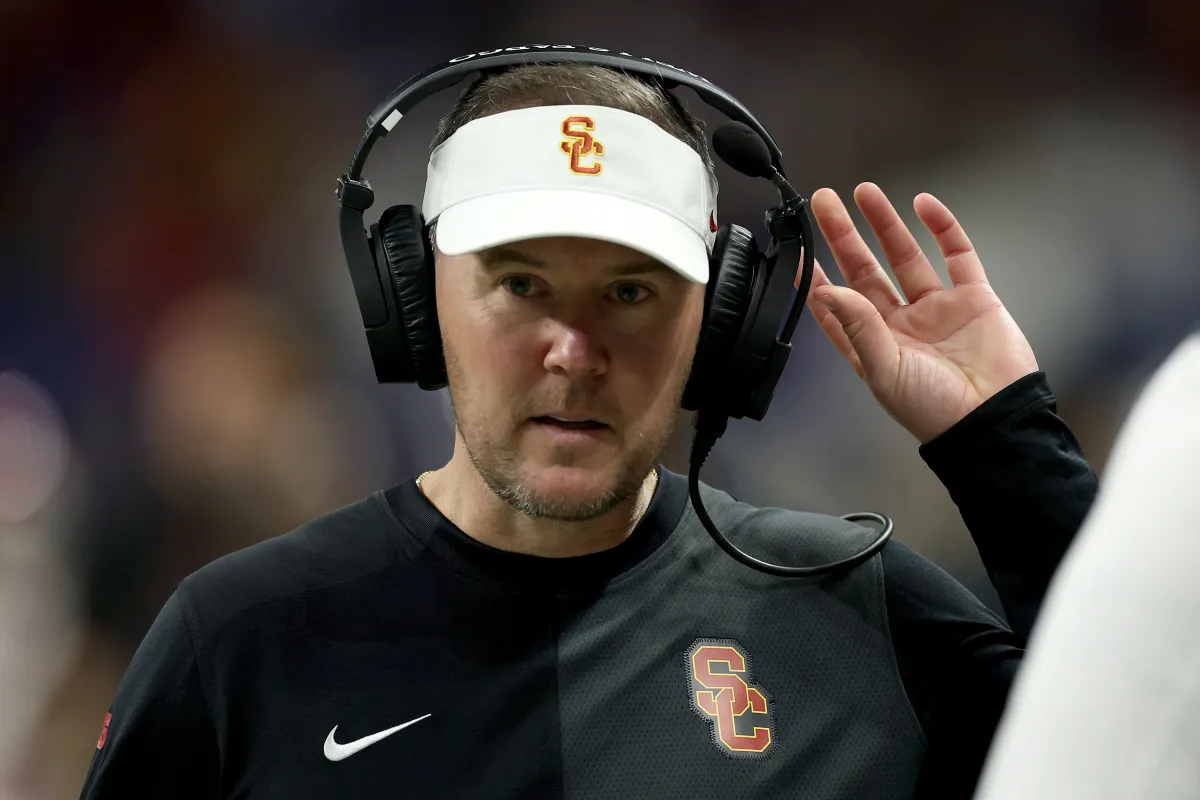
For USC, that coach is Lincoln Riley, the man who was once heralded as the second coming of offensive genius. When Riley shocked the sport by leaving Oklahoma for Los Angeles in 2022, he didn’t just arrive with a playbook; he arrived with the weight of a prophecy. USC handed him a staggering 10-year, $110 million contract, believing they had finally found the heir to Pete Carroll’s throne—a savior who would carry the banner of the Trojans back to the summit of college football. The early returns were intoxicatingly good. In his first year, Riley channeled the magic of quarterback Caleb Williams, who danced through defenses with an almost ethereal grace, earning the Heisman Trophy and leading USC to an 11-3 record. The Coliseum was alive again, shaking with the energy of a fanbase that had starved for fifteen years. But as is often the case in the ruthless cycle of college athletics, that euphoric honeymoon phase evaporated as quickly as it began. The following three seasons have been a study in agonizing frustration. The record since that sparkling debut has been a brutal, mediocre 24-15, a mark that feels less like a dynasty in the making and more like a slow, grinding descent into the abyss of “what if.” The defense, perpetually under-coordinated and soft up front, became a glaring Achilles’ heel—a fundamental flaw that no amount of West Coast flair could conceal. Entering this season, the Trojans find themselves at 4-0, undefeated, yet carrying the dark cloud of fractured expectations that hangs over a program that simply cannot seem to break through the glass ceiling.
ESPN’s Pete Thamel has been brutally candid about the precarious ledge Riley is standing on, and his words resonate with the cold truth of modern college football economics. “If they lose Saturday, it’s reasonable to say that Lincoln Riley is on the hot seat,” Thamel stated bluntly. He highlighted the uncomfortable juxtaposition of Riley’s tenure: the kind of good-but-not-great track record that gets coaches fired at blue-blood institutions. “He’s obviously been good, but he’s not been great, and he’s not been to the playoffs. And simply put, they did not hire him to be just good.” The ultimate kicker, however, is the financial albatross hanging over the athletic department’s collective neck: a $72 million buyout clause—a number so astronomically high it feels like something out of a sports fiction novel. Thamel aptly describes this as a “Jimbo Fisher-esque number” that will weigh heavily in the calculus of any decision. To humanize that number is to understand the sheer panic in the eyes of USC athletic director Jennifer Cohen. It represents the cost of paying a coach to go away while simultaneously funding an entirely new coaching staff, a new recruitment class, and NIL war chests—all from a budget that is already stretched thin. It means that for the foreseeable future, the Trojans might be financially handcuffed, forced to keep a coach they no longer believe in not because he’s winning, but because they aren’t Rockefeller. It’s the cruel paradox of the coaching carousel: the more spectacular the failure, the more expensive the exit, trapping the program in a purgatory of their own misguided optimism.
The shadow of Jimbo Fisher looms large over this entire saga, serving as a cautionary tale for every school tempted to gamble on a big-name hire. Fisher, who is still the undisputed king of the buyout market, received a record-shattering $76.8 million from Texas A&M to simply walk away in 2023, marking the catastrophic end of a tenure that never materialized into the SEC contender the Aggies dreamed of. Riley’s $72 million would place him dangerously close to that benchmark, a comparison that only adds insult to injury for USC fans who watch their rivals laugh at their misfortune. But there is a human story buried within the decimal points and legal fees. For Riley, each Saturday becomes a tightrope walk of pride and pragmatism. He knows that while the buyout protects his bank account, it does nothing to shield him from the humiliation of a hostile media, the empty seats in the third quarter of a blowout, or the growing whispers among high school recruits that USC is a place where careers go to plateau. Thamel’s mention of the buyout is really an acknowledgment of the emotional paralysis it induces. It’s the acknowledgment that sometimes, institutions are trapped by their own financial idiocy, forced to endure a painful marriage because the cost of a divorce is too steep to bear. And for the coach himself, it creates a bizarre siege mentality—knowing you are functionally unfireable for a year or two, yet living with the suffocating pressure of knowing that every loss is a strike against your immortal legacy.
Standing across the sideline from Riley in this high-stakes chess match is Dan Lanning, whose Oregon Ducks are equally desperate, albeit for slightly different reasons. Lanning was expected to be a perennial playoff contender, a master recruiter who turned the Ducks into a year-in, year-out powerhouse. This season, however, Oregon stumbled out of the gate with a stunning early-season loss, dropping them to 2-1 and injecting a palpable sense of urgency into their trip to Los Angeles. For Lanning, this game isn’t about a buyout; it’s about the trajectory of his program’s season and the credibility of his championship aspirations. Yet, the human element of this matchup is what makes it utterly compelling. These two coaches are mirror images of ambition and pressure, separated only by their financial safety nets. The rivalry between the Ducks and the Trojans has historically been a violent, passionate affair, defined by the “Tailback U” days, the Reggie Bush era, and the subsequent clashes between Chip Kelly and Pete Carroll. Now, stripped of their old league, they collide in a new conference, fighting not for a Pac-12 title, but for the nervous glances of selection committee members. For USC fans, Saturday night is a pilgrimage to recapture a glimmer of past glory. They remember the swagger of the mid-2000s, the national championships, the way the sun always seemed to set over the Coliseum with a Trojan victory. They see Riley now, and they see a coach who looks a bit like a tired man, wearing the weight of a failed dynasty, his playcalling scrutinized on every third down.
The underlying narrative of this grim showdown extends beyond the coaches and into the very fabric of how college football programs are built and broken in the modern era. USC’s struggles are not merely the fault of a head coach; they are a systemic failure of infrastructure, roster construction, and a stubborn refusal to adapt to the bruising physicality of the sport’s upper echelon. Riley’s offensive genius was always predicated on pitching a perfect game of aerial acrobatics, but his roster has lacked the trench warfare muscle needed to dominate in the Big Ten. He has patched the defense with a revolving door of transfer portal mercenaries, but cohesive units are built on time and development, not quick-fix NIL deals. The human consequence of this is felt by the players themselves—young men who lose their reputations in a spotlight of constant skepticism. And it’s felt by the fans. You can see it in the faces of the alumni who fund the NIL collectives, donating hundreds of thousands of dollars in hopes of seeing Notre Dame, Ohio State, and Michigan come December. They didn’t sign up for this. They signed up for the promise of a return to national dominance, a promise that has curdled into the sour taste of fourth-quarter collapses and middling bowl games. There is a peculiar grief in watching a beloved program descend into mediocrity, knowing that the person steering the ship is being paid a king’s ransom to do so, and knowing that his future is immune to the whims of a disgruntled fanbase due to the high cost of severance.
So, as the sun dips below the Pacific and the lights flicker on at the Coliseum, the kickoff for this Saturday night’s 7:30 PM ET clash will feel less like a football game and more like a verdict. For Lincoln Riley, it is a moment of reckoning that has been three years in the making. A win would be a temporary balm, a reason to smile through the skepticism and buy himself a few more weeks of relative peace. A loss, however, would unleash a torrent of speculation so powerful that not even the immovable sum of $72 million could shield him from the humiliation. He will walk the sideline, barking plays into the headset, feeling the electric tension of 90,000 restless Trojans fans who are one bad interception away from turning on him with a venom that is both personal and visceral. It is a uniquely human tragedy, this business of winning and losing, where a single play can define a season and a career. College football is a sport that celebrates redemption, but it is equally ruthless in its demand for excellence. And as Oregon and USC stare each other down, the irony is not lost that both programs are gambling with their futures on a game played at 7:30 PM on a Saturday, where the only certainty is that someone will walk away with a bruised ego, a dwindling job security, and a very, very expensive bill to contemplate.