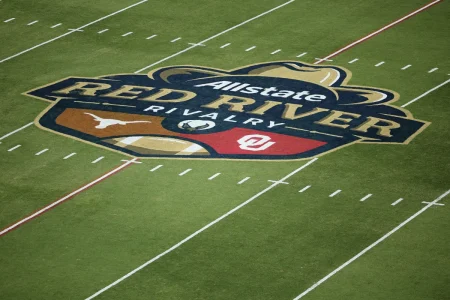




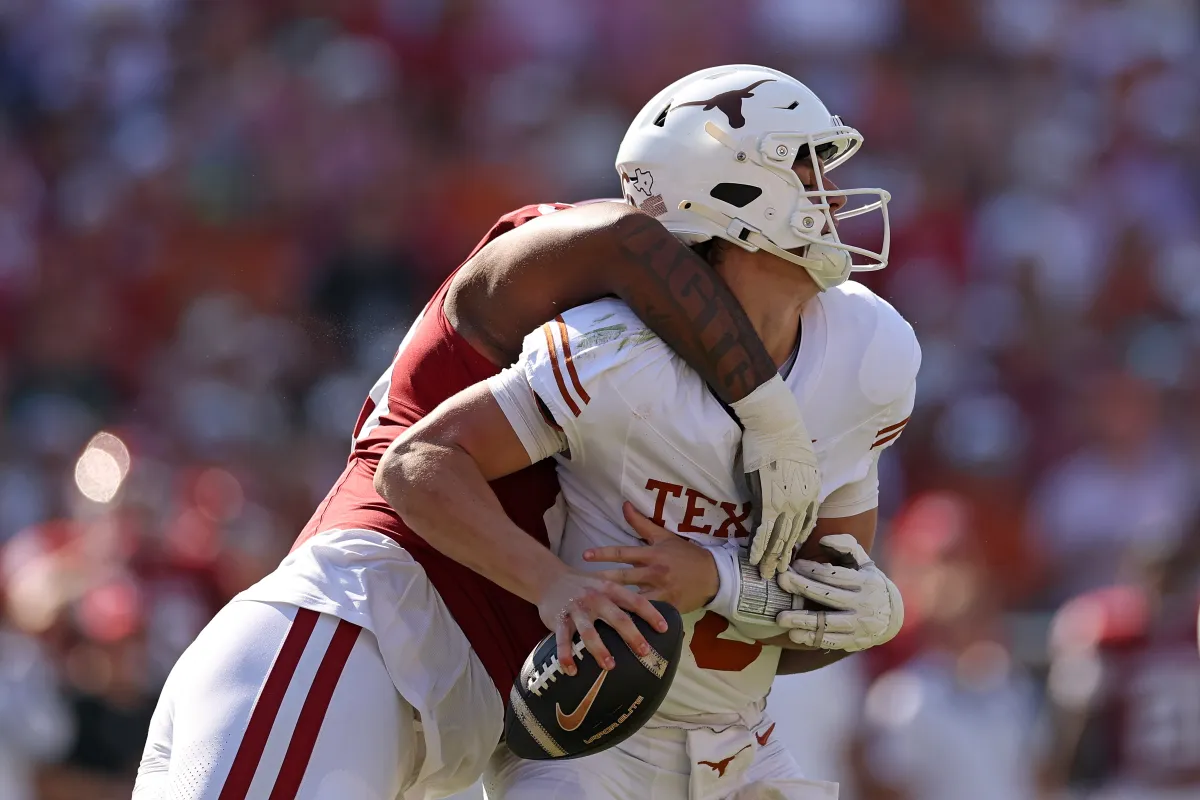
The Red River Rivalry has always had a way of turning the college football world on its head, but Saturday’s edition felt especially brutal. For the first time this season, the Texas Longhorns walked off the field with their heads down, carrying a 27-24 loss to an Oklahoma Sooners team that had been written off by nearly everyone. The Longhorns had arrived in Dallas as the No. 1 team in the country, wearing the crown that comes with a perfect record and a signature win over Ohio State. But in a rivalry where rankings mean little and emotion means everything, the Sooners reminded everyone that history is not written by numbers. Texas controlled the game for much of the first half, building a 17-7 lead that felt comfortable enough to quiet the doubts that had lingered around this team. But football is a game of momentum, and Oklahoma found a spark when it needed one most. By the time the final whistle blew, the Longhorns were left to process the kind of loss that stings not just because of the score, but because of how much was at stake. The celebration on the Oklahoma sideline told the story of a season saved, while the Texas locker room faced the harsh reality that perfection is no longer possible.
The game itself was a tale of two halves, and the contrast could not have been sharper. In the opening two quarters, Texas looked every bit like the No. 1 team in the nation. The offense moved the ball with purpose, the defense created pressure, and the Longhorns seemed to be in complete control. Oklahoma, meanwhile, struggled to find any rhythm, and the Sooners’ sideline grew quieter with every missed opportunity. But the second half brought a different energy, and much of that shift centered on Texas quarterback Arch Manning. Manning, who had stepped into the spotlight with the poise of a player far beyond his years, suddenly found himself under siege. The Sooners’ defense adjusted, and the young quarterback began to force throws that were not there. Two interceptions, including a devastating pick-six, turned the tide completely. The first mistake gave Oklahoma hope; the second gave them the lead. Add four punts from the Texas offense in the second half, and the formula for an upset was complete. It was not just that Texas lost the game—it was that the Longhorns seemed to lose their identity in the most critical moments. The same offense that had engineered a comeback against Ohio State suddenly looked uncertain, and the defense, so reliable earlier in the season, could not make the one stop that would have changed everything.
For Oklahoma, this was more than just a rivalry win. It was a lifeline. The Sooners had entered the season with high hopes, but those hopes had quickly faded. A loss to Michigan, followed by an uncomfortably close 14-6 win over New Mexico, had knocked Oklahoma out of the rankings entirely. The program was searching for answers, and head coach Brent Venables was facing growing questions about the direction of the team. Beating Texas, especially a No. 1 Texas, was the kind of statement that can shift the entire narrative of a season. The Sooners did not just win the game; they won with a resilience that had been missing in their earlier performances. They absorbed the early blows, kept fighting through the struggles, and then pounced when Texas began to unravel. For the players in crimson and cream, this was a reminder of what is possible when a team believes in itself. For the coaching staff, it was validation that the process was working even when the results did not show it. And for the fans, it was a moment of pure, unfiltered joy—the kind of win that makes all the frustration of the season disappear, at least for a week.
The loss also placed Texas in an exclusive and rather unflattering piece of history. According to ESPN Insights, the Longhorns became just the second team since 2010 to enter a game ranked No. 1 in the Associated Press poll and lose to an unranked opponent. The only other team to suffer that fate was Alabama, which fell to unranked Vanderbilt 40-35 in 2024. It is a distinction no program wants, and it raises difficult questions for a Texas team that had been viewed as the favorite to win the national championship. The Longhorns’ journey to No. 1 had been impressive, but it was never smooth. They entered the season ranked No. 5, and after a comeback win over then-No. 1 Ohio State on September 12, they claimed the top spot. Yet even in that victory, there were signs of vulnerability. Texas had to rally, and the Buckeyes had chances to finish the game. A few weeks later, Texas nearly blew a late lead against then-No. 14 Tennessee before holding on. The Longhorns were undeniably talented, but they were also imperfect. Saturday’s loss crystallized those imperfections in the most painful way possible. The pick-six, the punts, the missed opportunities—all of it added up to a performance that was not worthy of a No. 1 ranking. And now, instead of cruising toward the College Football Playoff, Texas must find a way to regroup with its margin for error suddenly reduced to zero.
Texas head coach Steve Sarkisian did not hide from the gravity of the moment. In his postgame remarks, he acknowledged the anger and frustration inside the locker room, but he also pointed to the issues that have been lurking beneath the surface all season. “There’s a level of anger and frustration because we know we have issues that need to be fixed, and we’re working on those issues and trying to get them fixed,” Sarkisian said, via On3. “But they reared their ugly head today against a quality team.” The honesty in those words reflects a coach who understands the stakes. The Longhorns are still talented enough to make a deep run, but they can no longer afford to make the same mistakes. The schedule does not get easier. Texas will next host the Florida Gators, who lost to South Carolina on Saturday and will be desperate to right their own ship. In the new College Football Playoff format, a one-loss Texas team is by no means eliminated, but the path becomes far more complicated. There is no longer any room for complacency, no more reliance on talent alone to overcome self-inflicted wounds. The Longhorns have to confront the very issues Sarkisian mentioned—the offensive inconsistency, the late-game decision-making, and the tendency to let momentum slip away. If they can fix those things, the loss to Oklahoma will be remembered as a wake-up call. If not, it will be remembered as the beginning of the end of a championship dream.
In the end, this game was a reminder of why college football remains so beloved and so maddening. The Red River Rivalry is not just a game; it is an emotional rollercoaster that brings out the best and worst in everyone involved. For Oklahoma, the victory was a season saved, a moment of redemption that will be celebrated long after the records are forgotten. For Texas, it was a fall from grace that will test the character of every player and coach. But in the chaos, there is also a human element that cannot be quantified. Players who had been doubted suddenly found belief. A quarterback who had been praised all season learned what it feels like to fail on the biggest stage. A coach who had been criticized for weeks felt the sweet relief of a monumental upset. The Longhorns now face the difficult task of picking up the pieces, knowing that the path forward requires more than just talent. It requires mental toughness, resilience, and the ability to learn from a pain that will not quickly fade. The Sooners, meanwhile, will savor this moment, but they too know that one win does not define a season. There is still work to be done, more games to be played, and more chances for the unpredictable magic of college football to strike again. For everyone who watched, Saturday was a reminder that rankings are temporary, rivalries are forever, and in this sport, anything can happen on any given Saturday.