


At the heart of this controversy is not whether Nidal Malik Hasan should pay for his crimes. On that point, even many of his harshest critics agree: Hasan, the former Army psychiatrist who killed 13 people and wounded 32 others at Fort Hood in 2009, deserves the death penalty. The real dispute is about how his death should be carried out—and, more specifically, whether the state should allow the world to watch. Defense Secretary Pete Hegseth announced earlier this week that the military would livestream Hasan’s execution by firing squad, a plan that President Donald Trump said he personally approved. The idea has produced a rare political rupture, with Democrats expressing overwhelming opposition and a notable number of Republicans breaking with Trump to say that livestreaming an execution is un-American, cruel, and beneath the dignity of a democratic society. The debate is not purely abstract. Hasan is scheduled to be killed at 1 p.m. on December 3, in a procedure that would make him the first military inmate executed by firing squad since World War II. For the families of the people he murdered, and for the survivors who still carry the physical and psychological scars of that terrible November morning, the question carries an added weight: Will justice be served with solemnity, or will it be turned into a spectacle that even the victims’ loved ones cannot escape?
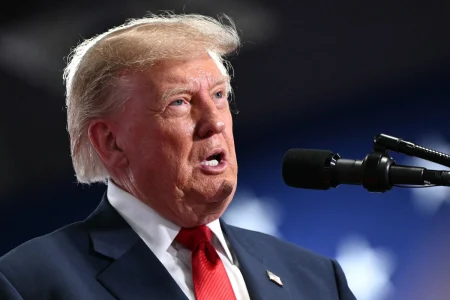
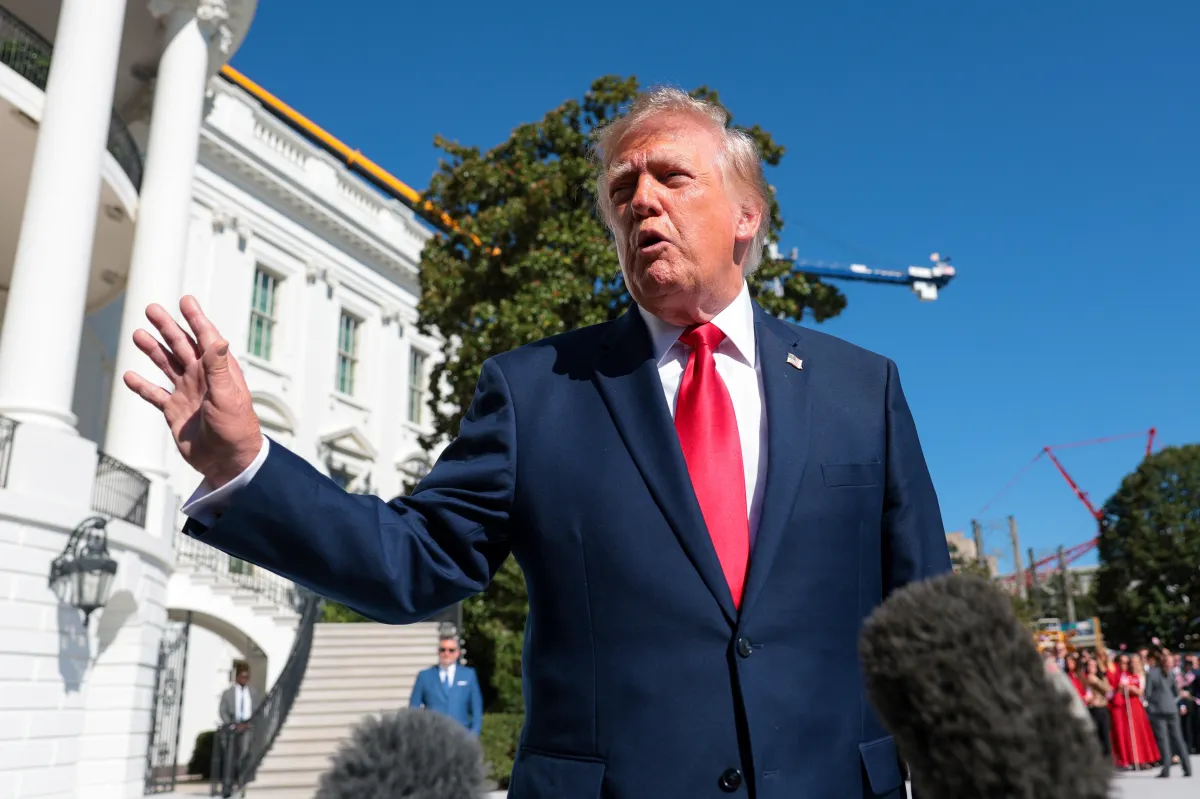
Trump’s public comments on the plan have been characteristically blunt. On Friday, he told reporters that he had personally approved the Pentagon’s decision to livestream the execution. When asked whether he worried the footage could be used as propaganda by extremists or enemies of the United States, Trump waved the concern aside, saying, “Well, they’re making a determination about that, but he will be killed.” He went on to say that Hasan deserved to be executed by firing squad, adding, “I really don’t care how he goes, as long as he goes. And I think that the death penalty is a very worthy way of going for him.” Hegseth, the defense secretary, has defended the plan in stark terms. Speaking aboard the USS Abraham Lincoln in an interview with the conservative outlet Real America’s Voice, he described soldiers with rifles forming the firing squad and insisted that the execution should be public. “We’ll make sure that people are able to watch it, that it’s public, because people need to understand that there’s serious consequences for these types of things,” he said. Vice President JD Vance, however, cast doubt on whether the livestream would actually happen. He said he did not believe the execution would be broadcast, and if it was, he would not watch it. The mixed signals from the administration reflect a deeper uncertainty: even those in power seem to realize that allowing millions of people to watch a man be shot to death is not the same as solemnly carrying out a legal punishment.
The political fallout was quick and fierce, and some of the strongest objections came from within Trump’s own party. Retiring North Carolina Senator Thom Tillis wrote on X that Hasan should face the death penalty but called the streaming plan “beyond disgusting.” “Public executions are what oppressive dictatorships like Iran and Afghanistan do,” he added. “It should not be happening in America.” Senator John Curtis of Utah invoked the ancient Roman philosopher Seneca, who warned that Rome’s bloody spectacles corrupted the people who watched them. “A civilization erodes when it cultivates an appetite for executions as a form of entertainment,” Curtis wrote. He urged Hegseth to reconsider, saying the victims deserved “justice administered with solemnity.” Senator John Kennedy of Louisiana said that if it were up to him, he would not televise or publicize the execution. “I just think it makes our society coarser,” he told reporters in Michigan. Representative Austin Scott of Georgia put it even more sharply: “I absolutely support the sentence of death, but live-streaming executions is what jihadists do. America is better than that.” Representative Ann Wagner of Missouri echoed that sentiment, writing, “Justice will be served, but the United States of America does not and should not livestream executions.” Representative Rob Bresnahan of Pennsylvania said an execution should not be a live-streamed spectacle and that the focus should remain on the victims and their families. “Their pain deserves respect, not a public show,” he wrote. Representative Tom Barrett of Michigan, who said he trained at Fort Hood the year before Hasan’s attack, described Hasan as an evil man who betrayed his country and killed American soldiers, but he still urged Hegseth to reconsider. “Our American values should strive to elevate human dignity,” Barrett wrote. “Making a public spectacle out of an already tragic situation is unnecessary and does not serve a public interest.” Representative Michael Baumgartner of Washington state said he supported bringing Hasan to justice but did not support the public livestream and believed the decision should be revisited. Nikki Haley, Trump’s former ambassador to the United Nations, pointed out that public executions are still carried out in countries like Iran and North Korea. “That is not the company we want to keep or the country we want to be,” she wrote.
Democrats were even less divided, but the most powerful moral critique may have come from Austin Sarat, a professor at Amherst College who has spent his career studying the death penalty. Sarat told Newsweek that death by firing squad is “always brutal,” and that livestreaming the execution would “turn that brutality into a spectacle of cruelty.” He rejected the idea that broadcasting an execution could serve an educational purpose. “Live-streaming will not educate,” Sarat said. “It will terrorize and is beneath the dignity that we owe to anyone, even those who commit the kind of horrific crime that Nidal Hasan did.” His words raise an uncomfortable question: what exactly would the public be watching? Not justice in the abstract, but a human being, restrained and helpless, being shot in the chest by a squad of armed soldiers. The event would be clinical and violent at the same time, broadcast into millions of homes, offices, and phones. It is hard to imagine that the victims’ families would find comfort in that. The debate also arrives at a time when capital punishment in the United States is already under intense scrutiny. The botched execution of Christa Pike in Tennessee has renewed questions about how the death penalty is carried out and whether the state can be trusted to administer it without unnecessary suffering. Those concerns are now amplified by the prospect of a public execution, which many legal experts say does nothing to deter crime and instead feeds the darkest appetites of human nature. As Senator Curtis suggested, a civilization is not measured by its willingness to kill but by its willingness to remember that even the guilty retain some claim to human dignity.
The crime itself is important to remember, not because it justifies the livestream, but because it explains why so many people want Hasan to die. On November 5, 2009, Hasan, an Army psychiatrist and major, walked into a medical building at Fort Hood, Texas, where soldiers were waiting to receive medical clearance before deploying to Afghanistan and Iraq. He shouted “Allahu akbar”—Arabic for “God is great!”—and then opened fire. He shot at soldiers who were unarmed, trapped, and fleeing toward a parking lot. By the time the attack ended, thirteen people were dead and more than thirty were wounded. Hasan himself was shot by law enforcement and paralyzed from the waist down; he now uses a wheelchair. At his court-martial in 2013, he admitted he was the shooter and said he had “switched sides.” He explained the massacre as an attempt to stop soldiers from deploying to Afghanistan and killing fellow Muslims. A military jury convicted him on all forty-two counts and sentenced him to death. The appeals process dragged on for years, and the Army said it was not resolved until the U.S. Supreme Court denied Hasan’s request for review in March 2025. Hegseth has noted that the military has not executed a service member by firing squad since World War II; the last military execution of any kind was the hanging of Army Private John Bennett in 1961. The execution date of December 3 now stands as a singular and deeply unsettling moment in American military history.
In the end, the dispute over the livestream is not really about whether Nidal Hasan deserves to die. Nearly every elected official who objected to the plan also said they supported his sentence. The harder question is what the United States reveals about itself when it decides to perform a killing in public. Public executions have long been associated with tyrants and terrorists, not with democratic republics that claim to value human rights and the rule of law. When the state kills someone, it should do so not to entertain the public or send a thrill through the internet, but to carry out a judgment that has been reached through careful legal process. The Republicans who broke with Trump on this issue are not defending Hasan. They are defending a particular idea of America—one in which justice can be severe without being sadistic, and punishment can be final without being theatrical. Senator Curtis was right to warn that a civilization erodes when it cultivates an appetite for executions as entertainment. The proposed livestream would not heal the families of the victims, and it would not make the country safer. It would only satisfy the curiosity of strangers and mark a quiet turning point in how we understand justice. Whether or not the execution is ultimately broadcast, the message from these lawmakers is clear: even in the face of unimaginable evil, Americans can choose dignity over spectacle. That choice may be the last and most important form of justice the victims receive.