




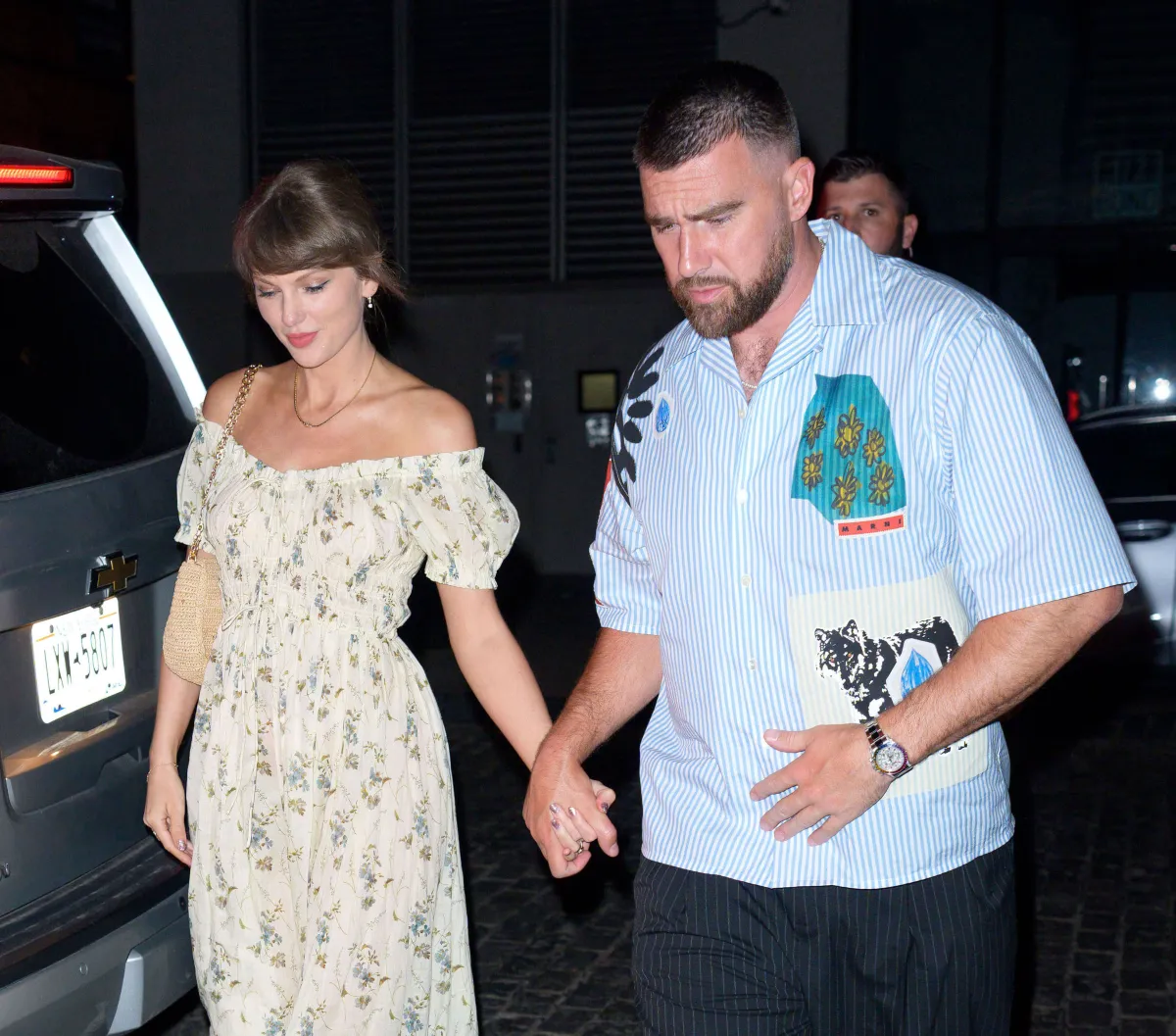
Long before any official invitations have been printed, before any save-the-dates have dropped into the mailboxes of the global elite, and before either Taylor Swift or Travis Kelce has even publicly confirmed an engagement, a massive, shadow-financial ecosystem has sprung up around their impending union. Across modern prediction platforms like Kalshi and Polymarket, more than $4 million has already been traded on the intimate details of a wedding that technically does not yet exist. This staggering figure does more than illustrate the obsessive, hyper-fixated nature of modern fan culture; it highlights how deeply the mechanics of Wall Street have merged with private lives, turning a genuine love story into a series of highly lucrative, tradable commodities. For platforms that historically specialized in political outcomes or macroeconomic trends, entertainment trading has exploded from tens of millions to several hundred million dollars, driven in large part by a demographic shift that has seen the proportion of female traders double over the past year. Today, everyday observers are not merely passive consumers of celebrity gossip; they are active stakeholders, buying and selling financial contracts on everything from the bridesmaid roster to the geographical coordinates of the altar, proving that in our current cultural climate, love is not just a spectators’ sport, but a high-stakes investment.
The epicenter of this speculative frenzy currently points directly to New York City, where a flurry of municipal activity has sent the prediction markets into overdrive. After months of fluctuating odds that saw Swift’s beloved, oceanfront Rhode Island estate trading neck-and-neck with Manhattan, New York has emerged as the overwhelming favorite, commanding an 80 percent probability on Kalshi and an even more staggering 85 percent on Polymarket. The catalyst for this sudden consensus was the discovery of a public permit application filed to secure extensive street closures surrounding Madison Square Garden from July 2 through July 4, specifically to facilitate a massive, highly secure private event on July 3. While neither the pop star nor the Kansas City Chiefs tight end is explicitly named on the municipal paperwork, the timing has set off a wave of intense excitement. July 2026 is poised to be one of the most chaotic periods in New York’s modern history, with the city simultaneously preparing to host the FIFA World Cup, celebrate the historic 250th anniversary of the United States, and launch the annual Macy’s Fourth of July fireworks. City officials have playfully acknowledged the impending logistical storm, with local police and politicians publicly joking about the sheer, unprecedented demand such a weekend will place on the New York City Police Department. Yet, while city planners prepare for the security challenges of managing a massive tent designed for up to a thousand guests in the heart of Midtown, some locals remain skeptical, pointing out that Madison Square Garden—despite its state-of-the-art secure underground access and unparalleled crowd control capabilities—might lack the traditional, softer glamour typically associated with the world’s most famous romantic icon.
Behind the logistical grandeur of the venue lies an intensely human drama regarding who will actually stand beside the couple on their big day, a subject that has turned friendship into a quantifiable metric of public speculation. Abigail Anderson Berard, Swift’s childhood best friend who was famously immortalized in her early songwriting, remains the runaway favorite to serve as Maid of Honor with an 85 percent probability, followed closely by longtime confidante Selena Gomez at 76 percent and supermodel Gigi Hadid at 54 percent. However, these numbers also reflect the cold reality of shifting social circles and the inevitable fractures that happen under the harsh glare of public scrutiny. The once-ubiquitous presence of Brittany Mahomes in Swift’s luxury suite has dramatically cooled, with her odds of appearing as a bridesmaid plummeting to a mere 8 percent as seasonal breaks in the NFL calendar have kept the two apart. Even more dramatic is the collapse of Blake Lively’s odds, which have also sunk to 8 percent following a highly publicized legal dispute with director Justin Baldoni that inadvertently dragged the notoriously private Swift into the headlines. The unsealing of private text messages, which revealed a slightly strained dynamic where Swift compared Lively’s communications to a “mass corporate email,” has served as a fascinating, grounded reminder that even the world’s most powerful icons navigate the awkward, sometimes painful realities of changing adult friendships. On the groom’s side, the dynamics appear far more stable and traditional: Travis Kelce’s brother Jason is the definitive favorite for Best Man at 89 percent, followed closely by his legendary quarterback teammate Patrick Mahomes, and Swift’s own brother Austin, illustrating a tight-knit circle of family and athletic brotherhood.
While the core wedding party is a study in lifelong loyalty and shifting alliances, the broader guest list has become a playground for both expected royalty and delightful, rule-breaking rebels who refuse to play by the standard celebrity playbook. Beyond the anticipated presence of collaborators like Jack Antonoff and rising stars like Sabrina Carpenter, several high-profile guests have already publicly vocalized their excitement, bringing a refreshing, down-to-earth perspective to an otherwise heavily stage-managed event. San Francisco 49ers star George Kittle recently made headlines by openly declaring his intention to violate one of the central rules rumored to have been established by the ultra-wealthy couple. Explaining his defiance on a popular sports podcast, Kittle joked that despite the “no gifts” request undoubtedly designed to spare billionaires the burden of useless clutter, he intends to purchase them a thoughtful gift anyway, noting with simple humor that while they are certainly rich enough to buy whatever they want, the gesture of giving remains a fundamental human joy. This desire to ground a massive, multi-million-dollar production in normal human connection is shared by other confirmed attendees like Kansas City Chiefs coach Andy Reid, actress Suki Waterhouse, and Jason Kelce, all of whom have spoken of the event not as a calculated branding exercise, but as a genuine, joyous opportunity to watch two hard-working, highly visible people celebrate their mutual devotion.
From a financial and logistical standpoint, the scale of this celebration is set to reshape the economy of modern weddings, introducing a new benchmark for luxury that wedding planners have already begun to dissect with awe. Spearheaded by rumored event planner Mark Seed, a figure famed for his absolute discretion and his experience handling high-profile nuptials for stars like Jennifer Lawrence, the event’s execution will be nothing short of monumental. Industry experts estimate that renting Madison Square Garden for a multi-day window—factoring in a day for elaborate set design, the ceremony itself, and a day for tear-down—will cost upwards of $3 million in venue fees alone, pushing the total wedding budget easily to between $10 million and $20 million once elite catering, high-level private security, and custom entertainment are secured. To put this in perspective, the total amount currently wagered on the prediction markets could fund roughly 111 average American weddings, while the actual cost of the event itself would be equivalent to nearly 500 ordinary ceremonies, illustrating the staggering wealth inequality inherent in modern celebrity culture. Yet, even a $20 million budget remains dwarfed by the ultra-luxury tier of the global elite, such as Jeff Bezos’ recent Venetian spectacle which cost an estimated $50 million, meaning that while Swift and Kelce are planning a night of historic grandeur, it remains a relatively modest affair compared to the infinite-budget spectacles of tech oligarchs. Nonetheless, the true economic impact of this wedding will not be measured by the venue buyout, but by “Swiftonomics”—the immediate, global consumer trends triggered by her custom, likely couture gown, with designers like Oscar de la Renta, Vivienne Westwood, and Elie Saab waiting in anticipation to see which house will define bridal fashion for the next decade.
Ultimately, the true significance of the Swift-Kelce wedding lies in its status as the definitive, modern “American Royal Wedding,” serving as a cultural touchstone that mirrors the grand spectacles of the British monarchy but reinterprets them through the lens of democratic celebrity. Royal commentators have pointed out that while weddings like those of Prince William and Kate Middleton, or Prince Harry and Meghan Markle, carry constitutional weight, military precision, and centuries of state history, Swift and Kelce command a different, perhaps more organic form of public devotion. This is a union that bridges the two most dominant pillars of contemporary American entertainment—the global, record-breaking dominance of pop music and the communal, high-stakes passion of the National Football League—creating a cultural powerhouse that feels uniquely representative of twenty-first-century life. Where royal weddings rely on traditional state protocol, this event celebrates the triumph of merit-based celebrity capitalism, where status is earned through cultural clout, creative genius, and athletic excellence. For the millions of fans who will watch from afar, tracking every leaked detail, analyzing every guest appearance, and celebrating every romantic milestone, this wedding represents a rare moment of collective, shared joy in an increasingly fragmented world, proving that we still crave the magic of a grand, unifying fairy tale, even if we have to build it ourselves out of pop songs, touchdowns, and the bright lights of New York City.