


Here is a humanized and expanded summary of the content, structured into six substantial paragraphs.
—
There is an almost electric hum of anticipation surrounding the University of Texas football program as the 2026 season approaches, a palpable sense that this could finally be the year the Longhorns reclaim their place at the very pinnacle of the college football pantheon. The preseason polls have been kind, blessing them with a No. 5 ranking, and for good reason. The team is led by a bonafide superstar in quarterback Arch Manning, a player whose name carries the weight of football royalty and whose arm is already being measured for a Heisman Trophy bust. Scouts whisper about him being a top-five pick in the 2027 NFL Draft, and the entire city of Austin seems to be holding its collective breath, ready to witness greatness. Yet, there’s a quiet undercurrent of anxiety that comes with such astronomical expectations. The Longhorns have been here before, standing on the precipice of destiny, only to see it all come crumbling down. Last year was supposed to be a coronation, a re-emergence into the national championship conversation, and instead, the team stumbled against Ohio State in the season opener, spending the rest of the year in a desperate, exhausting game of catch-up within the brutal SEC. The facade of invincibility was cracked, and the subsequent disappointment left a bitter taste that this new season has to wash away.
To add even more fuel to this already gigantic fire, the Longhorns have brought in a game-changing talent in five-star receiver, Cam Coleman. Coleman isn’t just another wide receiver; he’s a dynamic playmaker, a human highlight reel capable of taking a simple screen pass to the house from anywhere on the field. He’s the kind of electrifying threat in the receiving game that the team sorely missed in those crucial moments last season, the kind who can turn a 5-yard hitch into a house call and demoralize a defense. And while Coleman’s presence is a massive boost to the offense’s versatility, it also serves as a stark reminder of what was missing before. The ink on his commitment had barely dried when the narrative shifted. If the Longhorns were this talented last year and still fell short, adding another superstar only raises the question of how high the bar has been set. He is a crucial puzzle piece, but a piece that also makes a failure to reach the national championship game an even more glaring indictment of the team’s leadership and overall program trajectory. The foundation has been fortified, and the pressure to not just compete but to dominate has never been higher.
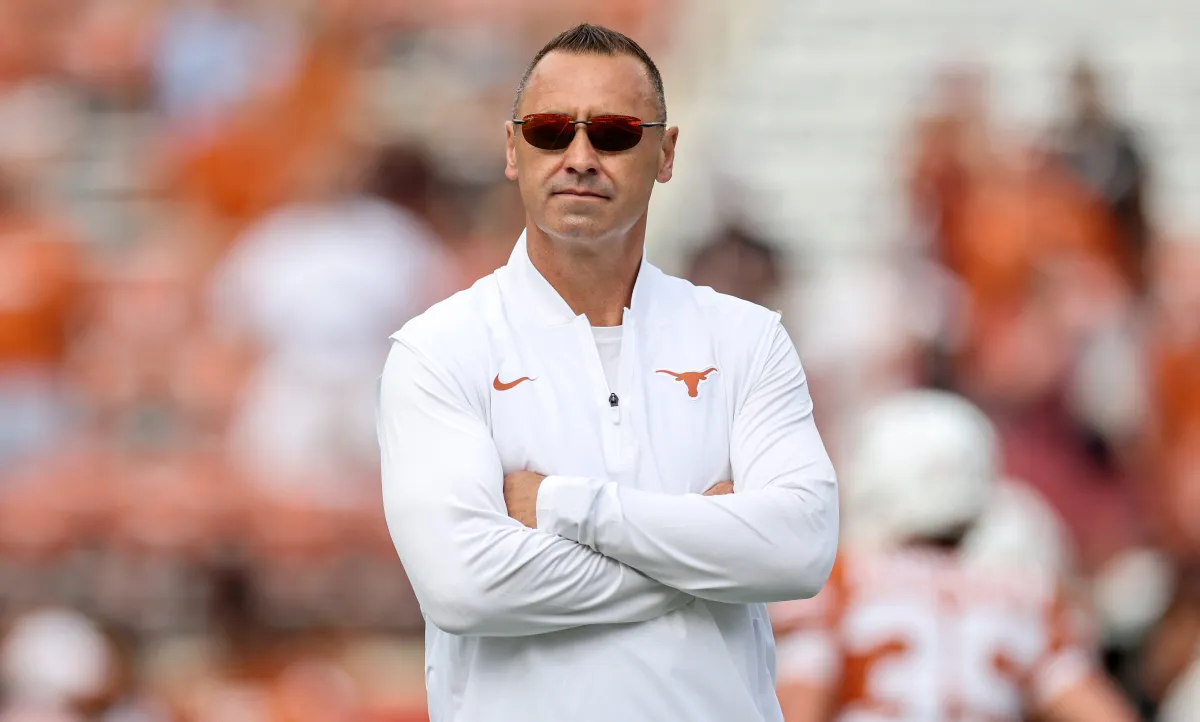
The pressure doesn’t just rest on the shoulders of the quarterback or the team’s on-field play; it casts a long, heavy shadow over the head coach, Steve Sarkisian. The narrative is no longer about whether this team is good; it’s about what happens if they fail to meet their astronomical ceiling. Steve Godfrey of Yahoo Sports recently articulated the high-stakes nature of the upcoming season with stark clarity, suggesting that if the Longhorns don’t advance to the national championship picture, the heat on Sarkisian will be scorching. “Texas is going to tell you they’re as good as Ohio State, as an overall machine,” Godfrey explained, “So, why did you need to be told that you had to have premier wide receiver talent for your quarterback?” It’s a pointed question that cuts to the heart of the coaching staff’s ability to construct and motivate a complete roster. Godfrey went on to state that without a performance of the absolute highest order—making the final four, earning double-digit wins, and playing deep into January—there would be a “serious referendum” on Sarkisian’s tenure. This isn’t just speculation; it’s a brutal, realistic assessment of the modern college football landscape where a coach is only as secure as his last big win.
It’s easy to forget in the midst of this impending doom, that Steve Sarkisian has, by most measures, done an exceptional job resurrecting this program from the doldrums of mediocrity. His first two seasons in Austin were a rollercoaster, a period of growing pains that left him with a barely-better-than-.500 record and a legion of doubters. He was learning on the fly, trying to build a giant, and the results were messy. But Sarkisian proved his mettle by turning things around, leading Texas to three consecutive ten-plus-win seasons. He took a good team and made it a great one, establishing a culture of winning that had been absent for over a decade. But in the cutthroat world of SEC football, positive regression isn’t always enough. The team’s failure last year to make the expanded 12-team College Football Playoff, a year after making it with Quinn Ewers at the helm, was a major disappointment, a jarring regression for a team with national title aspirations. That previous success under Ewers only magnifies the current predicament: he went to the dance, and Manning hasn’t, which has unfairly created a narrative that perhaps the coach can’t get it done with his guy.
The core of this entire high-stakes drama lies in the sheer, almost obscene, amount of talent assembled in that locker room. This isn’t a roster built on potential; it’s a roster built to win an NFL draft. Scouts are salivating over the possibility of seeing five or more Longhorns selected in the first round of next year’s draft, a statistic that underscores a painfully obvious truth: with a team this talented, anything less than a berth in the College Football Playoff semifinals would be an unmitigated disaster. Every snap executed, every route run, and every tackle will be scrutinized under a microscope as the season progresses, and the pressure of that immense potential could either forge a champion or shatter a team. The margin for error is razor-thin, and the whispers of “what’s wrong with Texas?” will morph into a full-blown uproar if the team stumbles early. Failure isn’t just a loss on a Saturday; it’s a referendum on the entire decade of rebuilding, a sign that the foundation is fundamentally flawed.
In the end, as the Longhorns prepare to take the field, they stand on the precipice of a knife’s edge, caught between glory and ignominy. For Coach Sarkisian, it’s a story of redemption, of second chances, and the immense burden of living up to a fully-realized potential. He has spent the last three years building a program, but now he faces his favorite and worst enemy: a season where he can’t hide. The national championship is the only acceptable outcome. A 10-win season in a tough conference, once a cause for celebration, would feel like a failure. The human element lies in the quiet resilience of a coach who has fought his way back from the brink, only to face his toughest opponent yet: the weight of a city’s sky-high expectations. This isn’t just about football anymore; it’s about a coach proving he can win the biggest game, a quarterback proving he’s a worthy heir, and a fanbase desperately hoping that this time, the dream won’t die in November, but will be etched in history in January. The pressure is immense, but so is the opportunity for a storybook ending.