


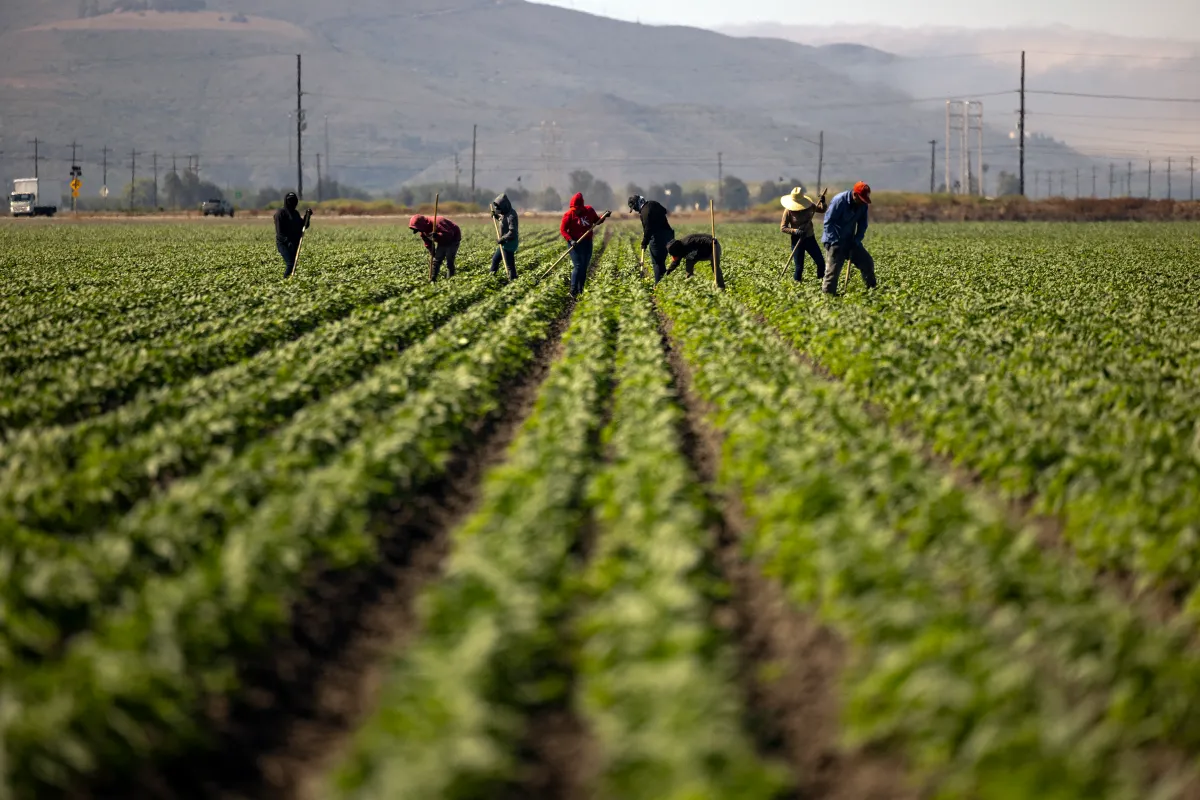
Behind the pristine rows of produce filling America’s grocery stores lies a grueling, highly vulnerable human reality: the backbone of the nation’s agricultural sector is heavily supported by an undocumented workforce that operates in the shadows. To address the systemic instability of this vital labor supply, House Agriculture Committee Chairman Glenn “GT” Thompson, a Pennsylvania Republican, alongside a bipartisan coalition of lawmakers, introduced the Securing Agriculture’s Workforce Act of 2026. This ambitious legislative effort represents one of the most significant attempts to overhaul agricultural labor in decades, but it has simultaneously ignited a fierce, deeply emotional ideological civil war within the Republican Party. For some conservative lawmakers and hardline immigration restrictionist groups, the bill is not a pragmatic solution, but rather an unacceptable form of “amnesty” that rewards unlawful behavior. At its core, the debate highlights a profound national tension between the immediate economic anxieties of American farmers, who are desperate for stable labor to keep their operations running, and the strict political demands of border-security advocates, who demand zero tolerance for immigration violations. This clash exposes a growing and complex rift between those who view immigration strictly through the lens of national security and those who see it as an economic necessity for keeping food on American tables.
To understand the scope of the proposed legislation, one must look at how it seeks to fundamentally modernize the H-2A agricultural guest worker program, a system that has not seen major statutory overhauls since its inception in 1986. Under current laws, the program is strictly seasonal, leaving year-round agricultural operations like dairy and livestock farms struggling to secure legal foreign labor during their constant, non-seasonal production cycles. Thompson’s bill addresses this by expanding H-2A visa access to these year-round employers and streamlining administrative hurdles, such as allowing labor certifications to remain valid for up to three years instead of requiring yearly renewals. Crucially, the bill’s most controversial provision would allow undocumented agricultural workers already living and working within the United States to apply for H-2A status without having to first leave the country. By waiving certain past immigration violations tied directly to unauthorized farm work, the bill seeks to transition this existing, unauthorized workforce into a legal, regulated temporary framework. Proponents argue this is a highly practical way to stabilize the domestic food supply chains, offering undocumented individuals a chance to work without the constant fear of deportation, while explicitly stopping short of offering them a direct pathway to green cards or permanent United States citizenship.
Despite these assurances that the bill does not offer a pathway to citizenship, the proposal has faced immediate, blistering resistance from immigration hardliners within the Republican Party who refuse to compromise on enforcement. High-profile figures such as Florida Representative Anna Paulina Luna have publically rejected the bill, arguing that allowing undocumented workers a legal channel to stay bypasses the millions of people trying to navigate the immigration system legally. Luna expressed deep frustration, stating that we cannot allow lawbreakers a “free pass” while the official immigration system remains bogged down and broken, advocating instead for a temporary pause on all immigration until robust reforms are enacted. This sentiment was echoed loudly across social media, where Florida Governor Ron DeSantis declared that people did not vote for amnesty in 2024, while Texas Representative Chip Roy’s office and the House Freedom Caucus demanded a complete focus on securing the southern border and increasing deportations. Seeking to clarify the linguistic battleground of this dispute, Julia Gelatt of the nonpartisan Migration Policy Institute pointed out that while the bill does waive penalties for unauthorized workers—fitting some broad definitions of amnesty—it differs fundamentally from traditional amnesty policies because it fails to provide any long-term pathway to permanent legal residency or citizenship, showcasing how the political definition of the word has been weaponized in modern political theater.
This sharp disagreement has laid bare the complex political mathematics and geography of a divided House of Representatives, where the bill’s eventual path forward remains highly uncertain. The legislation currently boasts 51 cosponsors in the House, which includes 47 Republicans and four Democrats—a coalition that reflects a distinct geographical divide between lawmakers representing rural, agricultural districts and those representing highly conservative, suburban, or border-adjacent areas. On paper, if every single one of these cosponsors maintains their support on the House floor, the bill could theoretically gather the necessary votes to pass the chamber, assuming a full turnout of the House’s 218 Republicans, 212 Democrats, and single independent. However, actually bringing the bill to a vote is a treacherous path, especially given the threat of rebellion from the influential House Freedom Caucus. Furthermore, the legislative hurdle is even higher in the closely divided Senate, where Republicans hold a slim majority and any controversial immigration bill would require significant bipartisan support to overcome a filibuster. This internal party deadlock illustrates how the pressure of local economic survival for farmers frequently collides with national party platforms, especially as the Trump administration continues to advocate for aggressive mass deportation policies that could severely uproot local agricultural workforces.
For the nation’s agricultural producers, the urgency of this bill is not a theoretical debate about legal terminology, but a highly pressing crisis of economic survival. Organizations like the American Farm Bureau Federation have released staggering statistics to demonstrate the absolute lack of domestic interest in agricultural labor, noting that in 2025, out of nearly 415,000 farm jobs advertised through the H-2A program, only 182 domestic applicants applied. Agricultural groups argue that family farms are being pushed to the brink of bankruptcy because there are simply no domestic workers willing to perform the grueling, manual labor required to harvest crops and manage livestock. Brian Gannon, the Vice President of Government Relations at LaborMex, emphasized that a secure food supply is ultimately dependent on a secure, legal, and dependable workforce, praising the bill as a vital step toward protecting American food production and ensuring consumers continue to have access to stable, affordable domestic goods. Chairman Thompson has framed the issue in even starker terms, warning that disruptions to the food supply represent one of the greatest national security threats facing the country, and that failing to modernize the H-2A program directly jeopardizes American independence and agricultural self-sufficiency.
On the other end of the political spectrum, restrictionist groups like NumbersUSA offer a strikingly different critique, viewing the bill as a corporate giveaway that harms workers under the guise of an agricultural rescue packages. Jeremy Beck, Co-President of NumbersUSA, argued that the legislation represents a form of corporate amnesty that allows employers to engage in illegal hiring practices while trapping foreign laborers in an unequal, dependent system. Beck warned that by anchoring undocumented workers to the agricultural industry, the bill lowers domestic wages, allows employers to deduct housing expenses from paychecks, and creates a “captive labor” force that has little freedom to leave or seek better opportunities. He cautioned that relying on low-wage guest workers removes any incentive for American agriculture to modernize and invest in advanced technological mechanization, pointing out that other developed nations facing labor shortages have successfully transitioned to automated farming rather than relying on imported labor. As the debate rages on, the White House has largely avoided the controversy by deferring questions to a tight-lipped State Department spokesperson who stressed the administration’s commitment to upholding the highest standards of safety in the visa process, leaving the fates of millions of undocumented farmworkers, family-owned farms, and the stability of the American food supply hanging in a state of anxious, unresolved limbo.