

There is a particular kind of magic that arrives with Nobel season. For a few days each autumn, the world pauses to celebrate discoveries that did not simply improve a field of study, but permanently changed the way we understand reality. The Nobel Prizes are often called the most prestigious awards on Earth, and this year’s scientific prizes remind us why. They honor people who turned impossible questions into practical tools, who spent decades chasing invisible phenomena, and who refused to accept that some mysteries were too strange to solve. This year, the prize in physiology or medicine went to the inventors of a technology that acts like a light switch for the brain, allowing scientists to turn specific neurons on and off with incredible precision. The prize in physics went to the visionary behind a buried Antarctic observatory that catches ghostly particles from beyond our solar system. And the prize in chemistry went to two researchers who cracked one of the most ancient and elegant puzzles of organic chemistry: why the molecules of life almost always exist in one of two possible mirror-image forms. At first glance, these achievements seem unrelated. One is about the machinery of the mind. Another is about the outermost edges of the cosmos. The third is about the subtle asymmetry of the chemical world. But look more closely, and they share something profound. Each prize was born from curiosity, persistence, and the courage to ask questions that others had dismissed or considered unanswerable. Nobel season is not just a roll call of great names; it is a reminder that human ingenuity, at its best, is a form of hope made visible.
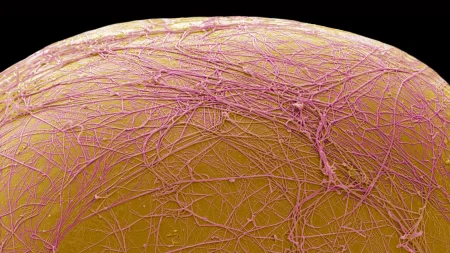
Consider the prize in physiology or medicine, whose origin is as surprising as it is beautiful. The human brain is often described as the most complex structure in the known universe. Inside your skull, nearly 90 billion neurons form a living network of roughly 100 trillion connections. Through this dense web, electrical impulses and chemical signals flow constantly, allowing you to think, move, remember, dream, and feel. But for decades, neuroscientists were trapped in a frustrating position. They could observe the brain from the outside, or stimulate large regions of it with electrodes, but they could not isolate a single circuit and ask exactly what it does. They dreamed of a switch—a tool that could turn one group of neurons on or off at will, with precision fine enough to link specific cells to specific behaviors. That switch arrived from an unexpected place: a single-celled green alga called Chlamydomonas. In the early 2000s, biophysicists Peter Hegemann and Georg Nagel discovered a protein in the alga’s eyespot that responds to light. When light strikes the protein, called channelrhodopsin, it opens like a pore in the cell membrane, allowing charged ions to rush in. That surge of ions generates an electrical impulse—the same kind of impulse neurons use to communicate. It was, in effect, a biological light switch hidden in pond scum. Stanford neuroscientist Karl Deisseroth then realized what this discovery could mean for neuroscience. He and his colleagues inserted the gene for channelrhodopsin into rat neurons in a dish, and the cells fired in rapid response to pulses of light. Then they moved into living mice, implanting optical fibers through the rodents’ skulls. By beaming blue light into precise regions of the brain, they could control the animals’ whiskers in real time. That was the birth of optogenetics, a technology that transformed neuroscience from a field of observation into a field of precise intervention. Today, optogenetics is used to map the neural circuits behind anxiety, addiction, memory, sleep, and perception. It has helped scientists understand what goes wrong in depression and dementia. It is even being tested as a way to restore sight in people whose retinal cells have degenerated, and it is helping researchers explore how the heart and brain shape the way we experience the world. A dream that once seemed impossible has become a staple of laboratories around the globe.
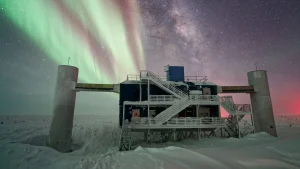
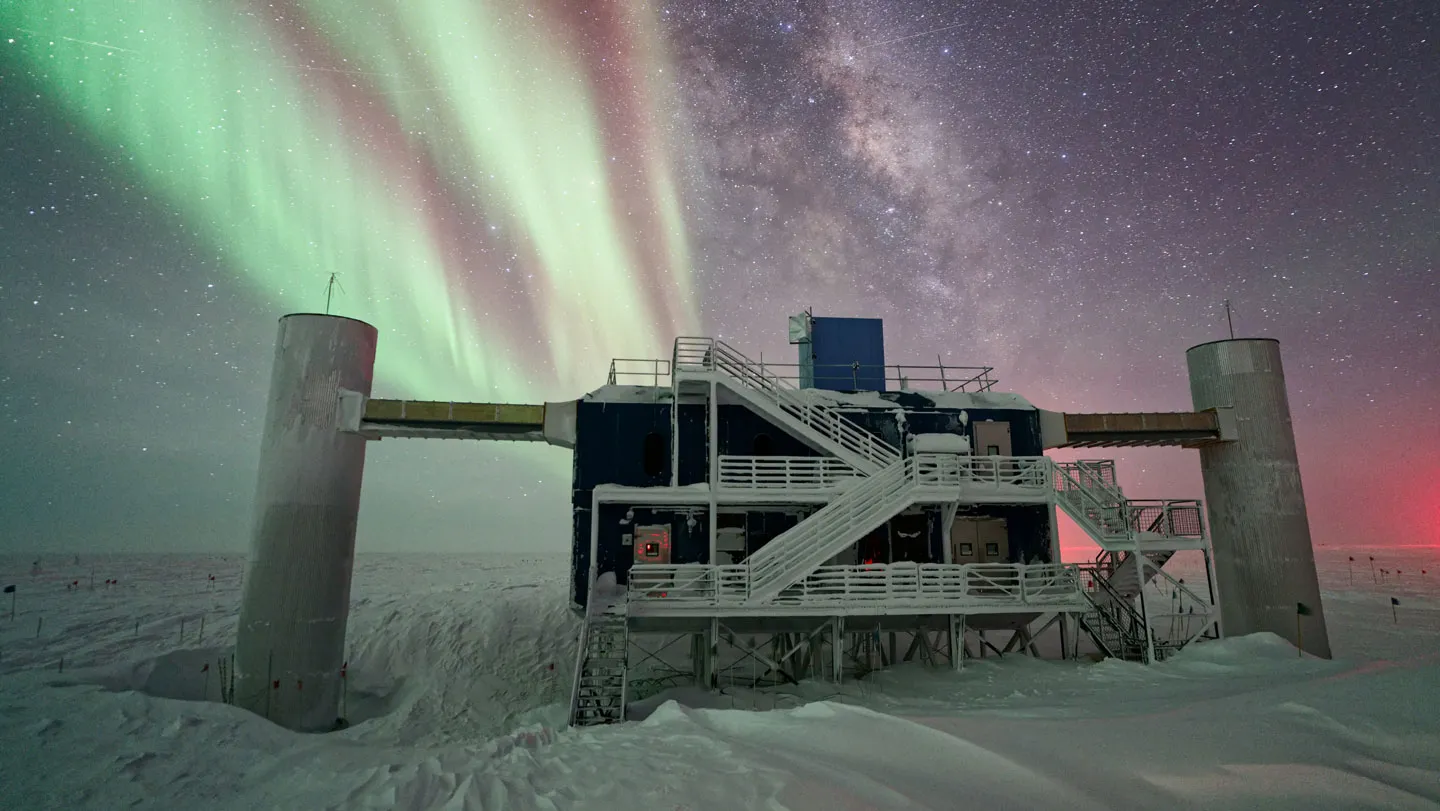
The prize in physics, meanwhile, took science to one of the most isolated places on Earth in order to catch the most elusive particles in the universe. At the South Pole, buried deep beneath the Antarctic ice sheet, there is a block of ice unlike any other. It is a cubic kilometer of ancient, transparent ice, threaded with thousands of spherical sensors that hang like beads on long strings. This is the IceCube Neutrino Observatory, and it was built for one astonishing purpose: to detect neutrinos. Neutrinos are subatomic particles so light, so tiny, and so indifferent to ordinary matter that they pass through almost everything without leaving a trace. Billions of neutrinos stream through your body every second, most of them produced by nuclear reactions in the sun. But some neutrinos are born in far more violent places—around supermassive black holes, in exploding stars, in collisions of unimaginable energy somewhere beyond our solar system. These cosmic neutrinos are precious messengers. Unlike light or charged particles, neutrinos are not deflected by magnetic fields and barely interact with matter, so their paths point almost directly back to their sources. If scientists could catch them, they could open a completely new window onto the universe. The problem was that catching a neutrino is almost impossibly hard. Most pass through entire planets without ever colliding with anything. For decades, scientists searched for a way. Physicist Francis Halzen found the answer in Antarctic ice. Deep within the ice sheet, the environment is dark, silent, and transparent—a perfect stage for the rare flashes of light that are produced when a neutrino finally crashes into an atomic nucleus. Halzen devoted years to making his vision real. His greatest fear, he later admitted, was that even a cubic kilometer of ice would not be large enough to see the cosmic neutrinos beyond our atmosphere. IceCube was completed in 2011, and within two years, it had already caught high-energy neutrinos arriving from far beyond the solar system. That discovery was only the beginning. In 2018, IceCube traced a neutrino back to a blazar—a galaxy whose core is powered by a supermassive black hole blasting tremendous jets of energy across space. In 2023, researchers used a decade of IceCube data to produce the first map of the Milky Way ever made using neutrinos instead of light. The ghostly particles that once seemed irrelevant to our understanding of the cosmos had become guides to the hidden architecture of the universe.
The prize in chemistry, on the other hand, found its subject much closer to home, hidden in the everyday shape of the molecules that make us who we are. Look at your own hands. They are mirror images of each other; perfectly similar, yet impossible to superimpose one on top of the other. Many molecules have exactly this property. They exist in two forms called enantiomers that contain the same atoms, arranged in the same order, but with a three-dimensional structure that is handed—one version is left-handed, the other right-handed. This property, known as chirality, is everywhere in chemistry. But here is the puzzle that confounded scientists for generations: in living things, chirality is not balanced. The molecules of life are overwhelmingly one-handed. Amino acids, the building blocks of proteins, are almost always left-handed. The sugars that make up DNA and RNA are almost always right-handed. When chemists tried to create chiral molecules in the laboratory, they naturally produced equal mixtures of both mirror-image forms. So how did life end up so lopsided? What natural process first chose one hand over the other? This year’s Nobel Prize in chemistry honored two scientists who helped answer that question. Henri Kagan of Université Paris-Saclay discovered in 1986 that specially designed catalysts could drive chemical reactions to produce a much greater amount of one enantiomer than chemists had previously thought possible. Then, in 1995, Kenso Soai of the Tokyo University of Science went even further. He found a way to create a chiral catalyst that could reproduce itself, amplifying its own handedness with every step. Starting from almost nothing, the reaction could produce a final product made up almost entirely of a single mirror-image form, without any preexisting chiral molecule to guide it. It was a spontaneous breaking of symmetry, echoing the way life itself may have begun. As one Nobel committee member put it, it was probably the coolest experiment in organic chemistry. And the practical stakes are immense. Many of the drugs we take are chiral molecules, and one enantiomer may heal while its mirror-image twin may harm or do nothing. The tragic history of thalidomide, a sedative prescribed in the 1950s that caused severe birth defects, remains a chilling illustration of how much depends on molecular handedness. By learning how to control chirality, chemists can create safer medicines and understand more deeply why life on Earth is the way it is.
Look at these three stories side by side, and a larger picture begins to emerge. Scientific discovery is not a predictable path. It is a tangled, branching journey, full of dead ends and surprising detours. Optogenetics did not come from a grand plan to cure brain disease; it came from a scientist looking at a green alga and wondering how it senses light. Neutrino astronomy did not come from a comfortable laboratory; it came from a physicist who looked at Antarctic ice and saw a giant telescope. The chemistry prize did not come from a search for a new drug; it came from a childlike curiosity about why our hands cannot be superimposed. The laureates are different people with different styles, but they share something essential. They were willing to take enormous risks. They were willing to spend years, even decades, on questions that others thought were too difficult or too strange. They trusted that nature is coherent, that a small clue can open a vast door, and that understanding is worth pursuing even when it has no immediate use. That trust turns out to be profoundly practical. The light-sensitive protein from pond scum is now helping doctors think about treating blindness. The neutrino detector buried in a frozen continent is now mapping the violent universe and pointing toward cosmic accelerators that no ordinary telescope can see. The study of chirality is shaping the design of safer pharmaceuticals and raising questions about the origin of life itself. Science is often described as cold and mechanical, but these prizes reveal something else. It is one of the most deeply human activities we have—an expression of our refusal to surrender to ignorance, our insistence on asking what is there, how it works, and why.
As Nobel season fades and the world returns to its usual rhythm, the names on the medals will slowly disappear from the headlines. But their ideas will endure. The light switch for the brain is now being used by thousands of scientists, and its full promise has only begun to unfold. The neutrinos that pass invisibly through our bodies every second are no longer just background noise; they are messages waiting to be decoded. The puzzle of chirality, once so mysterious, has been cracked open enough to inspire a new generation of chemists. The prizes themselves are not endings. They are way stations, moments of recognition along a journey that will continue long after the applause stops. Somewhere, in a laboratory lit late at night, there is a researcher staring at a failed experiment and wondering whether to try one more time. Somewhere else, a young student is hearing about chirality for the first time and feeling a strange fascination. The next Nobel Prize may already be taking shape in their hands, hidden in a puddle, at the bottom of the ocean, in a strange molecule, or in a question so obvious that no one else thought to take it seriously. If this year’s laureates teach us anything, it is this: keep looking. Keep asking. Keep imagining. The greatest discoveries are often the ones that were always there, waiting for someone brave enough to see them.