


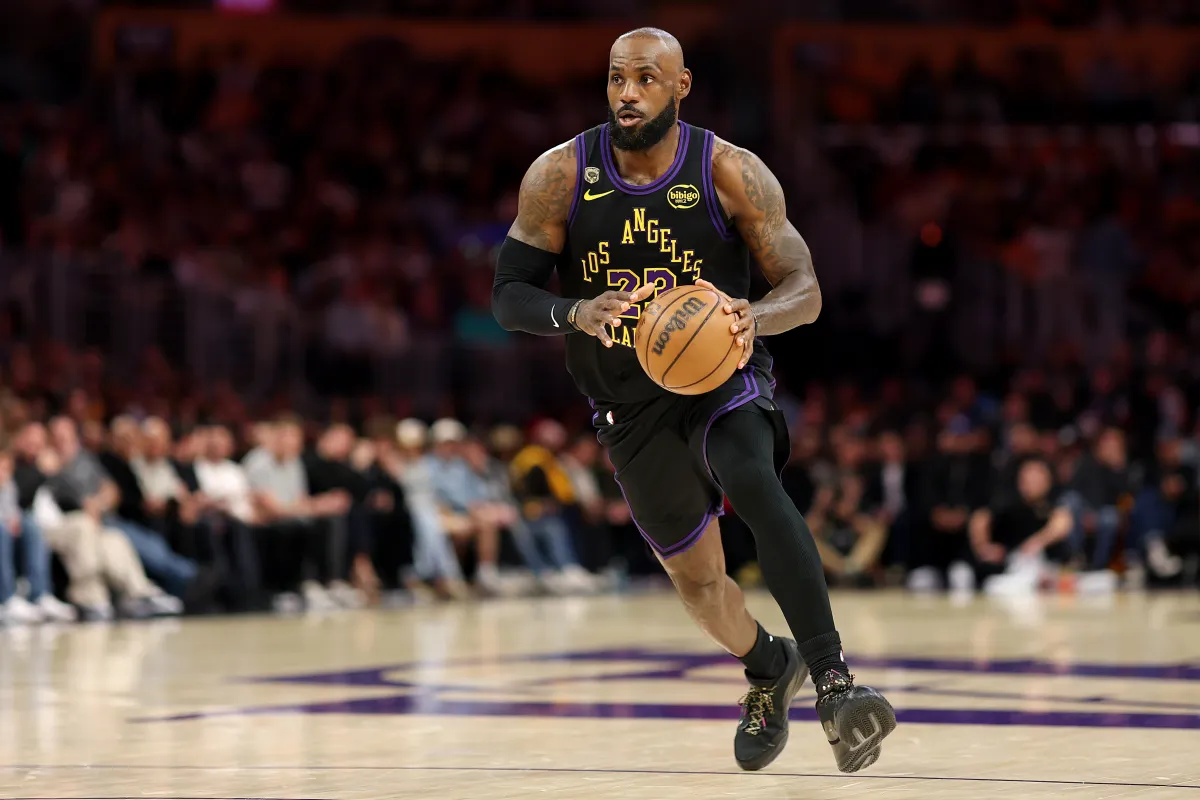
The echoing bounce of a leather basketball on hardwood has been the soundtrack of LeBron James’ life for as long as the global sports community can remember, but as the dust settles on his astonishing twenty-third NBA season, that familiar rhythm carries an unfamiliar weight. At forty-one years old, an age where almost all of his draft classmates have transitioned into coaching, broadcasting, or quiet retirement, the kid from Akron remains the sun around which the basketball universe revolves. Having just completed his eighth demanding campaign as the centerpiece of the Los Angeles Lakers, LeBron finds himself standing at a profound professional and personal crossroads that few humans in athletic history have ever navigated. He faces three distinct paths as he contemplates what remains of his legendary career: he can finally choose to step away from the game and retire into a life of global business and family; he can opt to test the waters of unrestricted free agency to chase one last championship ring with another franchise; or he can put pen to paper to extend his residency in Southern California. For a player who has spent more than half of his life under the relentless glare of the public eye, this decision is not merely about basketball strategy or financial gain; it is a deeply human evaluation of legacy, physical endurance, and the search for a perfect final chapter.
To understand where LeBron’s heart currently lies during this pivotal offseason, one must listen closely to those who have chronicled his journey from the very beginning, most notably ESPN NBA insider Brian Windhorst. Having covered James since the superstar’s teenage days at St. Vincent-St. Mary High School in Ohio, Windhorst possesses a unique, decades-long perspective on the champion’s decision-making patterns, and his recent insights suggest that LeBron’s primary focus is firmly locked on the glittering lights of Los Angeles. According to Windhorst, who recently shared his thoughts during a radio broadcast on ESPN Cleveland, LeBron has no intention of hanging up his signature sneakers just yet, and his creative energy is entirely directed toward hammering out a new deal to remain with the Lakers. The negotiation table is currently active, with both parties engaged in a delicate, high-stakes back-and-forth dance to align their visions for the future under the strict constraints of the league’s collective bargaining agreement. This is not a situation where LeBron is looking to escape or orchestrate a dramatic exit; rather, he is dedicating the next fourteen days to finding common ground with the Lakers’ front office, hoping to secure an agreement that honors his unparalleled contributions while positioning the team to remain highly competitive in a brutal Western Conference.
The fact that a forty-one-year-old athlete is still in a position to demand a game-defining contract is a testament to the unprecedented physical and mental standards LeBron has maintained throughout his historic twenty-three-year career. During this past season, he defied the natural laws of aging by averaging an astonishing 20.9 points, 7.2 assists, and 6.1 rebounds per game, statistics that would make an All-Star in their prime incredibly proud, let alone a veteran with more miles on his knees than almost any player in history. These numbers are not empty statistics compiled on a lottery team; they represent the daily triumph of a meticulous discipline that costs millions of dollars annually in body maintenance, advanced recovery technology, and strict nutritional science. In a league defined by young, hyper-athletic guards and towering dynamic big men, LeBron’s ability to orchestrate an offense, read defenses split-seconds before they react, and occasionally summon the explosive power of his youth remains nothing short of a basketball miracle. He has successfully morphed from a player who dominated through sheer, unadulterated athleticism into an elder statesman who commands the floor with sheer IQ, proving that while Father Time may be undefeated, LeBron is putting up the most courageous and historically significant fight the sports world has ever seen.
However, even the most legendary figures cannot carry the entire world on their shoulders without feeling the immense strain, and the physical toll of LeBron’s twenty-third season was magnified by the cruel realities of professional sports injuries. As the Lakers pushed deep into the grueling postseason tournament, their championship aspirations were systematically dismantled not by a lack of heart, but by the devastating loss of key personnel at the worst possible moment. The team was forced to march into battle without the brilliant, game-changing wizardry of superstar Luka Doncic, whose absence left a massive void in the team’s offensive engine, alongside the sidelined Austin Reaves, whose gritty perimeter play and clutch shooting had become indispensable to the Lakers’ identity. This double blow placed a monumental, almost unfair workload back onto LeBron’s forty-one-year-old frame, forcing him to play heavy, exhausting minutes against youthful defenses designed specifically to wear him down. It was a heartbreaking scenario that highlighted the fragile nature of championship windows, where one bad landing or muscle strain can instantly turn a year of intense preparation into a mountain of what-ifs, leaving an aging icon to fight a lonely, valiant battle against overwhelming odds.
The Lakers’ valiant run ultimately met its demise in the second round of the playoffs, falling to a young, explosive, and relentless Oklahoma City Thunder squad that represents the rising generation of NBA dominance. Walking off the court after that final, decisive loss to the Thunder, LeBron was visibly exhausted, a physical manifestation of a long, drama-filled season that began with championship expectations and ended with the quiet disappointment of a locker room filled with ice packs and unfulfilled potential. The defeat to Oklahoma City felt like a symbolic passing of the torch, a stark reminder that the league’s future is fast approaching and will not wait for the legends of the past to catch their breath. For LeBron, that second-round exit was a bitter pill to swallow, sparking intense contemplation about how many more times he can subject his body to the grueling eighty-two-game regular season and the high-intensity warfare of the playoffs. This emotional and physical hangover is the backdrop against which his current free agency negotiations are occurring, serving as a powerful reminder that every decision he makes now must be calculated to maximize his remaining chances at holding the Larry O’Brien Trophy.
Ultimately, these next two weeks represent far more than a routine contract negotiation; they are about a family man, a global icon, and a passionate competitor defining the terms of his sunset years in the sport he revolutionized. Staying with the Los Angeles Lakers allows LeBron to maintain a sense of stability for his family, keep his thriving business empire close at hand, and continue wearing one of the most prestigious jerseys in all of professional sports. As Brian Windhorst noted, the wheels of negotiation are turning, and the basketball community hangs on every rumor, waiting to see if the Lakers can construct a roster that justifies LeBron’s continued sacrifice of his body and time. Whether he signed his final massive contract or is preparing the groundwork for a farewell tour that will capture the imagination of fans worldwide, LeBron James has earned the right to dictate his own ending on his own terms. As we watch this fortnight of negotiations unfold, we are witnessing the twilight of a golden era, a human story of preservation, ambition, and the relentless pursuit of greatness that will be talked about for generations to come.