





The glittering, sun-drenched beaches of Fiji are designed to be the ultimate stage for manufactured romance, a tropical paradise where young, attractive singles seek fleeting connections under the watchful gaze of millions of viewers on Peacock’s sensation “Love Island USA.” For twenty-six-year-old Gabriel Vasconcelos, this reality television villa was supposed to be a sanctuary of passion, a place to find a partner while temporarily disconnected from the chaotic rhythm of the outside world. Yet, the fickle nature of dating shows meant his journey was abruptly cut short, resulting in a shocking dumping during the dramatic episode broadcast on June 19. While such an unexpected rejection might leave most contestants nursing wounded egos and contemplating what went wrong in their search for love, Gabriel emerged from the villa not with tears, but with an overwhelming, infectious sense of liberation. The reason for his post-dumping euphoria was simple, deeply rooted, and entirely relatable to millions around the globe: his heart did not belong to a reality television contestant, but rather to the iconic yellow jersey of the Brazilian national football team, and more specifically, to the mesmerizing talents of its star forward, Vinícius Júnior. Free from the strict electronic blackout of the television production, where contestants are shielded from global news and live broadcasts, Gabriel could finally engage with his true passion, trading the synthetic drama of televised dates for the authentic, heart-pounding spectacles of the 2026 FIFA Men’s World Cup. This sudden transition from heartbreak to national pride perfectly illustrates how sport functions as a supreme emotional anchor, overriding personal disappointment with the collective joy of communal belonging. Gabriel’s departure was not a defeat, but a joyous homecoming of the spirit, proving that while romantic equations on television are fragile, the bond between a Brazilian fan and the Seleção is entirely unbreakable, enduring far beyond the temporary allure of a tropical villa environment where love is treated as a transactional competition rather than a genuine, lived experience of cultural and spiritual connection to one’s true roots in life.
Immediately following his departure from the show, Gabriel took to social media to share his unvarnished happiness with his growing fanbase, posting a vibrant Instagram video that quickly captured the hearts of football enthusiasts and reality television viewers alike. In the footage, he can be seen gleefully dancing across a concrete parking lot, his movements filled with the rhythmic grace of a man who has just been liberated from an emotional cage. Draped in the legendary canarinha—the brilliant yellow jersey that carries the hopes, history, and dreams of an entire South American superpower—Gabriel paired his energetic choreography with a caption that perfectly encapsulated his state of mind: “Got dumped from the villa, but at least it’s time to watch my Brazil in the World Cup now. VAMOOOOOO! Te amo @vinijr.” To fully comprehend the depth of this reaction, one must look beyond the screen to Gabriel’s personal history, which he discussed during his appearance on Peacock’s recap show, “Love Island Aftersun.” Born and raised in the vibrant, football-mad city of Rio de Janeiro, Gabriel underwent a massive life transition in recent years when he moved to the United States after earning a prestigious scholarship to study computer science. Leaving the warmth of Rio’s coastal breezes for the rigorous academic demands of coding, algorithms, and foreign adaptation, the young scholar had to find ways to keep his cultural identity alive in a new country. In this context, the yellow jersey is not merely a piece of sportswear; it serves as a portable piece of home, a psychological security blanket, and a vital portal that instantaneously transports an expatriate student back to the bustling streets, family barbecues, and shared emotional frequencies of his beloved homeland, proving that football is never just a game, but a lifeline that sustains the soul across vast geographic distances and cultural divides. This profound sense of belonging, nurtured by the beautiful ritual of watching international matches, keeps him grounded, serving as an emotional anchor during his ambitious educational endeavors abroad.
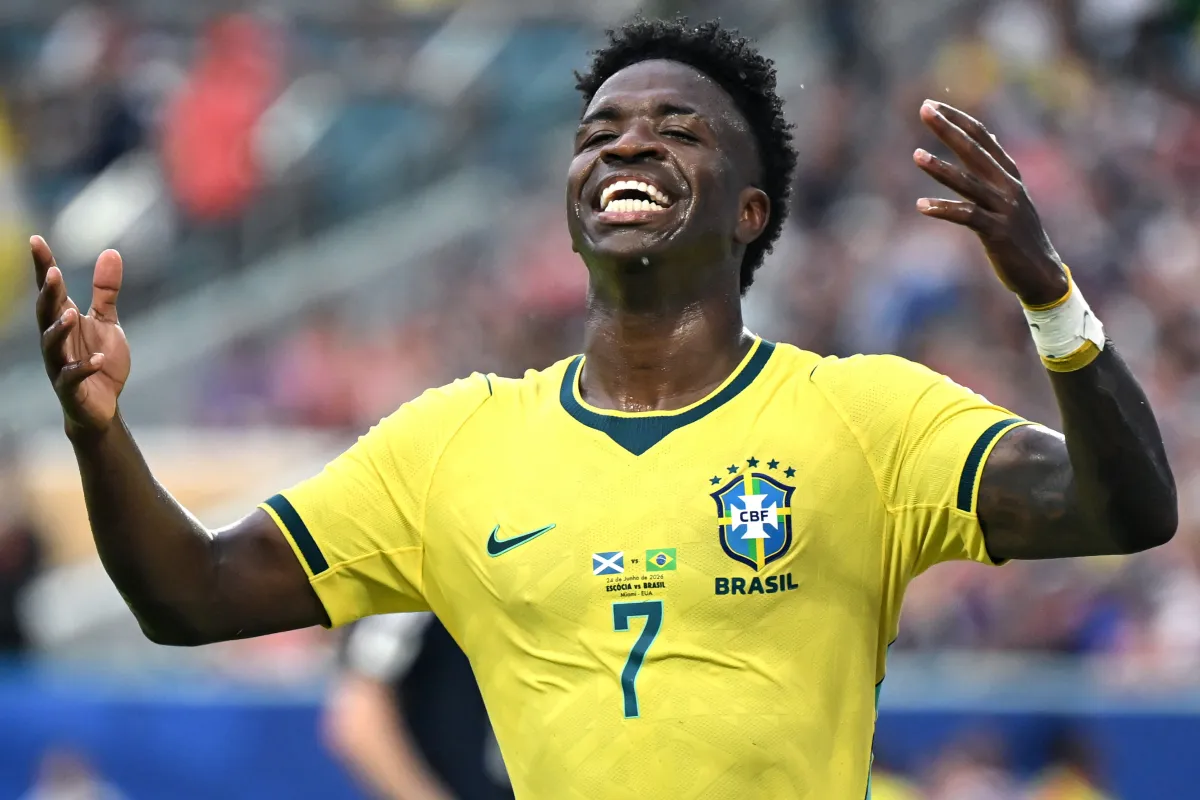
At the core of Gabriel’s football-induced salvation is his profound, unapologetic admiration for Vinícius Júnior, a player who represents the very pinnacle of modern Brazilian athletic expression and cultural resilience. Watching Vini Jr. navigate the grand stage of the World Cup is an experience of pure, unadulterated spectacle, characterized by a style of play that is as joyful as it is devastatingly effective. The young winger operates with a brilliant, improvisational wizardry on the pitch, combining breathtaking accelerations, delicate touches, and an audacious willingness to challenge defenders that keeps spectators on the absolute edge of their seats. For young Brazilians like Gabriel, Vini Jr. is far more than a world-class athlete scoring goals for Real Madrid and the national team; he is a symbol of hope, a kid from the municipality of São Gonçalo in Rio de Janeiro who conquered the footballing world through sheer talent, relentless hard work, and an unshakeable smile. Having faced immense adversity, including systemic racism and relentless pressure in European stadiums, Vinícius has consistently responded with dignity and breathtaking performances, making him a true hero of the diaspora. This deep personal resonance is why Gabriel’s Instagram declaration of love was so passionately directed at the attacker. In a world where professional sports can sometimes feel overly corporate and detached from the average fan, Vinícius injects a sense of soul back into the game, playing with the free-spirited essence of joga bonito—the beautiful game—which prioritizes artistic expression, creativity, and communal joy over sterile tactical pragmatism. By celebrating Vini Jr., Gabriel is celebrating his own roots, finding a reflection of Rio’s vibrant energy in every step-over, sprint, and triumphant smile displayed on the television screen, turning a distant tournament into an intimate, shared triumph that reminds him of why he fell in love with football in the first place. This emotional connection represents the ultimate antidote to the artificiality of reality television, grounding Gabriel in an authentic sporting passion that transcends the boundaries of temporary entertainment and trivial, scripted matchmaking dramas.
This transcendent connection between the fan and the icon has been fueled by the breathtaking reality of Brazil’s current World Cup campaign, where Vinícius Júnior has assumed the mantle of leadership with astonishing ease and grace. Throughout the intense crucible of the tournament’s group stage, the dynamic forward has been nothing short of mercurial, terrorizing opposing defensive lines and establishing himself as one of the most productive players on the planet. With an impressive tally of four goals and a crucial assist recorded in just three highly contested matches, Vini Jr. has thrust himself directly into the global spotlight, launching a formidable campaign for the tournament’s most coveted individual honor, the Golden Boot. The statistical race for this prize reads like a roll call of modern footballing royalty, illustrating the incredibly high level of competition in this iteration of the World Cup. Currently, the legendary Argentinian icon Lionel Messi leads the pack with a spectacular five goals, maintaining a razor-thin advantage over a chasing group of elite superstars. Tied just behind him with four goals each are France’s generational talisman Kylian Mbappé, Norway’s unstoppable goal-scoring machine Erling Haaland, and Brazil’s own Vinícius Júnior. For Gabriel, watching this high-stakes narrative unfold is infinitely more compelling than any manufactured reality television storyline, as it represents human drama at its absolute peak, where legacy, destiny, and national pride collide in real-time. Each goal scored by Vinícius is not just a statistic on a screen, but a moment of intense catharsis that validates Gabriel’s decision to trade the quiet romance of the Fiji villa for the roaring, emotional rollercoaster of the global stadium. It provides a thrilling spectacle where the heroes are real, the achievements are earned, and the sheer unpredictability of sports creates a narrative of suspense that no Hollywood writer could ever dream of producing. In this arena, there are no scripted coupling ceremonies or strategic votes; there is only the pure, raw collision of physical brilliance and tactical execution under the gaze of the world.
The most recent chapter of this thrilling odyssey occurred on Wednesday, June 24, when Brazil took the field in a decisive encounter against a disciplined and resilient Scotland squad. With the pressure of securing the top spot in Group C weighing heavily on their shoulders, the Seleção delivered a masterclass in attacking football, dismantling their opponents in a convincing 3-0 victory that sent a clear warning shot to the rest of the tournament field. At the heart of this footballing clinic was once again Vinícius Júnior, who single-handedly put the match out of reach in the first half by scoring a sensational brace, showcasing both his predatory instincts inside the penalty box and his clinical finishing ability under immense pressure. This resounding victory ensured that Brazil captured the crown of Group C, earning them a coveted ticket to the knockout stage of the tournament. As the competition shifts to the high-stakes, single-elimination intensity of the Round of 32 on Monday, June 29, the road ahead becomes significantly more treacherous for the South American giants. Brazil must now prepare to face the runners-up of Group F, a spot that remains hotly contested between three vastly different footballing cultures: the tactical and fluid Netherlands, the disciplined and high-speed Japan, or the physically imposing and highly structured Sweden. For millions of fans worldwide, including Gabriel in his American college town, the days leading up to this crucial match are filled with a mix of nervous anxiety and boundless optimism, as the tournament enters its most unforgiving phase where one slip-up can end a nation’s dream. Every tactical adjustment, injury report, and pre-match press conference is scrutinized with intense focus, building a slow-burning tension that unites diaspora communities in living rooms, sports bars, and student dormitories across the entire globe ahead of the massive showdown. The shared collective breath of a dispersed global nation is held in unison, awaiting the next dramatic chapter of the ultimate footballing tournament where legends are forged in the fires of competition.
Indeed, the journey that lies ahead for the Brazilian national team is laden with the immense weight of historical expectation, as the country seeks to put an end to an agonizing twenty-four-year World Cup drought. Despite being the most successful men’s national team in the history of the sport with five glittering stars embroidered above their crest, Brazil has not raised the iconic golden trophy since the legendary Ronaldo led them to glory in Yokohama back in 2002. This long-standing absence from the absolute pinnacle of world football has created a palpable hunger within the nation, transforming every World Cup cycle into a high-pressure crusade for redemption. Gabriel Vasconcelos’s personal story of reality television exit and footballing salvation beautifully mirrors this larger national narrative of hope, resilience, and the search for ultimate triumph. While his quest to find a romantic connection on a televised beach in Fiji may have ended in premature disappointment, the young computer science student discovered that some connections are too deeply embedded in one’s DNA to ever be truly severed. By embracing the joy of the World Cup and the spectacular rise of Vinícius Júnior, Gabriel found a sense of belonging and happiness that no reality television show could ever hope to replicate. As Monday’s critical Round of 32 clash approaches, Gabriel will undoubtedly be standing proud, clad in his cherished yellow canarinha jersey, ready to cheer, cry, and dance alongside millions of his compatriots, united by the beautifully realized truth that while reality television romances are fleeting, the love for the Seleção is eternal, a burning fire that illuminates the path homeward no matter where in the world an expatriate finds himself, waiting watchfully for that glorious sixth star to finally be claimed. This beautiful game remains the ultimate equalizer, transforming the sting of an artificial rejection on a commercial dating program into an enduring triumph of cultural pride, identity, and raw sports spectacle that connects his soul back to Rio.