





The vast, sun-drenched expanses of the Pacific Ocean have long served as both a cradle of planetary biodiversity and a vital highway for those who harvest its bounty to feed the world. For decades, a delicate and often tense truce existed between those who viewed these deep waters as pristine sanctuaries requiring absolute protection and those who relied on them for their livelihood. This balance shifted when President Donald Trump signed an executive proclamation that reopened nearly half a million square miles of federally protected marine national monuments to commercial fishing. Styled by the administration as a historic victory for American working-class coastal communities and a vital step toward domestic food security, the decision has reignited a passionate, nationwide debate over the stewardship of our global commons. To the weathered fishermen who navigate these remote waters, the move represents a long-awaited lifeline, a chance to reclaim traditional fishing grounds and sustain a way of life that has been increasingly squeezed by international competition and stringent domestic regulations. Conversely, for marine biologists, conservation groups, and indigenous advocates who have spent lifetimes documenting and defending these fragile aquatic wonders, the reopening feels like a devastating setback. They view these sanctuaries not as economic assets to be harvested, but as irreplaceable ecological refuges—living libraries of evolutionary history that buffer our warming planet against the compounding crises of climate change and habitat loss. By peeling back protections initially established by past administrations, this policy shift places the future of some of the Earth’s most isolated and biologically rich marine environments squarely at the center of a larger philosophical struggle: whether the wild places of our world are best preserved by locking them away from human touch, or whether they can be sustainably managed while remaining open to the people whose lives are inextricably linked to their bounty. This intricate dance between human need and ecological limits defines the modern environmental era.
To truly appreciate the depth of feelings surrounding this decision, one must look at the human reality of modern American commercial fishing. American fleets operate under some of the most rigorous and demanding environmental standards in the world, ensuring that every catch is tracked, measured, and sustainably harvested to preserve fish populations. Yet, for years, these highly regulated domestic crews have watched from the sidelines as heavily subsidized foreign vessels, operating with far fewer ecological constraints, swept through the open waters just beyond the borders of U.S. marine monuments, capitalizing on the highly migratory fish stocks that move freely across invisible political lines. By restricting American vessels from these nutrient-rich zones, previous policies unintentionally forced domestic fishermen to travel much further out into treacherous open seas, burning more fuel, increasing operational risks, and lengthening their time away from their families, all while driving up the cost of local seafood for everyday consumers back home. The Trump administration’s decision to open areas like the Mau and Ho‘omalu zones of Papahānaumokuākea, along with parts of the Mariana Trench and Rose Atoll monuments, is framed by supporters as a restorative act of economic justice. Advocates like Commerce Secretary Howard Lutnick and NOAA Administrator Neil Jacobs point out that this action will lower prices at the supermarket, reduce America’s heavy reliance on imported seafood—which currently accounts for the vast majority of fish consumed in the United States—and restore competitive balance to American fleets. For the multi-generational fishing families who form the backbone of these isolated coastal economies, this proclamation is not merely about corporate profits; it is about preservation of their own cultural heritage, ensuring that the ancient, honorable trade of harvesting the sea can be passed down to their children in an era increasingly dominated by global supply chains, economic uncertainty, and bureaucratic barriers. They are the standard-bearers of a proud maritime heritage that deserves to be sustained.
On the other side of this deep-water divide lies a community of scientists, conservationists, and cultural practitioners who view these marine sanctuaries as sacred, irreplaceable gifts to humanity that must be guarded at all costs. These are not empty patches of ocean; they are home to some of the most extraordinary ecological wonders on the planet. The Mariana Trench, for instance, plunges into the pitch-black depths of the earth, hosting mysterious hydrothermal vents, mud volcanoes, and ancient deep-sea coral communities that scientists believe could hold clues to the very origins of life on Earth. To the east, the sprawling coral reefs of Rose Atoll shelter endangered green sea turtles, hawksbill turtles, and millions of nesting seabirds, while the immense reaches of Papahānaumokuākea in the Northwestern Hawaiian Islands house thousands of unique marine species found nowhere else on the globe, alongside shipwreck sites of historical significance and waters deeply sacred to Native Hawaiians. When Presidents George W. Bush and Barack Obama utilized the Antiquities Act to establish and expand these monuments, they did so with the understanding that the ocean’s health is a holistic system, where the protection of top predators and deep-sea benthic habitats cascades downward to benefit the entire global food web. Conservation organizations like Oceana warn that admitting heavy commercial fishing gear, longlines, and large-scale harvesting operations into these delicate sanctuary boundaries risks disrupting fragile ecosystems that take hundreds of years to recover from human disturbance. For these defenders of the deep, the proclamation represents a dangerous precedent of environmental rollbacks, suggesting that no conservation victory is ever truly permanent and that the long-term ecological health of our biosphere is being sacrificed for short-term economic gains. For them, these zones are not empty space, but sacred ancestral waters holding the memories of past generations.
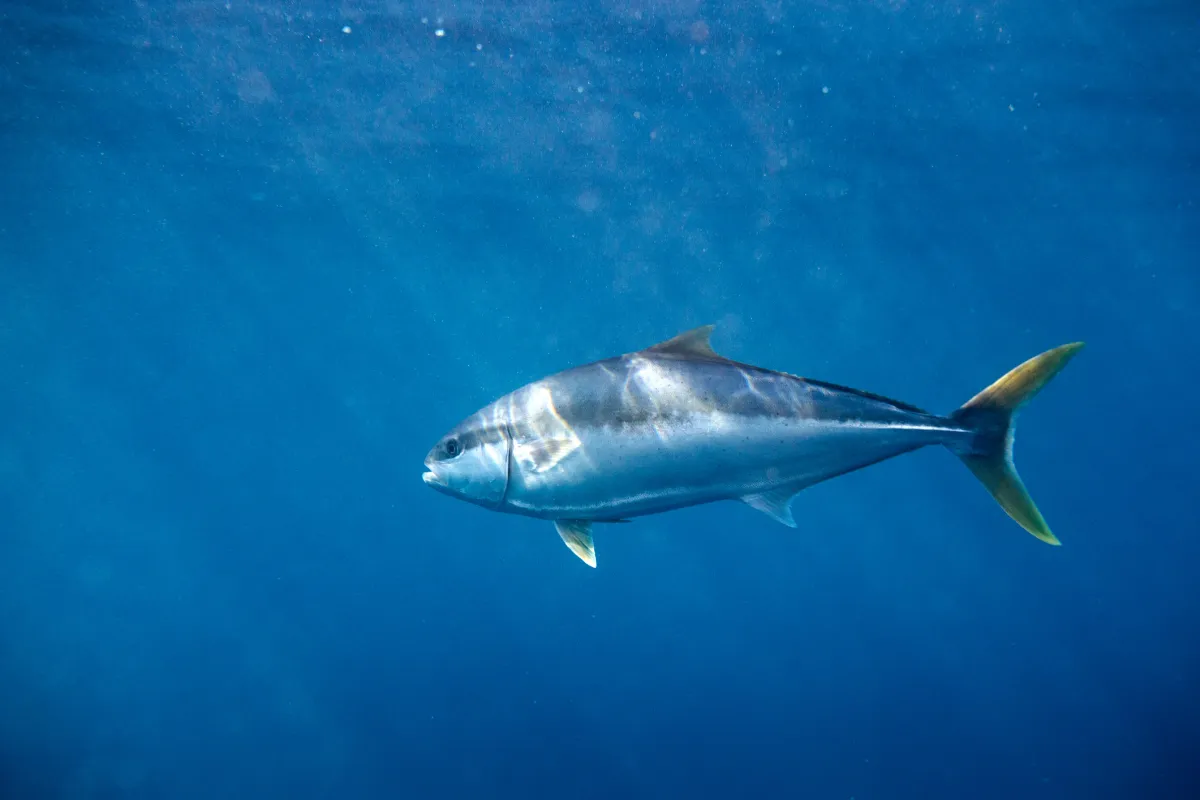
At the heart of this policy dispute is a fundamental disagreement over how we define and practice environmental stewardship. Critics of the monument designations have long argued that the Antiquities Act of 1906, a law originally intended to protect small, land-based archaeological sites like Native American ruins, was never meant to be used by executive fiat to cordon off hundreds of thousands of square miles of open ocean. They contend that locking up such immense areas is an example of federal overreach that bypasses local communities and ignores the highly sophisticated, science-based fishery management systems already in place. The Trump administration’s proclamation leans heavily on this argument, asserting that the Magnuson-Stevens Fishery Conservation and Management Act—the primary law governing marine fisheries in federal waters—provides more than enough oversight to prevent overfishing and protect habitats without needing to completely ban commercial vessels. According to this perspective, highly migratory pelagic species like tuna and swordfish do not recognize monument boundaries anyway; they swim through them, meaning that local exclusions do little to protect the species globally while doing immense harm to the local fishing economies that depend on them. Supporters of the rollback argue that “appropriately managed commercial fishing” is entirely compatible with biological conservation, blending rigorous scientific monitoring with the lived experience of fishermen who have a vested, long-term interest in keeping fish populations healthy. This viewpoint champions a philosophy of active, wise-use conservation, where nature and humanity coexist productively, in contrast to the preservationist model which seeks to isolate nature entirely from human economic activity in the hope of maintaining a pristine, pre-industrial state. This debate touches on the core of American environmental law and the limits of executive power.
While the proclamation marks a sweeping shift in ocean policy, it does not represent a complete abandonment of environmental safeguards, as a system of targeted, nearshore buffers remains in place to protect the most ecologically sensitive reefs and coastlines. The newly restored access specifically targets the outer pelagic zones of these massive monuments, where larger migratory fish are found, while maintaining strict prohibitions on commercial fishing within fifty nautical miles of the geographical centers of specified islands and reefs within the Northwestern Hawaiian Islands of Papahānaumokuākea. Similarly, a protective twelve-nautical-mile buffer is preserved around the delicate reefs of Rose Atoll to shield its immediate marine life from commercial-scale impacts. Furthermore, the administration has implemented a strict nationalistic framework for these reopened waters, stipulating that only United States-flagged vessels shall be permitted to conduct commercial fishing operations within these boundary areas, though foreign vessels may be granted permits solely to transport the catches harvested by American crews. This structured compromise is intended to channel the economic benefits directly into the domestic fishing sector, fostering local job growth in processing plants and shipyards along the Pacific coast while ensuring that the physical core of these unique monuments remains untouched by heavy gear. By allowing managed access to the deep ocean while keeping the shallow coral reefs and nearshore environments strictly off-limits, the administration claims to have struck a balanced middle ground that honors both the immediate survival of coastal communities and the long-term protection of critical marine habitats. The success of this delicate balance will be watched closely by environmental policy analysts worldwide.
Ultimately, this unfolding chapter in the history of marine conservation highlights a profound truth: both the fishermen who harvest the sea and the scientists who study it share a deep, abiding love for the ocean, even if they disagree on the best path forward to protect it. A fisherman’s connection to the sea is deeply visceral, forged through cold mornings, heavy swells, and a life lived at the mercy of the elements; they understand firsthand that a dead ocean means a dead industry, giving them a powerful incentive to advocate for sustainable oceans. Scientists and conservationists possess an equally passionate connection, driven by awe of natural systems and a desire to ensure that future generations inherit a planet teeming with wild, untouched life. As the physical effects of this proclamation begin to ripple through the waters of the Pacific, the success or failure of this experiment will depend heavily on the integrity of the federal oversight agencies, the cooperation of the fishing fleets, and the vigilance of independent researchers. If the newly opened zones can indeed be fished sustainably without degrading the surrounding deep-sea ecosystems, it could pave the way for a more collaborative, human-centered approach to marine resource management. If, however, the removal of these barriers leads to a decline in biodiversity or threatens vulnerable species, the clamor to reinstate absolute protections will only grow louder. In this great blue classroom of the Pacific, humanity is once again trying to solve one of its oldest and most complex riddles: how to feed ourselves today without emptying the oceans of tomorrow, reminding us that every policy choice we make is a reflection of our deep, complicated relationship with the natural world. Our shared future relies on finding a common language where conservation and human survival are harmonized.