





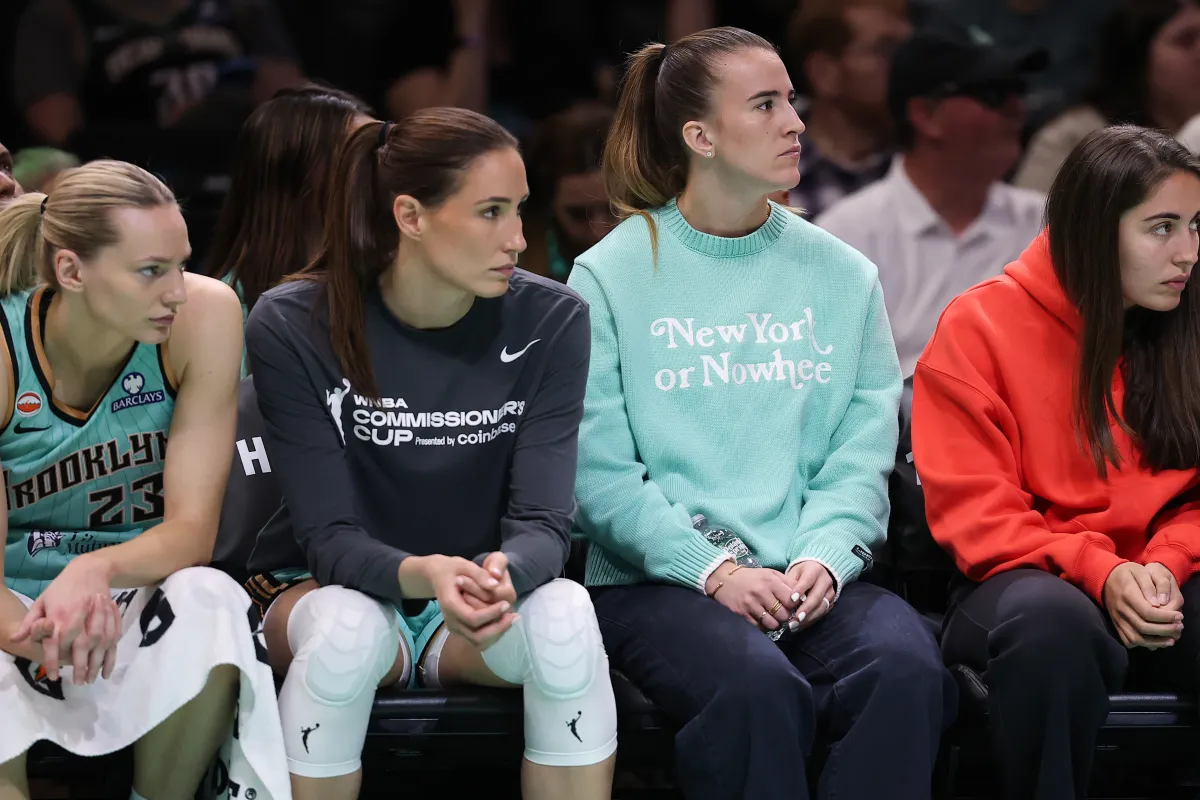
The weight of wearing a New York Liberty jersey carries a unique blend of historical reverence, immense pressure, and sky-high expectations, especially as the franchise embarked on the highly anticipated 2026 WNBA season. Fans, analysts, and city sports enthusiasts alike had harbored grand, glittering visions of deep playoff runs, championship banners, and highlight-reel plays dominating the sports landscape in Brooklyn, with much of that heavy expectation naturally resting upon the shoulders of their superstar guard, Sabrina Ionescu. A player defined by her relentless work ethic, unmatched floor vision, and cold-blooded clutch shooting, Ionescu is the undeniable heart, soul, and competitive identity of this modern Liberty squad. However, the unforgiving and often cruel nature of professional sports has a way of disrupting even the most meticulously laid plans, leaving the team and its passionate fan base in a sudden, jarring state of anxious suspense. This devastating emotional blow did not arrive in the form of a dramatic, season-ending on-court collision, but rather through the quiet, frustrating accumulation of physical ailments that have steadily sidelined their franchise cornerstone. According to a detailed report from New York Post women’s sports reporter Madeline Kenney, Ionescu was officially ruled out of traveling with the team to Connecticut for their critical Monday night matchup against the Sun, marking her sixth consecutive absence from the active lineup. What was initially hoped to be a minor, brief period of proactive rest has slowly transformed into an enigmatic and worrying struggle with what the team has officially termed “back soreness.” This vague medical designation has cast a looming shadow of uncertainty over the Liberty’s early-season campaign, humanizing the deep vulnerability that even the most elite, finely tuned athletes face when their physical bodies rebel against the relentless, grueling demands of professional basketball. For Sabrina, the psychological toll of being stuck on the sidelines, traveling separate from her teammates, and watching helplessly from afar can be just as agonizing as the physical pain itself, turning what should have been a triumphant season of basketball dominance into an exercise in patience and endurance.
To fully comprehend the deep layer of frustration and disappointment currently surrounding Ionescu’s prolonged absence, one must trace the agonizing timeline of her physical misfortunes back to the very twilight of the preseason when optimism was at an all-time high. The trouble began on May 3 during a final exhibition matchup against the selfsame Connecticut Sun, where a routine athletic play ended with Ionescu rolling her left ankle in a split-second moment that caused a collective sharp intake of breath throughout the Barclays Center crowd. While preliminary athletic training assessments expressed hope for a minor sprain, subsequent MRI scans revealed a far more complex and insidious left foot injury that immediately derailed her starting blocks for the regular season, forcing her to look on from the sidelines for the Liberty’s first five official games. The grueling, private rehabilitation process—filled with endless hours of physical therapy, ice baths, mobility drills, and mental preparation—finally culminated in a wave of excitement on May 24, when she made her highly anticipated season debut against the Dallas Wings, displaying the fierce competitive fire that has defined her entire basketball journey. In that game, despite carrying the obvious physical rust of a multi-week layoff and playing in what would ultimately become a disappointing 91-76 blowout defeat, Ionescu flashed her signature brilliance, fighting through physical limitations to record a stat-sheet-stuffing performance of 11 points, seven assists, and five rebounds. It was a brief, tantalizing glimpse of the game-changing impact she routinely brings to the hardwood, demonstrating her unique ability to facilitate the offense and elevate everyone around her, even in the midst of a highly physical defensive environment. Yet, that sparkling moment of competitive joy was quickly snuffed out as she has not touched the hardwood in an official game since that night, leaving supporters to wonder if that single, high-intensity performance demanded too much of a recovering body.
The plot thickened immediately following that lone regular-season appearance, quickly transitioning the narrative from a routine program of workload management into a confusing medical riddle that has left sports commentators searching for concrete answers. Originally, when Ionescu sat out the team’s May 25 contest against the expansion Portland Fire, it was presented to the public as a sensible, pre-planned day of recuperative rest designed to protect her newly healed foot during a demanding, condensed back-to-back schedule. However, the situation shifted dramatically later that week when “back soreness” suddenly materialized on the official league injury report, completely replacing the foot designation and raising immediate alarm bells among sports medicine experts and fans alike. In the delicate, highly interconnected kinetic chain of elite professional athletes, compensation is a notorious and silent enemy; it is incredibly common for a player recovering from a lower-extremity injury, such as a foot or ankle issue, to subtly alter their running stride, jump landing, or defensive slide. These minute adjustments, often made entirely unconsciously to protect the healing limb from pain, place unnatural, uneven rotational stress elsewhere in the skeletal structure, in this case likely radiating up into her hips and lower back. This kinetic chain reaction can quickly turn a straightforward, localized recovery process into a systemic, full-body issue, transforming what should have been a joyous return to play into a highly unpredictable, open-ended absence. Back pain is famously mercurial and difficult to diagnose or quantify, often resisting quick fixes and defying predictable rehabilitation curves, which places both the athlete and the medical staff in a deeply frustrating psychological limbo as they try to treat an invisible, shifting target while keeping her long-term mobility in mind.
Navigating this delicate, high-pressure situation has placed a direct, intense spotlight on the team’s leadership, particularly on first-year head coach Chris DeMarco, who must balance the franchise’s hunger for immediate wins with the absolute, non-negotiable necessity of preserving his superstar’s long-term health. The Liberty organization has opted for extreme caution, maintaining a highly tight-lipped approach regarding the specific pathology of Ionescu’s back condition, which has only fueled intense speculation and concern across the broader women’s basketball community. When pressed by sports reporters on May 29, Coach DeMarco offered a characteristically guarded, protective update, acknowledging that the back issue was indeed “something that’s been bothering her a little bit” and characterizing her rehabilitation status as strictly “day-to-day right now.” In the high-stakes, fast-paced lexicon of professional sports, the term “day-to-day” is often the most agonizing and frustrating phrase a fan, coach, or player can hear, as it serves as a polite linguistic shield that covers up the grueling, unceasing work happening behind closed doors in trainers’ rooms, recovery pools, and diagnostic clinics. Behind that simple phrase lies the quiet, often unglamorous human reality of a young superstar spending her mornings undergoing chiropractic adjustments, targeted core stabilization exercises, and anti-inflammatory therapy, all while dealing with the emotional isolation that inevitably comes from being separated from her teammates during crucial road trips. It highlights the immense, understated pressure on a first-year head coach like DeMarco, who must possess the strength of character to protect his franchise cornerstone from her own fierce competitive desire to rush back onto the hardwood prematurely, understanding fully that an early return to intense game action could lead to a catastrophic, chronic injury that derails her entire career.
Amidst the heavy fog of uncertainty surrounding their marquee guard, the silver lining for the New York Liberty has been the remarkable resilience, depth, and character displayed by the remaining members of the roster. Rather than allowing Ionescu’s absence to serve as an easy excuse for early-season mediocrity, the squad has rallied around one another, forging a renewed identity built on defensive grit, physical rebounding, and collective offensive responsibility. This passionate, united effort has yielded highly impressive results on the court, propelling the Liberty to an admirable 7-4 record and firmly keeping them in the upper echelon of the league standings. Entering their massive matchup against Connecticut, the team is riding the high wave of a stellar four-game winning streak, demonstrating to the rest of the league that they possess the depth and mental toughness to grind out tough victories even when their primary floor general is sidelined. This stretch of success has provided an incredible platform for role players and veteran depth pieces to step out of Ionescu’s formidable shadow, taking on expanded playmaking duties, hitting clutch shots, and building a fluid, intuitive on-court chemistry that will undoubtedly pay massive dividends when the high-stakes postseason arrives. The sight of bench players stepping up under intense pressure, exhausting themselves on the defensive end, and ecstatic teammates celebrating each other’s successes on the sideline paints a beautiful picture of basketball at its most human level, reminding fans that while individual superstars capture the headlines, it is cohesive, selfless teams that ultimately survive the grinding test of a long season and compete for championships.
As the Liberty prepare to face off against the formidable, physical Connecticut Sun in a highly anticipated, high-stakes Commissioner’s Cup battle, the entire situation serves as a stark, poignant reminder of the fragile balance between immediate athletic glory and long-term physical well-being. Missing a player of Ionescu’s transcendent caliber in such a marquee tournament matchup is undoubtedly a bitter, frustrating pill to swallow, both for the competitive spirit of the coaching staff on the sideline and for the passionate fans who pay hard-earned money to see the league’s grandest stars go head-to-head on the biggest stages of women’s basketball. However, the overarching perspective of a demanding, marathon-like WNBA season dictates that patience is not merely a passive virtue, but an active, absolute strategic necessity for modern sports organizations aiming for a championship ring. By prioritizing Sabrina’s complete structural recovery now, during the relatively early weeks of the summer season, the Liberty front office and coaching staff are playing the smart, compassionate, and wise “long game,” ensuring that when she does finally make her definitive, triumphant return, she will be entirely free of lingering, hidden ailments and fully prepared to lead a sustained, deep run into the autumn playoffs. Ultimately, this challenging, unpredictable chapter in New York’s season is a profound, beautifully humanizing testament to the reality of professional sports, illustrating that behind the flashing lights, multi-million dollar contracts, and arena noise, these athletes are human beings whose physical limits must be respected with care, and where the grace of patience often paves the most secure, triumphant path toward lasting, ultimate athletic glory.