






In the quiet hours of a weekend morning, a life was violently cut short in Naha, the capital of Okinawa, and the shock of that loss has rippled far beyond the walls of a modest hotel room. The victim was Anna Yagi, a 39-year-old woman whose name has now become part of a painful and familiar story in Japan’s southernmost prefecture. According to police and local news reports, Yagi was found dead in a hotel, and the investigation quickly focused on Devin J. Ballard, a 20-year-old lance corporal with the Third Marine Expeditionary Force. Ballard, a United States Marine, was arrested on suspicion of robbery and murder, though he has denied the allegations. Surveillance footage reportedly showed him entering the hotel with Yagi early on Saturday, and that image—two people walking into a building, unaware of what was to come—has become the center of a case that is still unfolding. The U.S. Embassy in Tokyo issued a brief statement expressing cooperation with Japanese authorities and offering sincere condolences to the victim’s family. But those words, however necessary, cannot undo the grief of a family now preparing to bury a daughter, a friend, a member of their community. And for the people of Okinawa, the tragedy is not just a single act of violence; it is another wound in a long history of living alongside a vast American military presence that they never asked for.
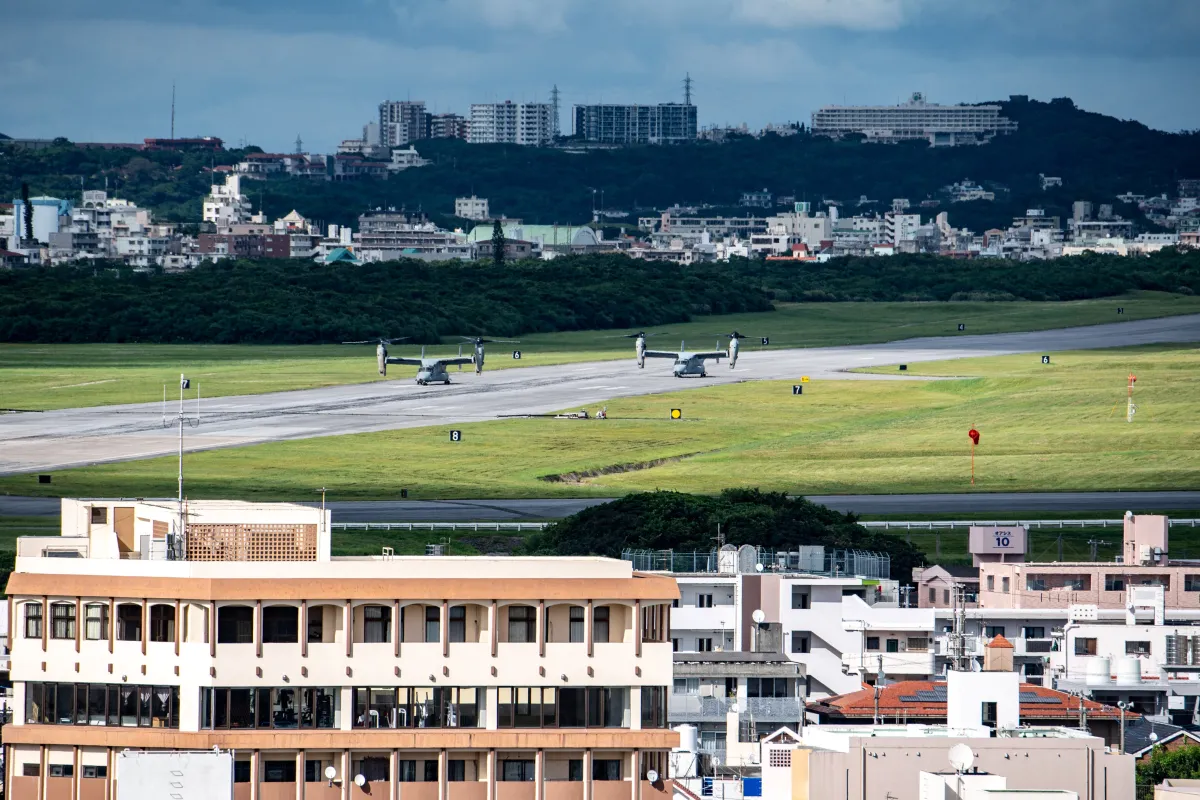
Okinawa has long carried a burden that the rest of Japan does not share. Though the prefecture makes up only a tiny fraction of the country’s landmass, it hosts roughly 30,000 active-duty U.S. personnel, along with their families, civilian employees, and the sprawling bases that dominate the island’s landscape. For decades, Okinawans have lived with the noise of aircraft, the constant movement of military vehicles, and the occasional crime or accident involving American service members. Each incident, no matter how isolated, tends to reignite a deep and simmering anger, because it feels less like an anomaly and more like a pattern of imposition. The death of Anna Yagi is not the first time a woman has been killed in Okinawa by someone connected to the U.S. military, and the memory of those earlier tragedies remains raw. In 1995, the rape of a 12-year-old girl by three U.S. servicemen sparked massive protests and forced a renegotiation of the agreements governing American troops in Japan. More recently, in 2016, the murder of a local woman by a civilian base worker led to renewed outrage and a temporary restriction on off-base activities. Every new case brings back the same questions: Why is this happening on our island? Why are we expected to bear this cost for the security of a nation so far away? And what does it say about the relationship between the United States and Japan when the people who are supposed to protect us sometimes become the source of our deepest fears?
The legal and political dimensions of this case are just as complicated as the emotional ones. Under the Status of Forces Agreement, or SOFA, between the United States and Japan, American service members are subject to Japanese law, but there are layers of procedure and negotiation that often leave local residents feeling that justice is not fully served. In this instance, Japanese police were able to arrest Ballard, and he is being held in Naha, which is a positive sign for those who worry that suspects might be transferred to U.S. custody before a thorough investigation can take place. Still, the Japanese government has lodged a formal protest with the United States, a response that reflects the seriousness of the situation and the political pressure that comes with it. The protest is not just a diplomatic formality; it is an acknowledgment that the incident has strained public trust and that the government must be seen as standing with the people of Okinawa. Yet for many Okinawans, a protest is not enough. They want to see meaningful changes to the legal framework that governs American troops, changes that would make it easier for local authorities to investigate and prosecute crimes, and changes that would reduce the overall footprint of the military on their island. The U.S. Embassy’s statement of cooperation is reassuring on the surface, but it does little to address the underlying structural inequalities that make every such incident feel like a betrayal.
Behind the headlines and the diplomatic statements, there are real human beings whose lives have been shattered. Anna Yagi was 39 years old, a woman with her own story, her own relationships, her own dreams. She was not a statistic or a symbol; she was someone who woke up on Saturday morning in a hotel, perhaps expecting an ordinary day, only to become the victim of a violent crime. Her family is now left with questions that may never be fully answered, and with a grief that no amount of official sympathy can ease. Devin Ballard, too, is a young man, barely out of his teens, far from home, serving in a foreign country under circumstances that must have been overwhelming in ways we can only imagine. None of this excuses the crime he is accused of, and if he is guilty, he must face the consequences of his actions. But the tragedy of this situation is that it involves two people whose lives collided in the worst possible way, and whose families on both sides of the Pacific are now caught in a nightmare of loss, anger, and uncertainty. The investigation will determine what happened, and the legal system will decide Ballard’s fate, but no verdict will bring Yagi back, and no sentence will repair the damage done to her loved ones. In the meantime, the rest of us can only watch, and try to remember that behind every news story there are human beings who deserve compassion, even as they demand justice.
For the people of Okinawa, this incident is not just a news item to be consumed and forgotten. It is a lived reality that shapes their daily existence, their sense of safety, and their relationship with the broader Japanese state and the American military. Local residents have gathered in small groups and online forums to express their grief and frustration, with many saying that they feel like hostages in their own homeland, forced to accept a military presence that they believe makes their island a target and a dumping ground for the problems of others. The governor of Okinawa has repeatedly called for a reduction in the U.S. military footprint and for a more equal partnership between Japan and the United States, but progress has been slow and often blocked by national politics. This latest tragedy will likely intensify those calls, and it may put new pressure on both governments to address the issue with greater urgency. But for many Okinawans, the problem is not just about crime rates or legal procedures; it is about respect. They want to be seen not as a convenient location for military bases, but as a community with its own culture, its own history, and its own right to live in peace. Every time a service member is accused of a crime, that desire for respect is pushed further away, and the gap between Okinawa and the rest of Japan, between Okinawa and the United States, grows wider.
This is a developing story, and the full details of what happened to Anna Yagi may not be known for some time. The investigation is ongoing, and both Japanese and American authorities have pledged to cooperate in seeking the truth. For now, the most important thing is to honor the memory of the woman who lost her life, to support her family and friends in their time of unimaginable sorrow, and to ensure that the legal process moves forward with fairness and transparency. It is also a moment for reflection, not just for the governments involved, but for all of us who care about justice and human dignity. The relationship between the United States and Japan is one of the most important alliances in the world, built on shared values and mutual interests. But an alliance is only as strong as the trust that underpins it, and trust is eroded every time a community feels that its suffering is being minimized or ignored. The people of Okinawa deserve more than condolences; they deserve a genuine commitment to change, to accountability, and to a future in which they do not have to live in fear of the very forces that are meant to protect them. As the world watches this case unfold, we must remember that the true measure of any society is how it treats its most vulnerable members, and how it responds when tragedy strikes. Anna Yagi’s death is a loss that cannot be undone, but it can be a catalyst for a more honest conversation about the cost of military presence, the meaning of justice, and the shared humanity that binds us all, even across oceans and cultures.