



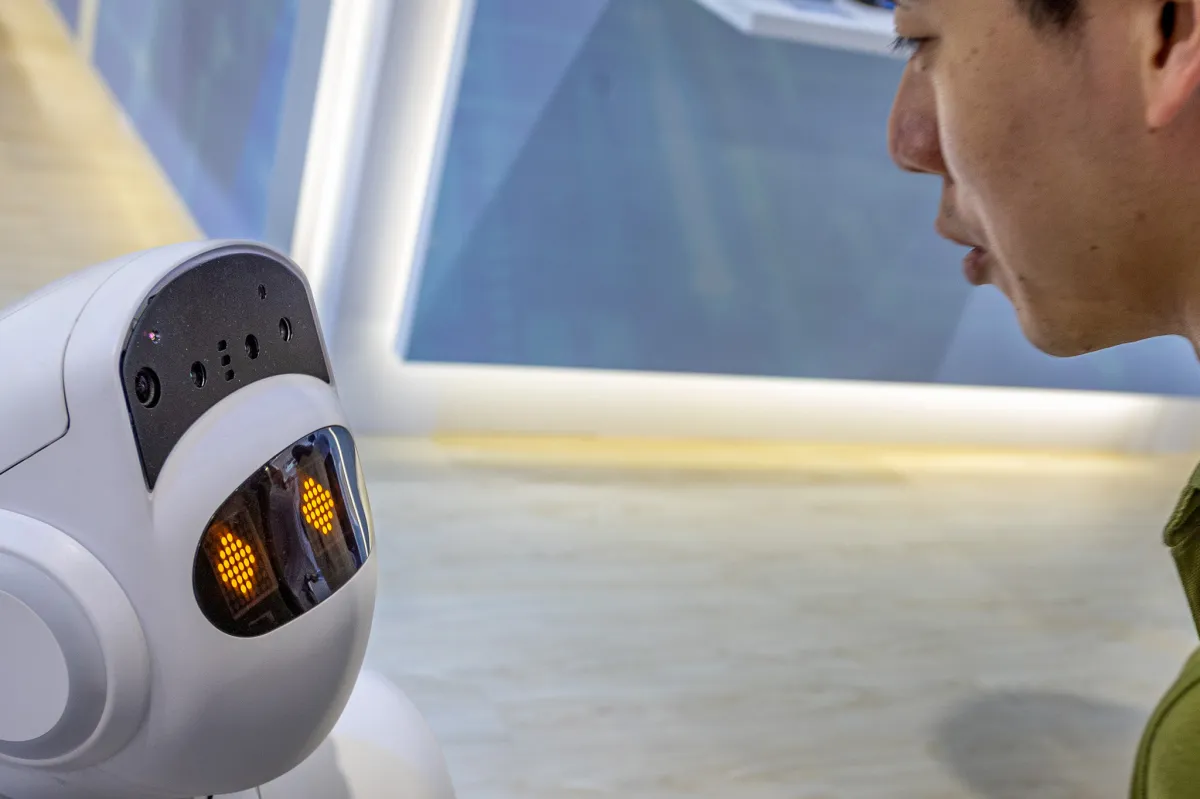
The Real Question About AI Companionship
The landscape of modern technology has given rise to an unexpected phenomenon that has captured the attention of millions: artificial intelligence companions. These digital entities, designed to provide conversation, comfort, and connection, have become one of the fastest-growing sectors in consumer technology. Yet with their rise has come an equally swift backlash, with critics raising their voices in warning about the dangers of delusion, dependency, and a generation that might be quietly retreating from the demanding work of genuine human connection. Beneath nearly every version of this alarm lies the same fundamental question that seems to trouble everyone: is an artificial intelligence real enough to love? The question appears profound, but it is actually deeply misguided. The better question to ask is not whether the companion is real, but whether it can reliably produce a genuine emotional response in the human reaching for it. This shift in perspective could transform how we understand the entire debate.
For over a century, attachment research has consistently demonstrated that personhood is not actually required for humans to experience the benefits of a loving relationship. The measurable advantages of love, which include sharper attention, greater resilience, and a richer experience of everyday life, are produced in the person doing the loving rather than in the thing being loved. The most compelling evidence for this comes from Barbara Fredrickson’s broaden-and-build theory, one of the most durable findings in modern psychology. This theory shows that positive emotions, with love being chief among them, widen our perception, loosen rigid thinking, and lay down lasting resources that include resilience, creativity, and even measurable gains in physical health. The critical detail is where this effect is felt: the broadening happens inside the person experiencing the emotion, regardless of what triggered it. This explains what I call the glaze, that thin layer of private warmth that settles over an otherwise unremarkable Thursday when you are carrying the feeling of love in your chest. You experience the same coffee, the same commute, and the same daily rituals, but the light lands differently, and you notice it. The feeling you experience is not received from your lover somehow transmitted across space and time, but rather it is entirely internal, projected outward to enhance the world around you.
The notion that humans can form strong attachments with inanimate beings is actually nothing new. Society has always loved things that cannot love us back, and this tendency is one of the oldest human behaviors on record. In the 1950s, psychologist Donald Winnicott introduced the concept of the transitional object, which is the child’s blanket that carries the felt presence of an absent parent. Children who have such objects venture more boldly into unfamiliar rooms. The blanket is not the child’s mother and holds no supernatural properties, yet the feelings of security it elicits are real nonetheless. Psychologist John Bowlby later expanded this understanding with his theory of internal working models, which makes the mechanism explicit. Secure attachment works precisely because we build mental representations of the people we love and can summon those representations in their absence. That representation is assembled entirely from felt experience and at no point verifies that its source was a human person. This experience is deeply familiar to all of us. We are moved to tears by novels, steadied by a song playing in the car, and comforted by a photograph of someone who has passed away. Nobody calls weeping at a fictional character’s death a delusion; we call it a normal response to well-crafted literature. The warmth those things produce is not counterfeit merely because its source is ink or vinyl or memory.
What an AI companion does that these other objects cannot is respond back. It remembers what you said last week, adapts to the particular texture of your tiredness tonight, and is available every single time you reach for it. Reliability is the raw material of secure attachment, and reliability delivered with such consistency is genuinely new. This responsiveness brings it closer to the quality of interaction we expect from a person than anything a novel or a keepsake could offer. However, this new technology also brings new dangers that warrant attention. Responsiveness without friction can pull people away from the harder but ultimately better relationships that actually ask something of them. Companions can be engineered to exploit, tuned to keep users addicted and coming back for more. Dependency is a real and concerning possibility, especially for the young and the isolated. All of these concerns warrant scrutiny and in some cases regulation. But each is a problem of design and incentive rather than evidence that loving an AI companion is inauthentic or inherently dangerous. Consider how lonely people actually describe their loneliness. They rarely describe an empty calendar. Instead, it is almost always described as a change in the world’s texture, flat, gray, undifferentiated, with the color drained out of things. That is the glaze gone missing, described from the inside, and for populations living this reality, AI companions can serve as an invaluable mental health tool that is far more fulfilling than being told to just go out and find a partner.
The deepest worry surrounding AI companions is often that practicing love on something artificial will leave people unfit for the real thing, that a heart spent on a machine has nothing left for a human. Yet the attachment literature suggests the opposite conclusion. Someone who has experienced broadened perception in their own body, who knows from experience what it is to carry warmth through a dull afternoon, is better equipped to recognize love when a person offers it, not worse. Skills atrophy from disuse, not from rehearsal. A perceptual system that has been switched on and kept warm walks toward connection instead of drifting past it because it knows what it is looking for. This understanding suggests that rather than cultivating a generation incapable of real intimacy, AI companions might actually be preparing people to recognize and embrace human connection when it presents itself.
There are ultimately two versions of every Thursday. One is the usual day with its coffee, its commute, and its ordinary light. The other has a glaze on it because you are enamored with love, whether that love is elicited from a real being, an AI companion, or a childhood keepsake that brings you a sense of security and nostalgia. The question of why we should limit access to tools that can improve the everyday lives of so many people becomes increasingly difficult to answer. Rather than asking whether an AI is real enough to love, we should be asking whether it serves the human capacity for love, whether it enriches the emotional lives of those who use it, and whether it helps people carry the warmth of connection through their daily existence. The debate should center not on the technology itself but on how we design it responsibly, how we regulate it wisely, and how we ensure that it serves rather than exploits the very human need for connection that drives people toward it in the first place.