





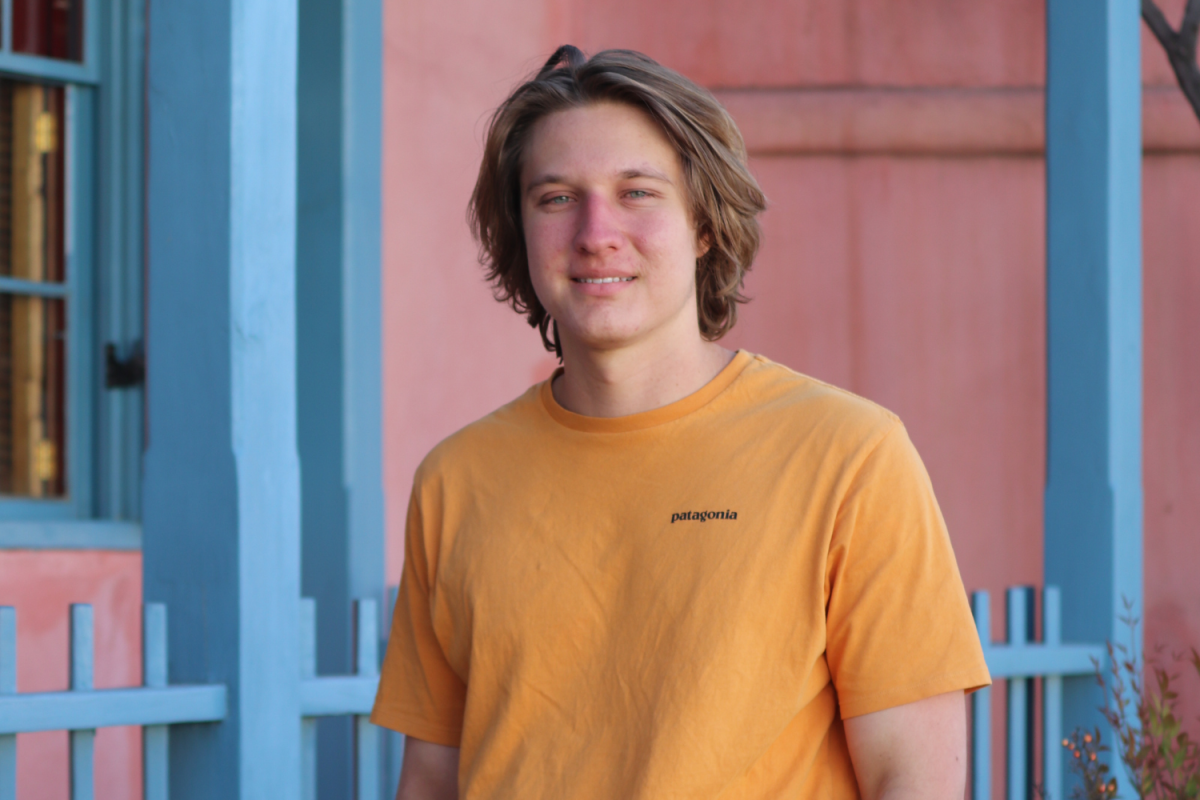
In an era where virtually every corner of our planet has been mapped, satellite-imaged, and geotagged, the human craving for the truly unseen has taken on a frantic, almost pathological quality. This modern obsession recently found its most extreme manifestation in Mykhailo Polyakov, a 25-year-old content creator from Arizona, whose quest for internet-breaking exclusivity led him to violate one of the most sacred and legally enforced boundaries on Earth: North Sentinel Island. Nestled within India’s remote Andaman and Nicobar archipelago, this emerald speck in the Bay of Bengal represents one of the very last sanctuaries of complete human isolation. It is home to the Sentinelese, an indigenous tribe that has rejected the outside world for millennia, surviving on their own terms, free from the entanglements of modern civilization. To the Indian government and global humanitarian organizations, the island is a highly restricted zone, surrounded by a strict multi-mile exclusion buffer designed to protect both the tribe’s sovereign right to isolation and their literal survival. To Polyakov, however, this ancient frontier was primarily a challenge waiting to be conquered, a blank spot on the map that could be transformed into compelling content for his YouTube channel. Under the cover of darkness on March 29, 2025, Polyakov embarked on an illicit nine-hour journey in a small, motorized dinghy from South Andaman, slicing through dark ocean waves toward an island that has violently repelled nearly every visitor for centuries. Guided by a potent mixture of youthful curiosity and the modern drive for digital clout, he calculated that the thrill of documenting the undocumented outweighed the formidable legal, ethical, and physical dangers awaiting him on those forbidden shores.
When the pale morning light finally revealed the dense, primordial canopy of North Sentinel Island, Polyakov did not see a ecological reserve or a vulnerable community deserving of quiet respect; he saw a stage. For roughly two hours, he hovered in the shallow, turquoise waters just off the island’s coastline, attempting to summon the islanders from the safety of their forest cover. He whistled loudly, flashed lights across the water, and yelled toward the treeline, desperate to capture even a fleeting glimpse of the tribal members on his camera lenses. In raw footage captured during this high-stakes intrusion, the chilling disconnect of the digital age is laid bare: as his boat drifts closer to the sacred sands, Polyakov can be heard casually joking to the camera, uttering remarks about “checking in” and jokingly offering to hand the tribespeople a Diet Coke. This flippant attempt at humor highlights a profound psychological distance, reducing a fragile, historically significant encounter into a lighthearted vlog segment for a distant, online audience. When he finally stepped onto the pristine sand of the beach, he crossed a threshold that very few modern humans have ever crossed and survived. Though he later insisted to journalists that his objective was never to establish formal communication or disrupt their way of life, his physical presence on that beach was an act of forced contact in itself. In attempting to “get them on camera,” Polyakov treated some of the last uncontacted humans not as sovereign agents with their own right to privacy, but as rare spectacles to be collected, cataloged, and monetized for an audience hungry for the exotic.
The terrifying irresponsibility of Polyakov’s landing lies not just in his defiance of Indian maritime law, but in the unseen biological warfare his mere presence threatened to unleash. Having lived in absolute isolation for thousands of years, the Sentinelese people have no immunological memory of the common pathogens that circulate harmlessly throughout the globalized world. A simple common cold, a trace of influenza, or a passing virus carried on an influencer’s clothing could easily act as a devastating biological agent, capable of decimating the tiny, vulnerable population of the island in a matter of weeks. This existential threat is precisely why global human rights organizations, such as Survival International, reacted with swift and fierce condemnation following his arrest. Survival International publicly denounced Polyakov’s expedition, labeling him a “self-obsessed influencer” whose reckless actions exposed the dark heart of modern attention-seeking behavior. They pointed out that uncontacted peoples have made a conscious, active choice to remain isolated from the outside world, a choice that has been repeatedly communicated through defensive violence. The history of North Sentinel Island is stained with the blood of those who ignored these warnings: in 2018, young American missionary John Allen Chau was killed by arrows when he tried to convert the tribe, and in 2006, two local fishermen met a similar fate after their boat drifted onto the island’s reefs. Knowing this violent history, Polyakov’s decision to land was a calculated gamble, a gamble that prioritized his personal brand over the collective survival of an entire ancient culture.
Upon his return to the mainland, the reality of the Indian legal system caught up with the young YouTuber, resulting in his immediate arrest and the confiscation of his travel permits. Yet, the subsequent legal consequences he faced raise troubling questions about the efficacy of international protections for vulnerable indigenous groups when pitted against wealthy, mobile Western creators. Polyakov was detained for three weeks and ordered to pay a fine of 15,000 Indian rupees—an amount equivalent to roughly $158 USD. For a content creator whose videos can generate thousands of dollars in ad revenue and sponsorship deals, this penalty represents little more than a negligible business expense. Polyakov himself admitted as much, candidly reflecting that he had weighed the potential risks of getting caught beforehand and assumed the legal fallout would be minor, a calculation that proved entirely correct. This disparity between the gravity of his offence and the light punishment he received illustrates a dangerous loophole in global travel ethics: when the penalties for violating sacred spaces are so low, they cease to function as deterrents and instead become the simple cost of doing business. Humanitarian advocates argue that such lenient treatment only encourages other ambitious creators to view restricted regions as high-reward, low-risk playgrounds where they can trade a few weeks of detention for lifelong internet fame and lucrative content rights.
More than a year after his arrest, as he begins to roll out the heavily produced footage of his forbidden journey on his YouTube channel, renamed “Neo-Orientalist,” Polyakov remains entirely unrepentant. When asked directly if he regretted his actions or if he would make the same decision today, his answer was an unwavering, unapologetic yes. He frames his illicit journey not as an act of reckless trespass, but as an act of noble, independent journalism, claiming a personal mandate to document the parts of our world that are otherwise hidden from the public eye. This defense relies on a romanticized, nineteenth-century view of exploration, where the desire of the Western traveler to “know” and “see” overrides the basic human rights and sovereign boundaries of the people being observed. By re-branding his trespassing as a “documentary” effort, Polyakov attempts to elevate his search for online engagement into a high-minded intellectual pursuit. This line of reasoning is central to the growing and controversial phenomenon of “danger tourism,” where travelers explicitly seek out geopolitical conflict zones, dangerous frontiers, and highly restricted areas to construct an aura of bravery and authenticity. However, while traditional documentarians operate under strict ethical guidelines, peer reviews, and deep respect for their subjects, the danger tourist operates in an ethical vacuum, where the primary currency is shock value, and the ultimate beneficiary is the creator’s own social media profile.
Ultimately, the saga of Mykhailo Polyakov’s journey to North Sentinel Island serves as a sobering parable for the digital age, illustrating the profound ethical challenges that arise when global connectivity collides with the fragile remnants of our untouched past. By refusing to accept responsibility for the potential consequences of broadcasting his footage, Polyakov highlights a systemic issue within the creator economy: the outsourcing of ethical accountability to the viewer. His claim that he does not encourage others to mimic his journey rings hollow when the very medium he uses to share his story is designed to inspire, titillate, and drive emulation through algorithmic amplification. The viral nature of social media ensures that every boundary pushed and every law broken acts as a blueprint for the next creator looking to make their mark on the digital landscape. As the virtual world grows more crowded, the pressure on influencers to seek out increasingly extreme, dangerous, and unethical content will only intensify. If we choose to celebrate, watch, and monetize the exploitation of the world’s last uncontacted peoples under the guise of “exploration,” we become complicit in the gradual erosion of their right to exist in peace. The survival of the Sentinelese people depends not on our ability to document them, but on our collective capacity to look away, to respect their boundaries, and to understand that some mysteries are far more beautiful left entirely in the dark.