





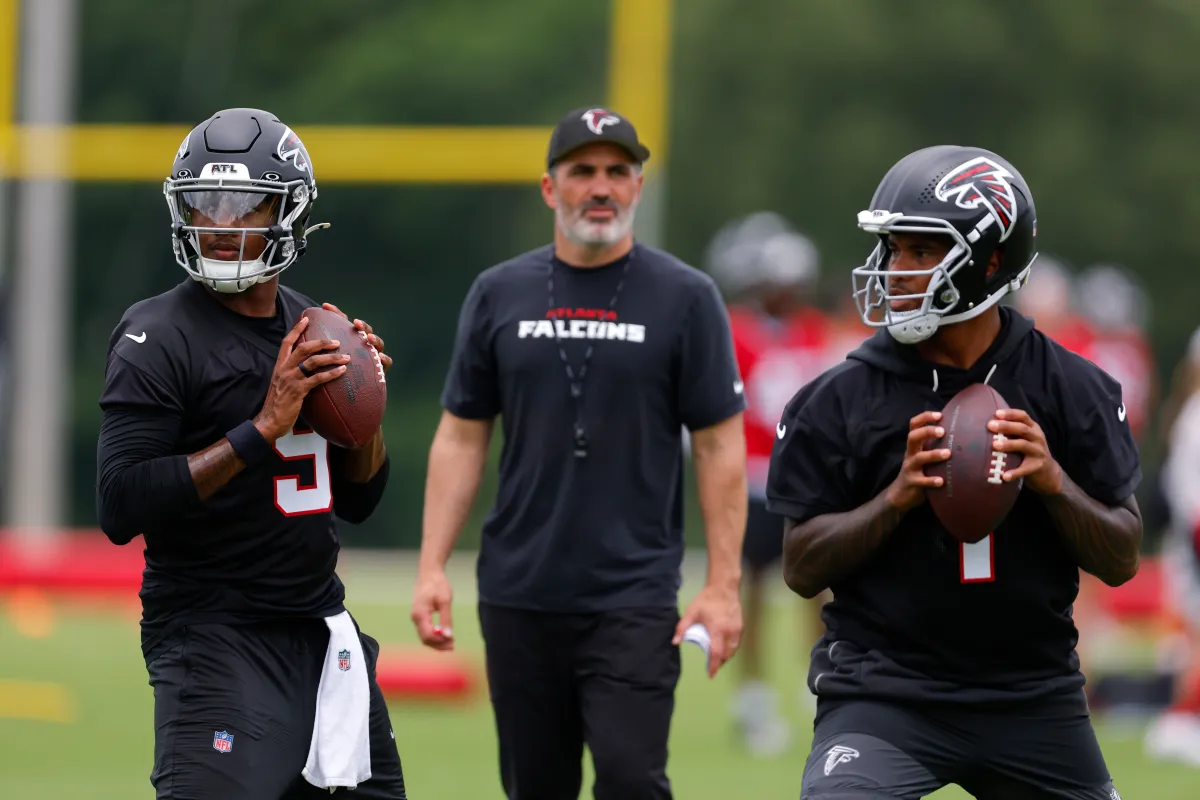
The journey of a professional gridiron quarterback is rarely a straightforward march to glory; instead, it is often shaped by the agonizing, quiet hours spent in rehabilitation clinics long before a player ever enjoys the deafening cheers of a packed stadium on Sunday afternoon. In Atlanta, an incredibly compelling and deeply human quarterback narrative is currently unfolding behind closed doors, although fans who are eagerly anticipating an immediate, cinematic showdown between Michael Penix Jr. and Tua Tagovailoa will have to temper their excitement and embrace a lengthy period of patience. The Falcons’ coaching staff, guided by the seasoned perspective of offensive minds like quarterbacks coach Alex Van Pelt, has made the highly protective decision to hit the pause button on this high-stakes competition during the team’s Organized Team Activities (OTAs) this spring. This calculated pause is rooted in a fundamental philosophy of organizational fairness, with Van Pelt publicly explaining to the media that it is virtually impossible to foster an authentic, constructive competition when both elite athletes are not competing on the exact same physical plane. The primary roadblock to this highly publicized duel is Penix’s ongoing recovery from a severe, season-ending torn anterior cruciate ligament (ACL) suffered during his collegiate career, a devastating injury that has kept the promising young passer from participating in dynamic, full-speed 11-on-11 team contact drills during spring practices. For Penix, the current phase of his career is defined by patient obedience to medical advice and incremental physical milestones, while for Tagovailoa, the spring represents an invaluable head start to command the offensive huddle, even as both competitors remain acutely aware that a fierce summer storm of competition is brewing on the horizon. This dynamic highlights the raw emotional tension of professional sports: the agonizing friction between an athlete’s natural, hyper-competitive desire to immediately assert dominance and the absolute physiological necessity of allowing a reconstructed knee to fully heal.
The physical and mental hurdles of returning from a major knee reconstruction are notoriously difficult for any young quarterback to navigate, as they must relearn how to trust their own legs while simultaneously absorbing the dizzying complexities of a completely new NFL offensive system. The current, restricted structure of Atlanta’s spring practices offers a fascinating window into this delicate evolutionary process, with Penix and Tagovailoa splitting repetitions as evenly as possible during controlled 7-on-7 passing drills, where the absence of a live, aggressive defensive rush provides a relatively safe harbor for the recovering rookie passer. Yet, even in this highly regulated environment, the subtle imbalances of the situation are impossible to ignore; because Tagovailoa is fully healthy and performing without physical constraints, he naturally commands a greater share of the first-team reps and the microscopic, unspoken leadership moments that occur between plays. Van Pelt has pointed out the inherent difficulty of trying to accurately evaluate two players when they are operating under entirely different circumstances, noting that while Penix’s performance in limited throwing sessions has been highly encouraging, a true quarterback evaluation remains a statistical impossibility without the chaotic, unscripted pressure of live 11-on-11 football. For a hungry athlete like Penix, standing on the sidelines during team drills is a profound test of mental discipline and emotional maturity, as he must watch a highly talented peer build physical rhythm and chemistry with the starting wide receivers while knowing that rushing his own rehabilitation timeline could permanently derail his future. Meanwhile, Tagovailoa must navigate his own complex emotional path, preparing himself daily as the team’s temporary leader while knowing that his teammate’s recovery is a ticking clock that will eventually usher in an era of intense, unrelenting competitive pressure.
Successfully managing this delicate situation requires an organizational leadership team that is willing to prioritize long-term clinical and franchise health over the immediate, insatiable demands of the modern twenty-four-hour sports media cycle, a philosophy that head coach Kevin Stefanski has embraced with unyielding determination. In his public statements, Stefanski has consistently refused to tether Penix’s physical recovery to a rigid, arbitrary calendar, opting instead to champion a milestone-based approach that relies heavily on ongoing communication between the team’s internal medical department and the young quarterback himself. This highly protective, paternal coaching stance is a critical element of modern athletic management, where coaches must frequently serve as the necessary external brakes on hyper-competitive young men who, in their desperate eagerness to play, would gladly ignore pain and risk permanent bodily harm. Stefanski candidly acknowledged this underlying human struggle, hinting that there are moments when the coaching and medical staff must actively hold Penix back from taking on too much work on the practice field, even as the young quarterback successfully hits every recovery milestone currently laid out for him. By refusing to commit to an exact timeline for Penix’s return to contact drills, or even confirming whether he will see action during the team’s summer exhibition games, the Falcons’ leadership is actively shielding their highly valuable asset from unnecessary public pressure, allowing him to heal in a supportive environment free from artificial deadlines. This slow and methodical approach speaks volumes about the front office’s long-term vision, indicating that they view Penix not as a temporary solution, but as a franchise cornerstone whose ultimate health must be preserved at all costs, regardless of the noise from outside the building.
While this cautious approach is undoubtedly the correct decision from a medical standpoint, it nonetheless introduces a series of significant logistical challenges and deeply frustrating hurdles that will inevitably complicate the team’s offensive preparation as training camp approaches. When a coaching staff is forced to split precious practice repetitions between two different signal-callers, it inherently limits the entire offensive unit’s ability to develop the deep, split-second chemistry that is absolutely critical for success in the modern NFL. This particular brand of operational frustration is currently echoing throughout the entire professional football landscape, as seen in Minnesota, where Vikings quarterback Kyler Murray recently voiced his strong dissatisfaction with the split-rep format he has had to share with rookie J.J. McCarthy during their spring workouts. Murray’s public remarks highlight a universal truth known to all professional starting quarterbacks: that dividing practice opportunities directly hinders a player’s capacity to truly master the timing, cadences, and intricate physical nuances of a complex, elite offensive scheme. In Atlanta, a similar prolonged setup through training camp means that neither Tagovailoa nor Penix will receive the concentrated, uninterrupted volume of work required to establish an absolute, second-nature connection with the primary offensive line and the starting receiver room. This lack of constant, reliable continuity can lead to critical miscues in timing, miscommunications on rapid route adjustments, and an overall lack of offensive rhythm that can easily bleed into the regular season, turning a sensible medical precaution into an offensive setback if the coaching staff cannot find creative ways to maximize limited time.
As the sweltering, humid days of late summer draw near, the intense pressure cooker of training camp will inevitably force this quiet quarterback situation into a highly accelerated, unpredictable phase where the luxury of patience must finally yield to the realities of the upcoming season. Once Penix is officially cleared by the medical department to shed his protective red non-contact jersey and re-enter the chaotic, high-speed world of live 11-on-11 team contact sessions, the coaching staff will have to make critical decisions in an exceptionally tight timeframe, transforming every practice snap into a high-stakes audition. The sheer velocity of a summer training camp quarterback battle is notoriously mentally taxing; every completed deep ball, every intercepted pass, and every pre-snap protection adjustment will be relentlessly analyzed by coaches on film, debated endlessly by media members, and heavily weighed by eager fans. This high-pressure environment leaves virtually zero margin for error, demanding that both Penix and Tagovailoa perform at the absolute peak of their respective athletic capabilities while navigating a shared workload that will likely persist deep into the preseason exhibition games. The winner of this grueling summer competition will not only have to physically outplay their talented counterpart on the turf, but they must also demonstrate an exceptional capacity for psychological resilience, maintaining consistent leadership and composure within a locker room that will be watching closely to see how both men respond to intense adversity. It is an old-school trial by fire, and the individual who ultimately claims the starting job will have almost no time to celebrate, as they must instantly pivot to the monumental task of directing the franchise through the unforgiving regular season schedule.
Ultimately, the unfolding quarterback saga in Atlanta represents much more than a sterile battle over depth chart positions, completion percentages, or medical timeline milestones; it is a profoundly compelling study of human resilience, personal ambition, and the pursuit of athletic greatness under the relentless lens of public expectation. For Michael Penix Jr., this journey is about triumphantly overcoming the cruel structural setbacks of a major knee injury, painstakingly rebuilding his physical foundation and mental confidence brick by brick to prove that his dream of franchise leadership remains fully within his grasp. For Tua Tagovailoa, it represents a profound test of his established professional identity and pride, demanding that he assert his natural talent and maintain his status as a premier starting signal-caller in the face of a highly motivated newcomer eager to claim his spot. As these two intensely driven, highly skilled competitors prepare to share the practice fields, the grace, professionalism, and mutual respect they display during this transition period will go a long way in shaping the overall culture and identity of the entire Falcons franchise. In an era where professional sports can frequently feel overly transactional, highly synchronized, and detached from raw emotion, the quiet, painstaking struggle taking place in Atlanta serves as a powerful, humanizing reminder of the vulnerability of the athletes themselves. Behind the iconic helmets, the lucrative contracts, and the heavy media narratives are two real human beings working through their fears, chasing their ultimate athletic potential, and fighting side by side to define their own legacies in the unforgiving theater of the NFL.