






The Gray Zone Challenge: NATO’s Race Against Time in the Skies Above Europe
The quiet skies over southeastern Europe were shattered on August 16 when a Spanish F-18 fighter jet, patrolling as part of NATO’s air policing mission, made a split-second decision to shoot down an unidentified drone that had drifted into Romanian airspace. Just four days later, Romanian F-16s scrambled once again, this time chasing a maritime drone that had been detected hovering dangerously close to the Neptun Alpha offshore platform—a crucial component of the massive Neptun Deep natural gas project that Europe has come to depend on for its energy security. No lives were lost in either incident, and for that, we can all breathe a collective sigh of relief. But these near-misses should not lull us into a false sense of security. What unfolded in the Black Sea region represents something far more troubling—a security challenge that NATO can no longer afford to push aside. The fundamental question that keeps military commanders and political leaders awake at night is this: How do we respond when an unidentified threat approaches allied territory, when every second counts, but determining who sent it could take hours or even days?
This is the uncomfortable reality of what military strategists call gray-zone warfare—that murky area between peace and open conflict where adversaries can create chaos without ever launching a conventional attack. An enemy no longer needs to commit to a full-scale military offensive to disrupt our way of life. A single cheap drone, designed to test our reaction times, hover menacingly near critical energy installations, or simply create uncertainty about its origin and intentions, can achieve strategic objectives that would normally require far more significant resources. The real goal often isn’t to cause physical destruction but to sow doubt in the minds of decision-makers, to make them hesitate, to create the appearance of vulnerability. This is not some theoretical future scenario playing out in think tanks and academic papers. On September 13, a drone struck the locomotive of a passenger train traveling from Kyiv to Warsaw, just a few kilometers from the Polish border. What makes this incident particularly chilling is the timing—mere minutes after a separate train carrying senior European officials, including former prime ministers of the United Kingdom and Sweden, had passed through the exact same stretch of track. No one was hurt, but the message was unmistakable: gray-zone tactics are now reaching into the very transport corridors that connect Ukraine to NATO territory, threatening the people who depend on these routes, including the most senior figures in European politics.
Having served as Romania’s deputy prime minister for strategic partnerships and minister of justice, I spent years grappling with national security challenges and the complexities of the Black Sea region, including co-chairing the U.S.-Romania Strategic Partnership Dialogue in Bucharest. That experience taught me a lesson that has become my unshakeable conviction: uncertainty must never become an excuse for inaction. NATO simply cannot afford to wait for definitive attribution before taking steps to protect its people and infrastructure. But this doesn’t mean we should embrace improvisation or reckless decision-making. Speed and deliberation are not mutually exclusive. What commanders need are pre-authorized rules of engagement, established well in advance, based on a threat’s behavior, its trajectory, how close it comes to protected assets, and the potential risk to civilian lives. The objective is not to turn every unidentified object into a target, but to give commanders a lawful basis for taking proportionate and timely action when a threat presents an imminent danger. More importantly, we need to send an unmistakable message to any potential adversary: testing NATO’s airspace, threatening its critical infrastructure, or probing its decision-making processes will not result in hesitation or paralysis. The alliance is prepared to act, and that readiness itself is what deterrence is all about.
Asking pilots or field commanders to solve complex legal and political equations while hurtling through the sky at supersonic speeds is both unfair and dangerous. A fighter pilot has seconds to make decisions that could mean the difference between life and death. Meanwhile, intelligence teams may need hours or even days to establish where a drone came from and who launched it. Designing our air defense systems on the assumption that these two timelines will naturally align is a recipe for catastrophic failure. This challenge is as much legal and political as it is operational. Under current peacetime arrangements, the authority to use force in defense of national airspace remains firmly in the hands of individual nations. We saw this play out in Poland, where the Polish Operational Commander made the decision to neutralize drones that posed a threat, with Polish and allied aircraft involved in the response. But because each member state relies on its own national protocols, the alliance is left with a patchwork of different rules and procedures. As someone who has served as minister of justice, I know all too well that military authorization is practically useless if the decision-making process becomes bogged down by fragmented responsibilities or endless bureaucratic sign-offs. NATO needs a fast-track operational protocol that defines, in advance, when and under what conditions commanders can engage a high-risk threat. When an unidentified object enters allied airspace or approaches critical infrastructure, the chain of command must be fast enough to match the threat. The authority to act must be established long before a crisis begins, not negotiated on a secure line while a drone is heading toward a populated area or an offshore energy platform.
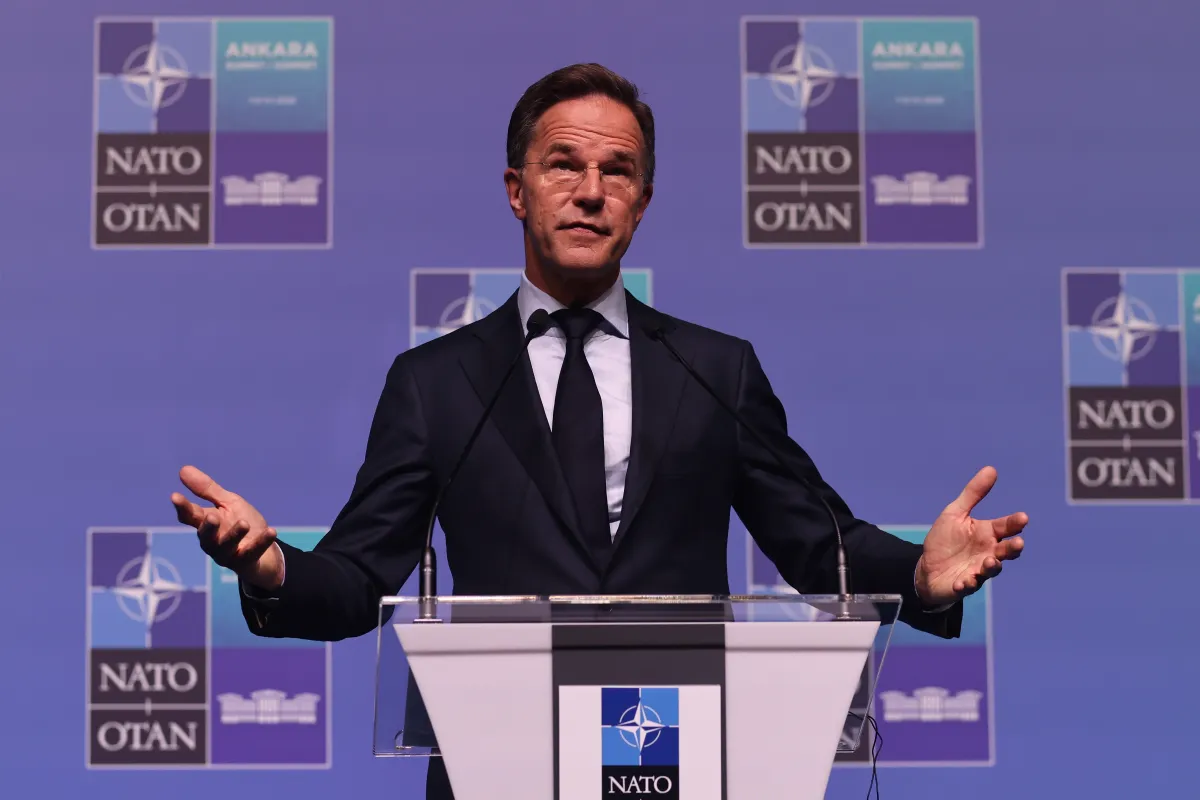
We also cannot afford to ignore the blunt economic reality of this new form of warfare. Scrambling a multimillion-dollar fighter jet or launching a high-end interceptor missile to deal with a cheap, mass-produced drone cannot remain our default response. These high-end systems are absolutely vital when lives or critical infrastructure are at serious risk, but NATO needs a broader, more flexible toolkit to address the full spectrum of threats. The announcement at the NATO Summit Defence Industry Forum in Ankara in July was encouraging—Secretary-General Mark Rutte unveiled the NATO Drone Edge Initiative, under which allies will invest more than $40 billion in counter-drone capabilities over the next five years. This investment is significant, but it must be matched by a unified operational doctrine that translates these resources into clear rules of engagement. The capabilities are already there. NATO’s European members need to bring them together into a layered air-defense system, combining sensors, command and control, electronic warfare, low-cost interceptors, and short-range systems. As technology continues to mature, we must also integrate directed-energy weapons into that toolkit. The alliance must match the tool to the threat while developing solutions that make countering these threats economically sustainable over the long term.
For Romania and our Black Sea neighbors, this is not an academic debate taking place in distant capitals. Strategic energy assets such as Neptun Deep are vital to Europe’s energy security and resilience, and protecting them must be part of baseline defensive planning. The same applies to ports, power plants, communications infrastructure, and military facilities across the entire alliance. Romania has already demonstrated what practical cooperation can look like. In April, we hosted the first event in NATO’s LCI-X counter-UAS series at the Capu Midia military training range. But these exercises must do more than simply test equipment; they must test decision-making processes. Who has the authority to act? How quickly can that authority be exercised? What happens when available intelligence is incomplete or contradictory? Deterrence depends on more than just military capabilities. Allies also need shared situational awareness, a clear political decision-making process, and timely communication to commanders and the public. In a gray-zone environment, fragmented information or contradictory messages can create the very uncertainty that adversaries seek to exploit. NATO must therefore rehearse not only how it will intercept a threat but also how it will perceive the same threat, decide what to do about it, and communicate that decision clearly to all stakeholders. For those of us on NATO’s eastern flank, the gray zone is no longer an abstract concept discussed in policy papers—it is part of our daily security reality. The alliance already has the technology, the capabilities, and the experience to respond effectively. What it needs now is the political courage to give commanders clear rules and the authority to act when time matters more than certainty. The next drone will not give us hours to debate. We must not waste those precious seconds trying to figure out what our rules are.