






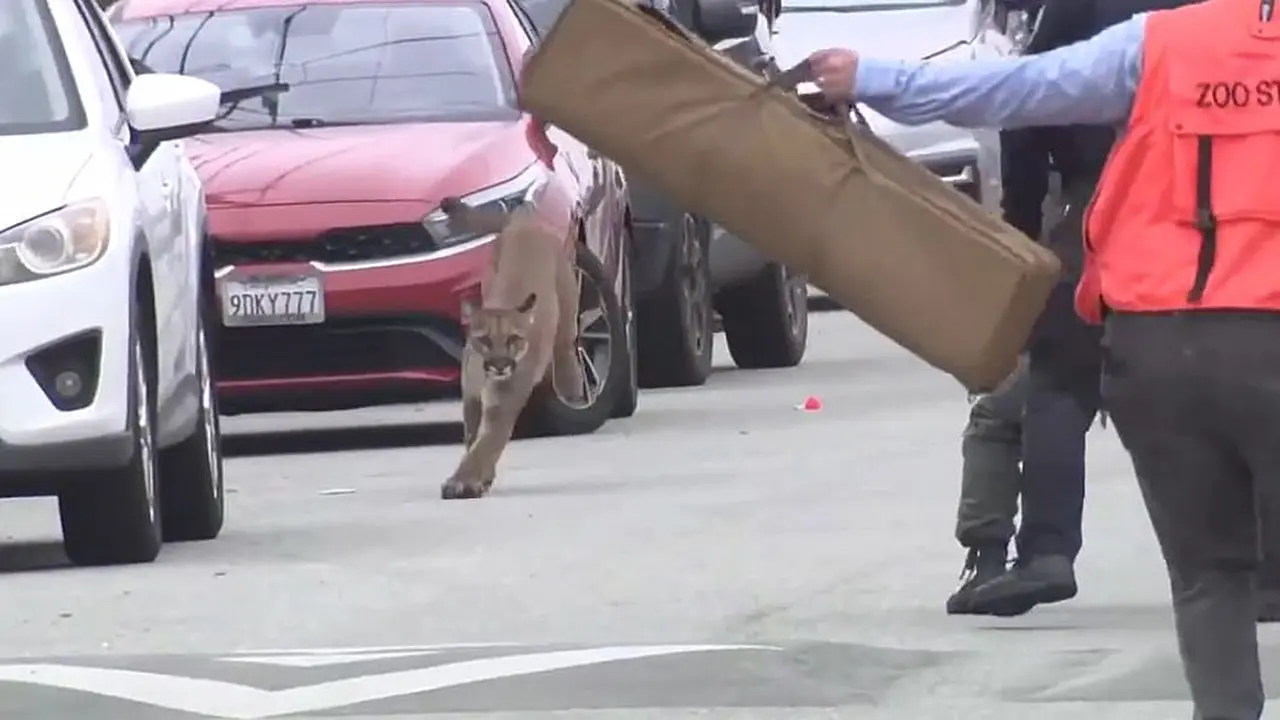
The fog rolled in thick over San Francisco’s Outer Sunset district on Friday morning, blanketing the familiar grid of pastel-colored row houses, corner laundromats, and the salty, endless whisper of the Pacific just beyond. It was a typical, sleepy morning in the city’s largest neighborhood, a place where the rhythm of life is measured by the arrival of the Muni bus and the creak of garage doors opening for the commute. But beneath the quiet hum of suburbia, an unusual visitor had taken refuge. A mountain lion—a ghost of the wild, sinewy and silent—had somehow slipped through the porous membrane between the rugged coastal hills and this dense, residential enclave. It was spotted lurking near backyards and driveways, its tawny coat blending imperfectly with the grey concrete and green hydrangeas, sending a ripple of disbelief and adrenaline through the community. For the residents who caught a glimpse of the big cat, it was a moment of surreal suspension; the wild had come knocking, not with a roar, but with a sudden, electric presence that transformed familiar sidewalks into a frontier of uncertainty.
The sighting triggered an immediate and massive mobilization, transforming the neighborhood into a tactical theater. The San Francisco Police Department arrived first, their squad cars blocking off intersections, their officers urging curious onlookers to step back behind the yellow tape. They were soon joined by a formidable coalition: California Department of Fish and Wildlife wardens, the city’s Animal Care & Control officers, and, notably, experts from the San Francisco Zoo. The mountain lion, likely confused and terrified by the cacophony of sirens and the scent of a thousand humans, had taken cover in a confined, shadowy space—a narrow crawlspace under a porch or the thick, damp underbrush beside a residential garage. For hours, the standoff persisted. Officials monitored the animal’s breathing from a safe distance, their radios crackling with quiet, urgent assessments. The air was thick with tension; the stakes were deeply human as much as they were scientific. No one wanted a tranquilized cat to stagger into traffic, and no one wanted a frightened resident to be harmed. The coordination was a delicate ballet of patience, a waiting game where every twitch of the cougar’s ear was analyzed, and every shift of the fog changed the tactical dynamics. Neighbors watched from behind their windows, sipping coffee and clutching their pets, their morning routines entirely hijacked by the drama unfolding just yards from their trash bins.
Finally, the moment of resolution came. A veterinarian from the San Francisco Zoo, armed with a dart rifle, skillfully delivered the sedative. The mountain lion, magnificent in its sheer size and power, slowed, its yellow eyes growing heavy, before eventually slumping into a deep, chemically induced sleep. A wave of relief washed over the officers as they carefully extracted the animal from its hiding spot, placing it gently into a secure metal transport crate. After a brief period of medical evaluation to ensure the dose was perfect and the cat was stable, the team loaded the crate into a vehicle and drove out of the city, heading south toward a wilder, safer landscape. In the late afternoon, Animal Care & Control shared a triumphant video on social media: the crate door swinging open, a moment of hesitation, and then the mountain lion—groggy but alive—stepping out onto the leaf-strewn earth, blinking in the dappled sunlight. It paused, shook its massive head, and with a fluid, effortless stride, disappeared into the dense, protective woods. It was a perfect ending to a harrowing day, a testament to the skill and compassion of the professionals who refused to treat the animal as a mere nuisance, but rather as a misplaced soul deserving of a second chance.
The story, however, held a quiet mystery that deepened the narrative: the mountain lion was wearing a collar it hadn’t reportedly had before. This detail immediately linked the wild visitor to the Santa Cruz Puma Project, a dedicated research initiative that studies the behavior, movement, and ecology of mountain lions along the California central coast. For these scientists, the collaring of a puma is a milestone—a way to unlock the secrets of how these apex predators navigate the increasingly fragmented landscape of highways, suburbs, and farmland. The presence of this specific collar meant that the mountain lion was not just a random vagrant; it was a known individual, likely a young, dispersing male, perhaps in search of new territory or a mate, forced to push further into urban edges than his ancestors ever would have dared. The coincidence of a prior sighting in San Francisco’s Panhandle neighborhood earlier in the month, where another cougar was spotted but vanished back into the greenery on its own, begged the tantalizing question: was this the same wanderer, tracing a lonely, perilous circuit through the city’s green belts? The scientific value of this incident was enormous, offering a live case study in wildlife corridor connectivity and the adaptability of a species under severe habitat pressure.
Beyond the logistics of darting and release, the event was a profoundly human story, one that revealed the fragile empathy we hold for the wild. The official Facebook post from San Francisco Animal Care & Control captured this sentiment perfectly, thanking the San Francisco Zoo for their “expertise darting the lion,” the police for “having our backs,” and the Santa Cruz Puma Project for their research. With a touch of delightful humility, they wrote, “It takes a village to wrangle a mountain lion!” This phrase resonated deeply, turning a potentially frightening wildlife encounter into a communal uplift. It acknowledged the bravery and dedication of Animal Control Officers who work daily, not just with stray dogs, but with the unexpected, high-stakes emergencies that test their limits. For the human onlookers, there was an undeniable mix of awe and primal fear. To see a mountain lion is to feel a surge of respect for a top predator that outweighs any city dweller. The lion wasn’t malicious; it was lost, driven by instinct, its wild heart beating against the bars of its urban trap. In that respect, the city’s response wasn’t just about public safety—it was an act of profound mercy, a collective decision to guide a fellow creature back to its rightful home rather than resort to lethal force.
As the sun set on the Sunset District, the event faded into the realm of neighborhood legend, but its implications lingered. This encounter is emblematic of a larger, accelerating shift in the American West, where urban sprawl constantly intersects with dwindling wilderness. As human development expands into the foothills and canyons of California, encounters with mountain lions, bobcats, and black bears are becoming less of an anomaly and more of a routine, albeit special, occurrence. The safety of both people and wildlife hinges on that delicate balance between vigilance and compassion. The successful outcome on Friday was a resounding victory for coexistence, proving that with the right combination of expertise—bureaucratic, veterinary, and ecological—we can share our spaces with the wild without destroying it. The mountain lion’s brief sojourn through the fog brought the city to a standstill, not out of panic, but out of collective wonder. It challenged us to remember that the concrete grid of our cities is just a thin skin stretched over a landscape that was once theirs. And in that quiet moment when the crate door opened, and the cougar stepped back into the shadows, San Francisco caught a fleeting, breathtaking glimpse of what true wilderness feels like—a reminder that even in the densest urban jungle, the mystery and majesty of the natural world is never more than a heartbeat away.