




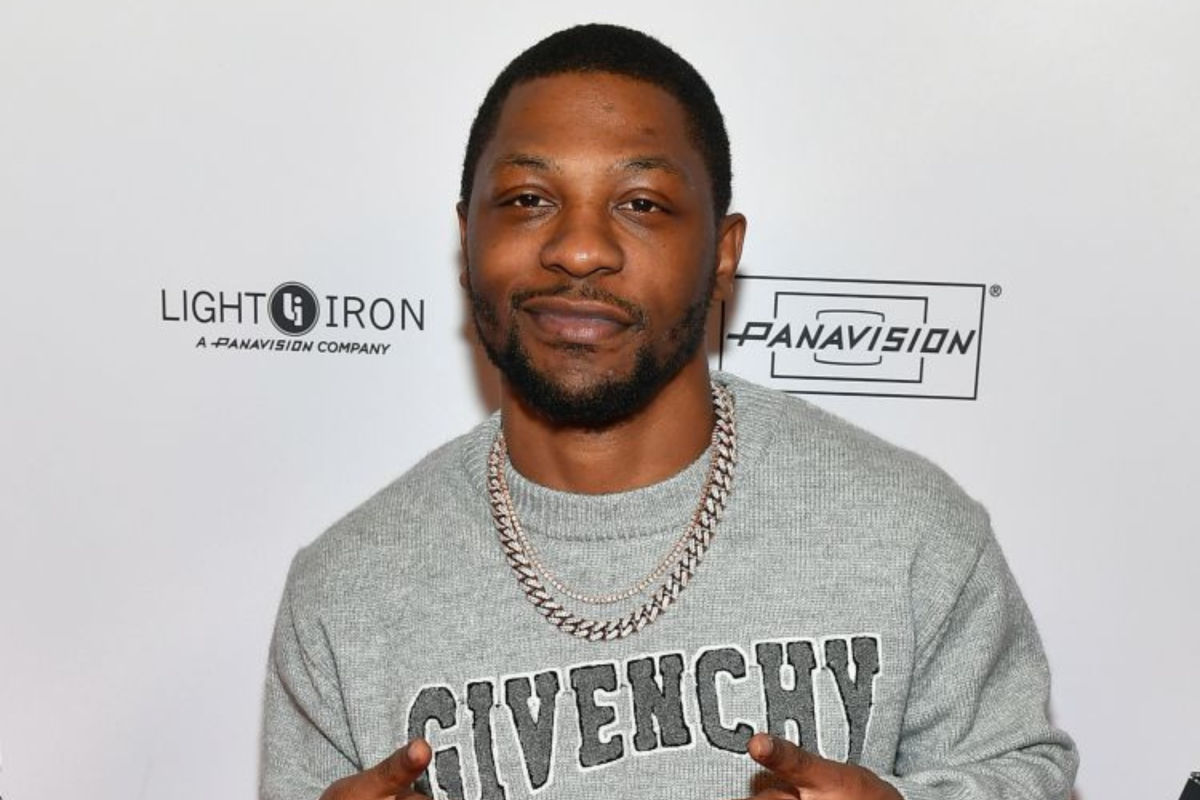
Former child actor Bobb’e J. Thompson now faces more than two years in federal prison after a sentencing that closed a swift and sobering chapter in his life. According to the U.S. Attorney’s Office for the Northern District of Iowa, Thompson was arrested in September 2025 after authorities stopped a vehicle he was driving at 104 miles per hour in a 70-mile-per-hour zone. During the stop, investigators found marijuana and a loaded stolen handgun inside a backpack belonging to the actor. Thompson pleaded guilty in April, and on Wednesday, U.S. District Judge Leonard T. Strand sentenced him to 30 months behind bars followed by three years of supervised release. Federal prosecutors also pointed to Thompson’s prior convictions, which included assault-related offenses and an earlier firearm conviction. The sentence carries a weight that feels especially heavy given where Thompson started. Many people first met him as Stanley on the Disney Channel’s That’s So Raven, where he appeared in ten episodes and brought a kind of bright, mischievous energy that made him easy to remember. He went on to build a career through Wild ’N Out, House of Payne, and a number of film roles. But on that Iowa highway, the distance between the boy who made audiences laugh and the man now facing a federal prison term became painfully clear. His case is no longer just a career setback; it is a criminal sentence that will follow him long after he leaves prison.
Thompson’s story is not an isolated one, and his sentencing has renewed attention on a troubling pattern that has played out across generations of young entertainers. The entertainment industry has a long history of lifting children into extraordinary fame while giving them very little protection from the ordinary struggles of growing up. For some, the transition to adulthood has been marked by addiction, mental health crises, and repeated encounters with the criminal justice system. Among Disney Channel alumni, the list is long and well documented. Orlando Brown, known for his roles on That’s So Raven and other Disney projects, spent years in and out of legal trouble, with arrests connected to domestic disputes, narcotics possession allegations, trespassing incidents, and court-related violations. He has spoken openly about his battles with substance abuse and homelessness, making his story one of the most visible examples of a former child star struggling to find stability after early success. Shia LaBeouf, who rose to fame on Even Stevens, has faced multiple arrests and legal controversies as an adult, most recently receiving a sentence in June after pleading guilty to simple battery charges stemming from a Mardi Gras altercation in New Orleans. He also faced arrests in Georgia and New York, and was the subject of a civil lawsuit brought by singer FKA twigs that was later settled out of court. Mitchel Musso, best remembered as Oliver on Hannah Montana, was arrested in Texas in 2023 on public intoxication and theft-related allegations, though the key charges were later dismissed. Adam Hicks, from Zeke and Luther and Lemonade Mouth, faced far more serious allegations, including armed robbery charges in California in 2018. He was sentenced to five years in prison in 2021 but was paroled in March 2022 after receiving credit for time served. Hicks later spoke publicly about addiction, incarceration, and recovery, offering a rare glimpse of accountability and hope. Anneliese van der Pol, another That’s So Raven alum, pleaded no contest after a 2006 DUI arrest that occurred when she crashed into a parked vehicle, triggering a chain-reaction collision involving two other cars. She was sentenced to probation, fined, and ordered to complete an alcohol education program, and she later spoke publicly about her struggles with substance abuse and recovery. Debby Ryan, the star of Jessie, was arrested after a 2016 traffic collision that resulted in a DUI case, which was ultimately resolved through a plea to a reduced charge of reckless driving. Each of these stories is different, but together they reveal a painful truth: fame at a young age does not protect anyone from the complicated, messy work of becoming an adult.
The pattern extends well beyond Disney Channel, reaching Nickelodeon and the world of film, where some of the most recognizable child stars in Hollywood history have faced serious legal trouble. Amanda Bynes, who became a household name through All That and The Amanda Show, remains one of the most discussed examples. Between 2012 and 2014, she faced multiple driving-related cases, including a DUI arrest, hit-and-run allegations, and charges connected to driving on a suspended license. That period coincided with widely reported mental health struggles and a conservatorship that remained in place for nearly a decade. Many of her legal matters were eventually resolved through plea agreements, dismissals, or counseling requirements, but the public watched her suffering in real time. Drake Bell, the star of Drake and Josh, became involved in one of the most high-profile cases involving a former Nickelodeon actor. In 2021, he pleaded guilty to attempted child endangerment and disseminating material harmful to juveniles, and a court sentenced him to two years of probation and 200 hours of community service. Bell later spoke publicly about the case and its impact on his life and career. Among movie child stars, Macaulay Culkin, best known for Home Alone, was arrested in Oklahoma in 2004 after authorities found marijuana and prescription medication in a vehicle. He pleaded guilty to misdemeanor drug charges and has since sought to have the decades-old record expunged. Unlike many former child stars whose troubles became recurring headlines, Culkin’s legal issues were relatively limited. Lindsay Lohan’s legal history, however, became one of Hollywood’s most closely watched celebrity sagas. Between 2007 and 2013, she faced multiple DUI arrests, probation violations, rehabilitation orders, and court appearances that often overshadowed her acting career and generated years of tabloid coverage. Jake Lloyd, who portrayed young Anakin Skywalker in Star Wars: Episode I — The Phantom Menace, experienced legal problems that his family later linked to severe mental illness and schizophrenia. His best-known arrest followed a high-speed police chase in South Carolina in 2015, though family members have since said he has responded positively to treatment. Edward Furlong, who became famous through Terminator 2: Judgment Day, faced repeated domestic violence allegations, probation violations, and jail sentences during the early 2010s. Beginning in 2001, Furlong was arrested twice in one day for driving without a license and driving under the influence. In the 2010s, he was arrested for violating a restraining order from his then-wife, Rachael Kneeland, and later sentenced to 16 months in jail for violating his probation. Haley Joel Osment, one of Hollywood’s most recognizable former child stars, drew widespread attention after a 2006 single-vehicle crash in Los Angeles County when he was 18. Authorities alleged that he was driving under the influence and in possession of marijuana when his car struck a brick pillar. He pleaded no contest to misdemeanor DUI and marijuana possession charges, and received probation, alcohol rehabilitation requirements, and fines. The incident remained an isolated episode in an otherwise relatively quiet public life. Tatum O’Neal, who made history as the youngest competitive Oscar winner at age ten for Paper Moon, struggled with addiction for decades and was arrested in 2008 in New York City after police alleged she attempted to purchase crack cocaine near her Manhattan apartment. She entered a treatment-focused resolution and later spoke openly about the substance abuse issues that had affected various stages of her life.
Television sitcom child stars have also faced their share of legal troubles, and in some cases, the outcomes have been devastating. Darius McCrary, who played Eddie Winslow on Family Matters, was arrested in 2025 on a Michigan warrant tied to child-support matters and failure to appear in court. He entered a no-contest plea and was released pending sentencing. Todd Bridges, known as Willis Jackson on Diff’rent Strokes, faced some of the most serious legal problems of any former child star. During the late 1980s and early 1990s, he dealt with drug addiction, weapons-related arrests, and an attempted murder case that ended in acquittal. Bridges has since spoken extensively about recovery and rebuilding his life after addiction, becoming a testament to the possibility of change. Dana Plato, who played Kimberly Drummond on Diff’rent Strokes, faced her own painful decline. In 1991, she was arrested after entering a Las Vegas video store with a pellet gun and demanding cash from employees. She pleaded guilty and received probation, but her struggles continued, and she died in 1999 at age 34 from an accidental drug overdose that was later ruled a suicide. Zachery Ty Bryan, best known for portraying Brad Taylor on Home Improvement, has faced a string of legal problems in recent years, making him one of the highest-profile former child actors to encounter repeated interactions with law enforcement as an adult. Starting in 2020 and continuing through November 2025, authorities arrested Bryan multiple times on allegations related to domestic violence and assault-related incidents. He was sentenced to 16 months in jail in February after a DUI conviction that stemmed from an arrest in 2025. These stories are not just headlines; they are lives unfolding under public scrutiny, often without the private support systems that might have made a difference.
What makes these stories so painful is not simply the legal consequences, but the larger human tragedy beneath them. Many child stars were thrust into adult environments before they had the emotional tools to understand what was happening around them. They worked long hours, carried enormous responsibilities, and were often treated as products rather than people. When the cameras stopped, many were left to navigate fame, money, relationships, and identity on their own. Addiction, mental illness, and poor decision-making are not moral failures; they are often the predictable outcomes of a childhood that was never allowed to be ordinary. The legal system, in many cases, became a stand-in for the scaffolding that should have been in place long before. For some, like Todd Bridges and Adam Hicks, the path has led to recovery and a willingness to speak honestly about their mistakes. For others, like Dana Plato, the end came far too soon. And for many more, the legal system has become a revolving door, catching them again and again as they struggle to break free from patterns established years ago. It is easy to look at these cases and see only bad choices, but doing so ignores the deeper context of exploitation, trauma, and neglect that so often shaped their lives. The entertainment industry gave these children fame, but it did not always give them the protection, education, therapy, or unconditional love that every child needs. The result is a long and heartbreaking list of talented people whose careers became intertwined with the criminal justice system in ways that no one could have predicted when they were first introduced to the world as bright-eyed young performers.
For Bobb’e J. Thompson, the road ahead is now clear and difficult. He will spend the next 30 months in federal prison, followed by three years of supervised release. His case joins a long list of legal troubles involving former child entertainers, but it is also deeply personal. Thompson is not just a cautionary tale; he is a man in his twenties who grew up in front of audiences and now must face the consequences of choices made as an adult. His earlier convictions, including assault-related offenses and a prior firearm conviction, show a pattern that will not be easy to break. But his sentence is not the end of his story. Federal supervised release is designed to offer structure and support, and many people who have served time have gone on to rebuild their lives. The same resilience that allowed Thompson to navigate the unpredictable world of Hollywood as a child might one day help him navigate the challenges of reentry. His case is a reminder that fame is not a shield, and childhood stardom is not a guarantee of a happy ending. It is also a reminder that the public’s fascination with these stories should be tempered with compassion. Behind every headline, every mugshot, and every court filing is a human being who was once a child with dreams. Thompson’s dream of a successful acting career may be behind him now, but his life is not over. What matters most is what he does next, and whether the system, and the rest of us, can see him not just as a former child star who fell, but as someone capable of finding his way back.