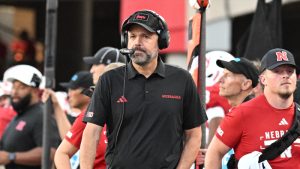





There is something about a Saturday night in Oxford, Mississippi, that makes college football feel less like a game and more like a drama unfolding under stadium lights. This weekend, the stage is set for one of the most emotionally charged matchups of the season as Lane Kiffin brings his new team, the LSU Tigers, to face the Ole Miss Rebels, the program he once led. The No. 7 Tigers and No. 8 Rebels are both undefeated in the ways that matter most, and the atmosphere in Vaught-Hemingway Stadium will be electric, tense, and personal. But in the days leading up to kickoff, the biggest story has not been about X’s and O’s or playoff positioning. It has been about the health of LSU quarterback Sam Leavitt, who appeared on the injury report as “doubtful” earlier in the week, only to be upgraded to “questionable” within the past day, according to ESPN’s Pete Thamel. That kind of ambiguity is enough to drive fans, analysts, and opposing coaches crazy. And it has certainly caught the attention of college football legend Nick Saban, who made it very clear that he is not buying the injury report at face value. In fact, Saban said he “100%” expects Leavitt to play on Saturday night, and he believes the entire situation may be a calculated piece of gamesmanship from Kiffin, a coach who has never been afraid to play with the minds of his opponents.
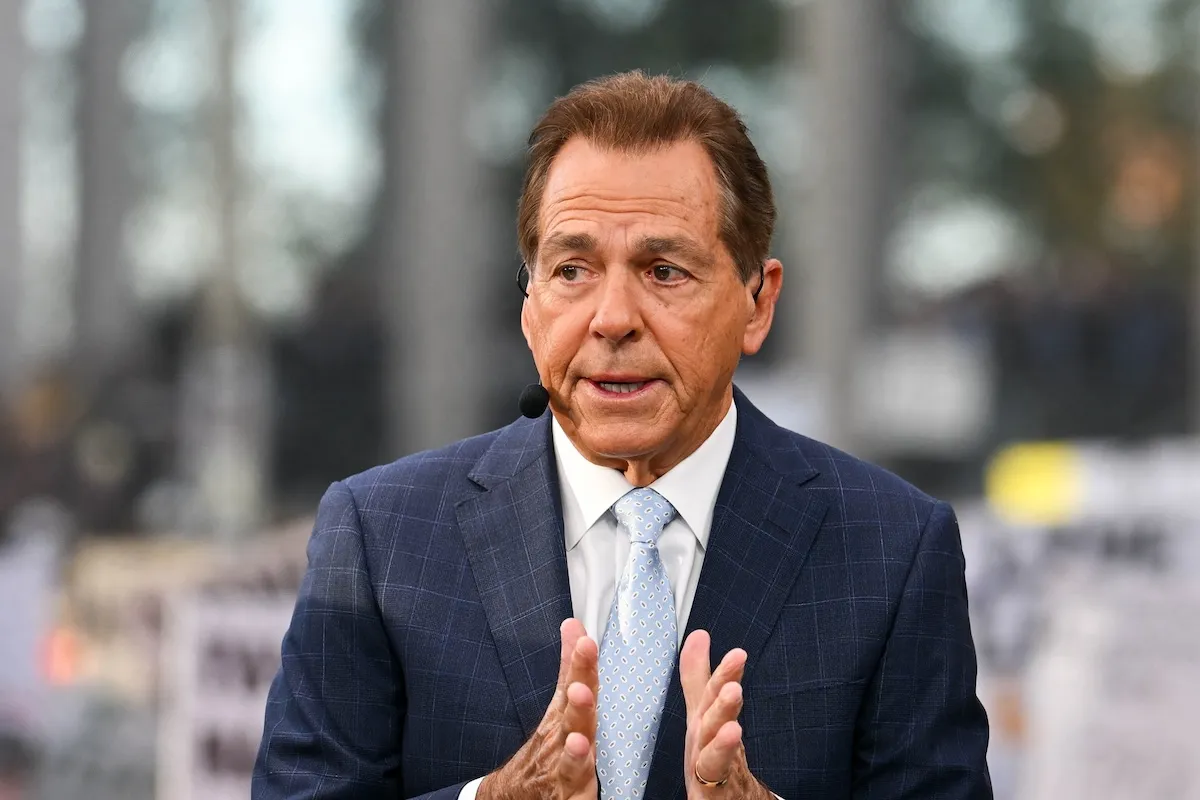
Saban shared his thoughts on Friday during an appearance on “The Pat McAfee Show,” and he did not mince words. The former Alabama head coach, who spent decades at the pinnacle of college football, knows a thing or two about how coaches manipulate information to gain an edge. He looked at the injury report, considered the context, and concluded that Leavitt is likely just fine. “If I was a betting man I would say there’s absolutely nothing wrong with Sam Leavitt,” Saban said. He went on to suggest that Kiffin might be using the injury designation as a form of psychological warfare, planting doubt in the minds of Ole Miss defenders. Saban explained that he would be “psychologically telling the defensive players that this doesn’t matter. Sam Leavitt’s gonna play; he’s gonna be the best; we gotta stop him.” His advice was simple and direct: do not relax, do not assume the opponent will be absent, and do not lose your edge. Because if you prepare as if Leavitt won’t play and then he shows up, the emotional letdown can be devastating. Saban’s words carry weight not just because of his five national championships, but because he has been on both sides of this kind of game. He has used injury reports to his advantage, and he has seen opponents try to do the same to him. When he speaks, people listen, and his assessment of this situation has only added more fuel to an already roaring fire.
What makes this whole scenario so intriguing is the lack of any obvious reason for Leavitt to be sidelined. During LSU’s win over Louisiana Tech last weekend, the junior quarterback did not appear to be in any pain, nor did he suffer any visibly reported injury. He moved around the pocket, delivered passes, and finished the game without any noticeable limp or grimace. That has led many to believe that the “doubtful” and “questionable” designations are less about actual physical ailment and more about strategic ambiguity. Kiffin has a reputation for being a master of the mental side of the game, and he knows that forcing Ole Miss to prepare for two different quarterbacks is a burden. It splits practice time, creates uncertainty in defensive game planning, and plants seeds of doubt in the minds of players who might be tempted to ease up. There is also the emotional layer of Kiffin returning to Oxford, where he once roamed the sideline as the Rebels’ head coach. He knows the personnel, the culture, and the atmosphere. He also knows Pete Golding, his former defensive coordinator, who was promoted to head coach at Ole Miss after Kiffin’s departure. That familiarity cuts both ways, and Kiffin is likely enjoying the chance to make his former program squirm. The official word on Leavitt’s status is expected to come either Friday night or roughly 90 minutes before kickoff, but by the time that announcement arrives, the psychological damage may already be done.
Leavitt himself is a fascinating figure in this drama. A junior transfer from Arizona State, he has quickly become the leader of LSU’s offense, bringing a blend of athleticism, arm strength, and poise that has made the Tigers one of the most dangerous teams in the country. So far this season, he has thrown for 574 yards and two touchdowns, though he has also thrown four interceptions, a stat that shows he is willing to take risks and test defenses downfield. His numbers are not eye-popping, but they do not need to be, because his value goes beyond the stat sheet. He manages the game, keeps drives alive, and gives his team confidence. If he were to miss this game, LSU would turn to Landen Clark, an Elon transfer who has limited experience at this level. Clark is a capable backup, but asking him to step into a hostile environment like Oxford, against a top-10 opponent, with the entire college football world watching, would be a monumental challenge. That is exactly why Saban believes the injury report is a ruse. A coach like Kiffin would not want to risk his starting quarterback in a game this important unless he had no choice, and the fact that Leavitt seemed perfectly healthy just days ago suggests this is all part of a larger plan. Saban even noted that once the injury report is updated and Leavitt is confirmed to play, everyone in the SEC will simply “move on” as if the drama never happened.
Saban’s comments go beyond just this one game, though. They speak to a broader truth about college football and the psychological battles that happen long before the ball is kicked off. Coaches are constantly looking for any edge, whether it is in recruiting, film study, or the way they present information to the public. Injury reports are supposed to be about transparency, but in practice, they are often used as tools of deception. Saban’s warning to Ole Miss defenders was essentially a reminder that the game is won in the mind as much as it is on the field. If you convince yourself that the opponent’s best player will not be there, you might subconsciously take a play off, miss an assignment, or fail to bring the same intensity. Then, when that player trots onto the field, the shock can be paralyzing. Saban has seen it happen countless times, and he wanted to make sure the Rebels did not fall into that trap. His message was not just about Leavitt; it was about the importance of preparation, focus, and mental toughness. In a sport where one missed tackle or one blown coverage can decide a game, the smallest lapse in concentration can be catastrophic. That is why Saban’s advice was so pointed. He was telling Ole Miss to assume the best version of LSU will show up, because that is the only way to be truly ready.
When Saturday night finally arrives, all the speculation will give way to action. The No. 7 LSU Tigers and No. 8 Ole Miss Rebels will meet at 7:30 p.m. ET in a game that could have massive implications for the SEC standings and the College Football Playoff race. Kiffin will walk into a stadium filled with fans who once cheered for him, and now they will be booing him. Golding will face the coach who gave him his big opportunity, and he will try to prove that he is ready for the spotlight. And Leavitt, if Saban is right, will take the field and try to silence the crowd with his play. There is a certain poetry to it all, the way the sport brings together old friends, old rivals, and old grudges. Saban, now removed from the sidelines, has become something of a sage, offering wisdom to anyone willing to listen. His belief that Leavitt will play is not just a prediction; it is a reflection of how he views the game itself. College football is a sport of feints and counterfeints, of hidden injuries and secret game plans, of coaches who will say anything to win. But in the end, the truth always comes out on the field. If Leavitt plays, the drama will have been just another chapter in the endless story of football gamesmanship. If he does not, then Kiffin will have pulled off one of the great tricks of the season. Either way, Saturday night in Oxford promises to be unforgettable, a reminder of why college football captures our hearts and minds like nothing else. And as the sun sets over the Grove and the crowd begins to roar, one thing is certain: nobody will be taking their eyes off the field.