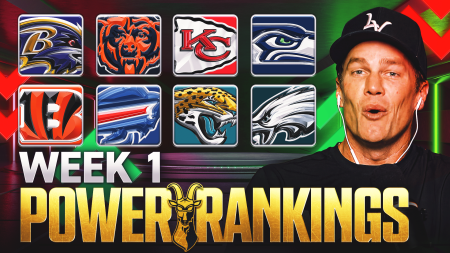





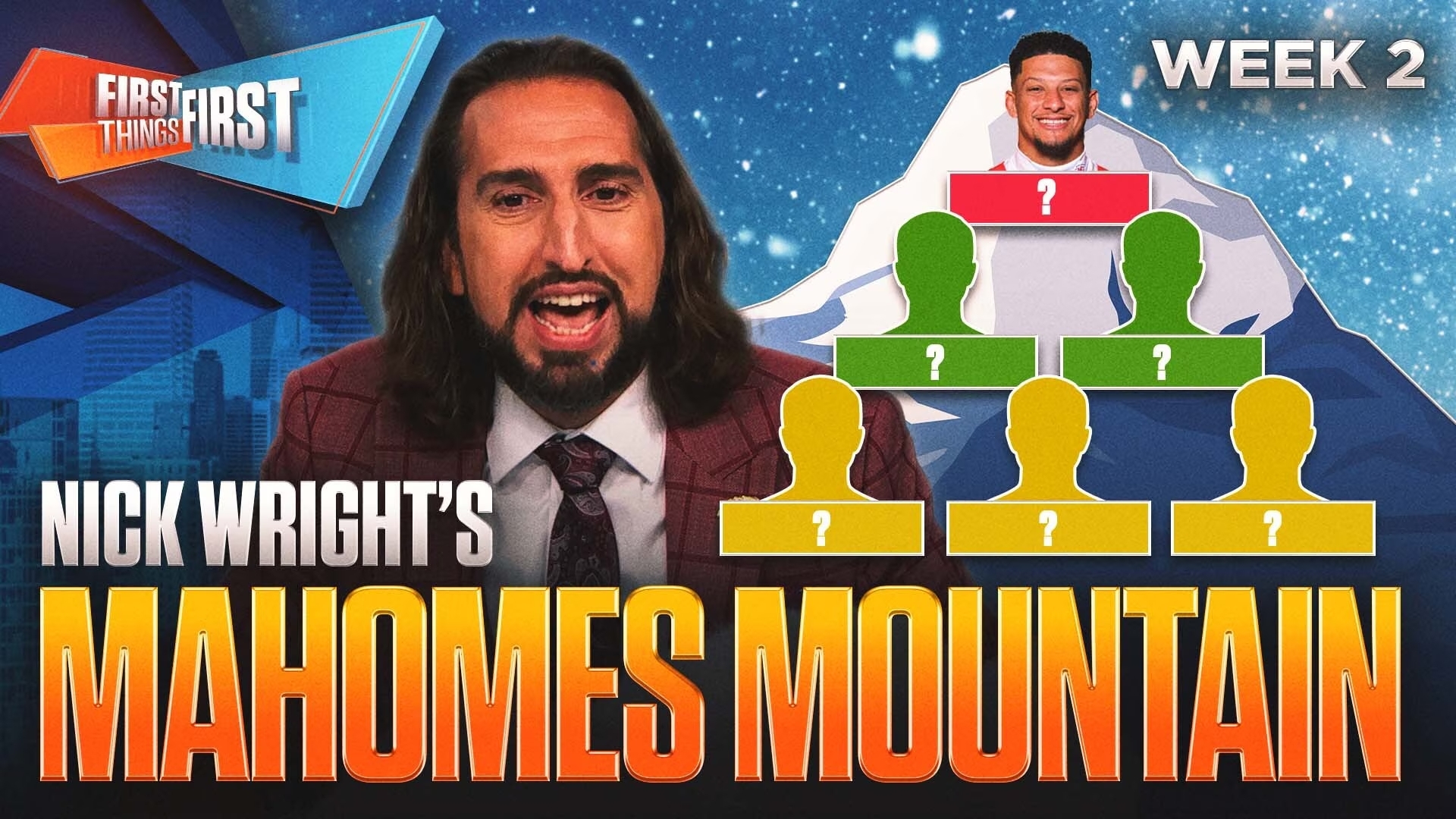
There is a moment every NFL season when the early storylines start to harden into something like truth, and Nick Wright’s latest quarterback rankings feel exactly like that kind of moment. On his show, Wright runs a segment called Mahomes Mountain, a living, breathing hierarchy of every starting quarterback in the league, with the best at the summit and everyone else scattered across rows sloping down into football irrelevance. For years, the top of that mountain was reserved for Patrick Mahomes, a kind of default assumption that he is the best until proven otherwise. But after Week 1, the mountain shook. Patrick Mahomes, the man for whom the mountain is named, was not at the top. Instead, the summit belonged to Trevor Lawrence, the Jacksonville Jaguars quarterback who has spent his entire professional career being called immensely talented but who rarely gets the national respect that his arm, size, and athleticism seem to deserve. Wright called him “the prince who was promised,” a nod to the famous Game of Thrones prophecy, and said that for the first time in the history of the mountain, the prophecy was finally realized at the top of the quarterback mountain. It was a surprising statement, but it was also a reflection of a weekend full of enormous performances. The first week of the season gave us Josh Allen being brilliant, Lamar Jackson looking like an MVP again, Caleb Williams showing why he was the first overall pick, and Lawrence doing exactly what people have been waiting to see him do. Something had to give. The mountain could not stay still. Wright looked at all of it and made a decision that will no doubt be debated all week: the prince who was promised is real, and he is currently sitting above everyone else in football.
Before getting to the joy of the top of the mountain, it is worth spending time at the bottom, because Mahomes Mountain has never been just about crowning kings. It is also about separating the guys who have a chance from the guys who are already lost, and Week 1 gave Wright plenty of material in both categories. He started by removing a few names entirely from the mountain. Sam Darnold, Kyler Murray, and Tua Tagovailoa were all pushed off because of injuries, which feels like an unfortunate technicality but also makes sense. The mountain is based on performance, and if you cannot play, you cannot climb. Then there were the players who fell off because of what they actually did on the field. Deshaun Watson, Cooper Rush, Cam Ward, and Malik Willis all played themselves off the mountain in Week 1, though Willis is apparently already trying to find a way back on. Wright noted that Willis was “dying to get on the mountain, trying to find a spot, somebody’s spot to take.” That kind of desperation is understandable. Every quarterback in the league knows how fast things can change, and Willis seems determined not to be left behind. In the seventh row, Drew Lock got a little bit of love for playing well once he got his feet underneath him against a Patriots defense that should be good. Wright gave him credit, but he was a lot less generous with Daniel Jones. The Giants quarterback has always been a fascinating case, but Wright’s concern was specific and grounded in the reality of the modern NFL. Jones does not seem to want to run on that Achilles. He had just one carry for four yards in Week 1, and if he is not running, he is not going to be effective. It is a cold, practical observation, and it captures the truth that mobility often separates the good quarterbacks from the irrelevant ones. The sixth row brought a mix of promise and frustration. Tyler Shough moved up after throwing for 410 yards, which sounds like the kind of performance that should launch a quarterback into the top five, but Wright wondered whether that production was more about the Lions secondary being a total catastrophe than about Shough being a superstar. Still, his connection with Chris Olave was real, and sometimes that is enough to earn a promotion. Then there was Jacoby Brissett, who remains one of the most confusing quarterbacks in football. Wright said that if you turn on a Brissett game, about every other one you are going to think this guy can start somewhere. He makes throws, he moves the offense, he looks like a legitimate NFL starter. But the other half of the time, he is just throwing laser beams to the opponent, perfect dots to the secondary. Against the Chargers, though, Brissett looked really good, and he seriously outplayed Justin Herbert, which is no small thing. And then there was Baker Mayfield, still affectionately called “Bake Show.” The fumbles were awful, Wright said, and not just because they cost him in Week 1. Baker just got paid, and then he went out and played reckless. That is a dangerous combination. It is one thing to be fearless. It is another thing to be careless, and Mayfield’s performance was a reminder that the line between hero and problem is sometimes just a matter of ball security.
Moving up the mountain, the middle rows were defined by a mix of steadiness, disappointment, and quiet encouragement. In the fifth row, Jared Goff was simply fine. He did not need to move up and he did not need to move down, which in the chaotic aftermath of Week 1 is almost a compliment. Dak Prescott, on the other hand, was not fine. The interception before halftime was bad, and Wright made it clear that it was fair to call the opening week a disappointing one for Prescott. There are going to be moments when the quarterback of the Cowboys is asked to carry the team, and if he turns the ball over at the worst times, the criticism is going to follow. C.J. Stroud, meanwhile, found himself in a strange situation. He played well enough that Wright called it an encouraging performance, but it ended with Stroud fumbling the ball on the final possession and losing the game. That is a painful way to start a season, but Wright seemed to believe that the overall performance mattered more than the final mistake, at least for now. The fourth row was where things started to get genuinely interesting. Joe Burrow played fine, threw a pick-six that let the Buccaneers back into the game, and then steadied himself enough to keep his spot. He did not move up, but he did not fall, and in a week full of wild swings, stability has value. Jalen Hurts, however, was one of the biggest movers of the weekend. Wright said that Hurts made the three biggest plays of the game, and the Eagles won. That combination is almost always going to earn a promotion. There was nobody on the fifth row who deserved to move up more than him, and so Hurts climbed, proving again that the mountain rewards moments of brilliance, especially when they happen in the most important moments of a game.
Then came the third row, and this is where the mountain really started to feel different. Caleb Williams moved up after having perhaps the best game of his young career, and it is impossible to ignore the excitement around a rookie who looks like he belongs. Williams was the first overall pick for a reason, and in Week 1 he showed the kind of playmaking ability that makes quarterbacks into superstars. But the more surprising movement in the third row was downward. Matt Stafford moved down, and Patrick Mahomes moved down from the top spot of the mountain. That is a massive statement. Mahomes is the namesake of the entire segment, and for years it felt like he owned the summit by default. But Wright made it clear that Mahomes does not want to be graded on an ACL curve. He is not looking for excuses based on his knee or his injury history. Mahomes himself said he did not think he played that well, and Wright agreed. Given how many great quarterback performances happened in Week 1, Mahomes did not deserve to stay at the top of the mountain. To his credit, he steadied himself in the second half, but the first half was enough to knock him down a row. That is not disrespect. That is just the reality of a ranking system that rewards what happens on the field, not reputations or past championships. Mahomes is still on the mountain. He is still dangerous. But for the first time in a long time, he is not the prince on the high tower. He is just another guy looking up, and that is exactly what makes Mahomes Mountain so compelling. Nobody is safe. Not even the king.
The second row brought even more firepower, and this is where the top of the mountain really became crowded. Lamar Jackson moved up, and Wright made it clear that he thought Jackson was outstanding. Jackson has been a perennial MVP candidate for years, but there has always been a sense that he has to prove himself all over again every single season. After what he did in Week 1, that conversation should quiet down, at least for a little while. Josh Allen was also awesome, though he almost lost the game. That is the weird thing about Allen. He can be the best player on the field for sixty minutes, and then he can do something that almost costs his team everything. But he did not lose, and after almost losing, he made a throw that Wright described as 100 out of 100. That is the highest compliment possible. Allen has that rare combination of power, touch, and confidence, and when he is on, there is nobody more fun to watch. Lamar and Allen could have been the top of the mountain in almost any other week, but they were not. The first row, the row that matters more than any other, belonged to Trevor Lawrence. Wright said that for the first time in the history of the mountain, the prophecy was realized, and the prince who was promised was standing at the top. He also made a fascinating comparison, saying that Lawrence is who the media wants Justin Herbert to be. That is a loaded statement. Herbert has received endless praise for his talent, his arm strength, and his physical tools, but Lawrence finally put it all together in a way that forced the conversation to change. He is super-talented, he has the pedigree, he has the arm, he has the athleticism, and now he has the performance at the top of Mahomes Mountain. It was not an accident. It was not a gift. It was earned.
The season is only one week old, and the mountain is going to move again. That is the whole point of Nick Wright’s segment. It is not static. It is not permanent. It is a weekly argument about who deserves to be at the top and who is just borrowing time in the middle. Trevor Lawrence’s moment at the summit is a story about potential finally meeting production, but the mountain is not kind to those who sit still. It does not reward contracts or draft pedigree. It rewards what happens on Sundays, and every Sunday brings a new chance to climb or fall. Mahomes is still there, just a few rows down from where he used to be, and if he plays like the Mahomes everyone knows, he will be back at the top before long. Josh Allen and Lamar Jackson are knocking on the door, and Caleb Williams is rising fast. The bottom of the mountain is full of quarterbacks trying to get their footing, and the middle is crowded with players who are fine but not great, promising but not proven. The prince who was promised is real, at least for now. But in the NFL, promises are fragile, and the mountain is steep. Week 2 is coming, and with it, another opportunity for everyone to prove that they belong. Nick Wright built something wonderful with Mahomes Mountain because it captures the anxiety, excitement, and unpredictability of quarterback play. It is a reminder that no one is safe, that reputations mean nothing, and that the only thing that ever matters is what you do with the ball in your hands when the lights are brightest. Trevor Lawrence did it in Week 1. The question now is whether he can do it again.