




The blistering summer heat is beginning to rise across the country, and for millions of football fans, it signals the welcome return of the NFL offseason machine shifting into its highest and most frantic gear. As organized team activities (OTAs) get underway in earnest, players are dusting off their cleats, coaches are rolling out brand-new playbook adaptations, and front offices are anxiously holding their collective breath, hoping the meticulously assembled rosters of spring can seamlessly translate to gridiron success in autumn. For the Dallas Cowboys, this critical stretch of the calendar is packed with defining dates that will shape the trajectory of their entire 2026 campaign. The voluntary OTA sessions scheduled for June 1st, 2nd, 4th, 8th, 9th, and 11th will serve as the crucial initial testing ground where fresh faces and seasoned veterans first share the field to establish on-field chemistry and learn the basic verbiage of the coaching staff’s schemes. This is quickly followed by the intense, pressure-cooker environment of mandatory minicamp from June 16th to 18th, representing the absolute final phase of spring instruction before the roster scatters for their last brief summer respite. By mid-July, the sweat, grit, and pads-crashing collisions of training camp will officially arrive, with the eyes of the football world firmly fixed on Dallas as they prepare to open their preseason early with the highly anticipated NFL Hall of Fame game on August 6th in Canton, Ohio. There is an unmistakable, palpable sense of urgency hanging over the team’s practice facilities this year, as the franchise seeks to navigate a high-stakes transition period, quiet the relentless media noise that perpetually surrounds them, and prove they still possess the championship pedigree required to dominate a highly competitive league.
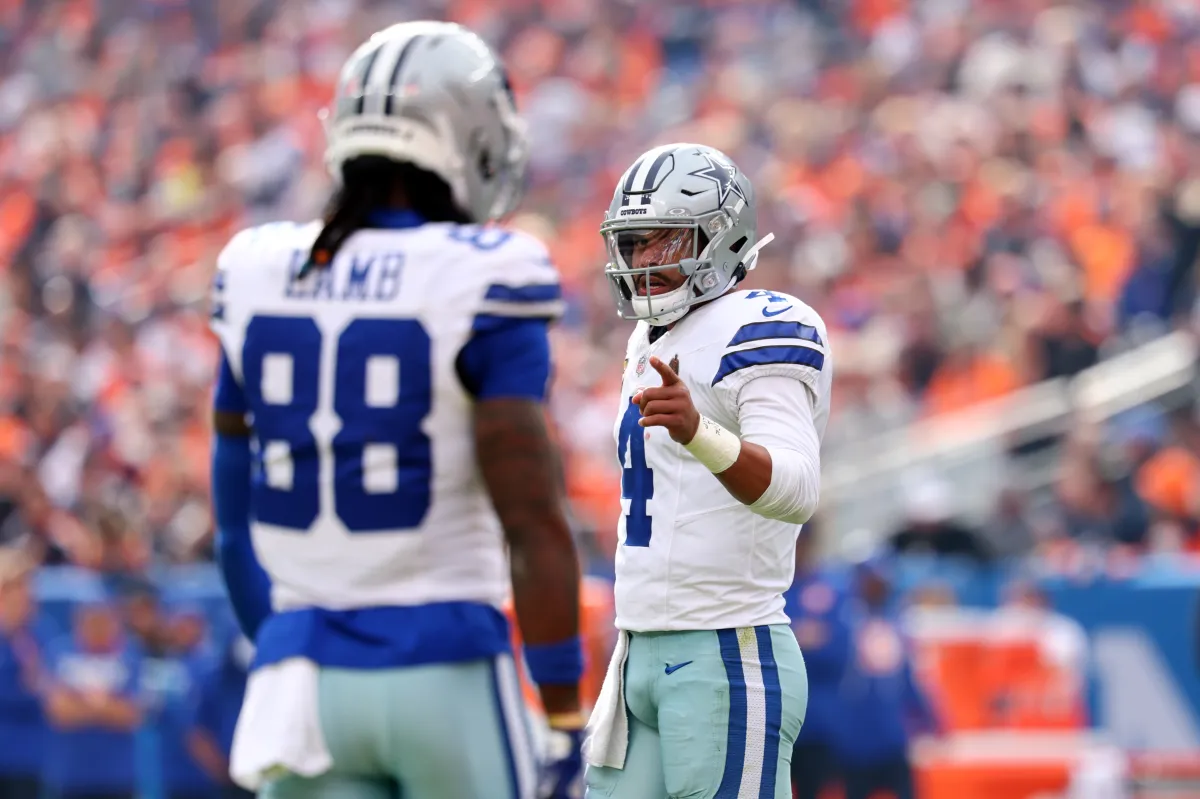
At the heart of the Cowboys’ championship aspirations lies a star-studded, highly explosive offense that remains, on paper, one of the most lethal and dynamic units in all of professional football. Spearheaded by the resilient, heavily criticized, yet undeniably talented Dak Prescott under center, Dallas boasts a playmaking ecosystem specifically designed to keep opposing defensive coordinators awake at night wondering how to slow down the tempo. The offensive backfield features the gritty, hard-nosed running style of Javonte Williams, a physical runner poised to shoulder a massive workload and wear down opposing defensive lines, while the passing game features a truly formidable receiving tandem in the superstar CeeDee Lamb and the highly kinetic, jump-ball specialist George Pickens. Adding to this potent aerial threat is tight end Jake Ferguson, a reliable, tough-as-nails safety valve who has rapidly developed into a premier red-zone threat and a favorite option for Prescott in critical third-down situations. Yet, for all this glittering skill-position talent, a dark and worrisome cloud of uncertainty looms over the offensive line—a group that has historically served as the very foundation of the franchise’s legendary success. Last season, the tackle positions were a source of constant anxiety and frustration for the coaching staff, as both Tyler Guyton and Terence Steele struggled heavily with lateral quickness and pass protection consistency, leaving Prescott vulnerable to blindside hits. To complicate matters further, the coaching staff continues to grapple with the ultimate positioning of Tyler Smith, whose elite versatility has ironically left the team undecided on whether his long-term talents are best utilized at guard or tackle. The ultimate wildcard in this equation is rookie fourth-round draft pick Drew Shelton, an athletic and physically imposing blocker who holds the potential to push the underperforming veterans, create healthy competition in the trenches, and potentially secure a starting role early in the season, making the offensive line battle one of the primary storylines to watch as training camp unfolds.
While the offense attempts to solidify its front line and establish a dominant rhythm, the absolute focal point of the Cowboys’ entire offseason strategy has been an aggressive, slash-and-burn reconstruction of what was statistically and visually one of the worst defenses in the National Football League last year. During the absolute disaster that was the 2025 campaign, the Dallas defense was repeatedly shredded through the air, pushed around in the trenches, and exposed for playing with an alarming lack of discipline, speed, and fundamental tackling. The lone shining light in that otherwise bleak defensive wilderness was veteran edge-rusher Jadeveon Clowney, who put on an absolute clinic with 40 pressures, 29 hurries, 8.5 sacks, 12 tackles for loss, and a pair of crucial fumble recoveries; however, because he currently remains an unsigned free agent, the Cowboys entered the spring with practically zero proven production to build around from their defensive front. The front office, acutely aware that another defensive meltdown of that magnitude would cost jobs, lose the locker room, and utterly waste a championship-caliber offense, decided to completely tear down the block and rebuild from the ground up. This wasn’t a minor tune-up, a series of passive adjustments, or a quiet transition; it was a full-scale physical and philosophical overhaul geared toward injecting ruthless aggression, explosive raw speed, and mental toughness into every single level of the starting defense. The resulting massive influx of high-caliber free agents, heavy-hitting rookies, and versatile schematic pieces has completely transformed the locker room culture, signaling to the rest of the league that the passive, bend-but-don’t-break defensive philosophies of yesteryear have been firmly discarded in favor of a fast, violent, and relentlessly suffocating new identity.
The veteran reinforcements brought in to spearhead this defensive renaissance represent a carefully calculated mix of elite star power, blue-collar run defense, and critical secondary versatility designed to patch up the glaring holes of the past. Chief among these marquee additions is the explosive Pro Bowl edge-rusher Rashan Gary, whose rare combination of absolute speed and raw power is expected to instantly ignite a pass rush that desperately missed a consistent threat last season. Alongside Gary, the Cowboys secured the services of linebacker Dee Winters, a highly instinctual tackle machine who racked up over 100 stops last year and brings a vital injection of sideline-to-sideline speed and critical leadership to the middle of the defensive formations. To resolve the catastrophic coverage issues that repeatedly plagued the boundary, Dallas struck quickly in free agency to sign physical cornerbacks Cobie Durant and Derion Kendrick, both of whom possess the aggressive press-man coverage skills and confident mentality required to thrive under the intense microscope of playing in Big D. The safety room also received a massive, much-needed facelift with the veteran acquisitions of Jalen Thompson and P.J. Locke, a pair of highly intelligent, hard-hitting defensive backs who will provide invaluable pre-snap communication, deep-third coverage security, and tactical flexibility. Up front, the interior defensive line was heavily fortified with the signing of lunch-pail run-stuffers Otito Ogbonnia and Jonathan Bullard, two absolute heavyweights tasked with eating up double teams, freeing up the linebackers to scrape over the top, and ensuring that opponents can no longer effortlessly ram the ball down the throat of the Dallas defense. Even the quarterback room received a stabilizer in Sam Howell, who lands in Dallas as an elite insurance policy alongside deep-threat wide receiver Marquez Valdes-Scantling and center Matt Hennessy to provide veteran depth on the offensive side of the ball.
If the veteran additions laid the heavy physical foundation for the defense’s rebuild, the 2026 NFL Draft class was specifically designed to inject the unit with elite, game-changing upside and youthful, relentless energy. The crown jewel of this draft haul is undoubtedly first-round safety Caleb Downs, a generational collegiate talent whose remarkable football IQ, elite coverage range, and explosive tackling ability have analysts projecting him as an immediate star and a vocal leader in the secondary from day one. Dallas doubled down on elite defensive prospects in the first round by also selecting edge-rusher Malachi Lawrence, a bendy, explosive defender who will rotate with Rashan Gary and utilize his lightning-fast first step to keep opposing quarterbacks under constant, heavy duress. In the third round, they secured the physical and highly athletic linebacker Jaishawn Barham, a versatile defender who can play in space, drop into hook-curl zones, or rush the passer from the edge, giving the coaching staff a multi-dimensional chess piece to neutralize modern, high-flying NFL offenses. The middle rounds yielded even more intriguing defensive talent, featuring fourth-round cornerback Devin Moore, a lengthy defender with elite ball-tracking skills and a physical profile perfectly suited for press coverage, and fourth-round defensive end LT Overton, a powerful edge-setter who excels at squeezing running lanes and disrupting zone-read schemes. Rounding out this highly ambitious draft class is seventh-round wide receiver Anthony Smith, a late-round flyer with blazing track speed who will look to carve out a role on special teams coverage units and push for snaps in deep passing concepts, cementing a draft strategy that prioritized raw athletic traits, high football character, and immediate physical impact.
As the Cowboys assemble these fascinating new pieces on the sun-baked practice fields of training camp, they must also say goodbye to a notable list of departed veterans who have moved on to new chapters, including quarterback Will Grier, wide receiver Jalen Tolbert, offensive linemen Robert Jones and Brock Hoffman, defensive tackle Osa Odighizuwa, edge-rusher Dante Fowler Jr., linebacker Jack Sanborn, and safety Juanyeh Thomas. This massive roster turnover makes the critical re-signings of key depth contributors like defensive end Sam Williams and cornerback Corey Ballentine incredibly vital to maintaining a shred of locker room continuity, special teams stability, and veteran wisdom during this period of extreme defensive transition. The competitive stakes could not possibly be higher in the NFC East, where a healthy and dynamic Jayden Daniels in Washington has suddenly transformed the Commanders into a lethal divisional threat, paving the way for a grueling, three-team war for the divisional crown between Washington, the ever-dangerous Dallas roster, and their fierce rivals who improved their own groups this offseason. Ultimately, the ceiling of the 2026 Dallas Cowboys rests entirely on the speed and cohesion with which this radically overhauled, hyper-talented defense can gel into a single, disciplined unit under the guidance of its defensive staff. If the coaching staff can successfully mold these rookies and veteran newcomers into a top-half unit that creates turnovers and stops the run, while Dak Prescott and his elite offensive weaponry keep the scoreboard spinning at a high rate, a ten-win season and a highly coveted ticket to the postseason is not only a highly realistic outcome, but the absolute baseline expectation for a legendary franchise desperate to return to its former glory.