


Paragraph 1: The Weight of Expectation in Los Angeles
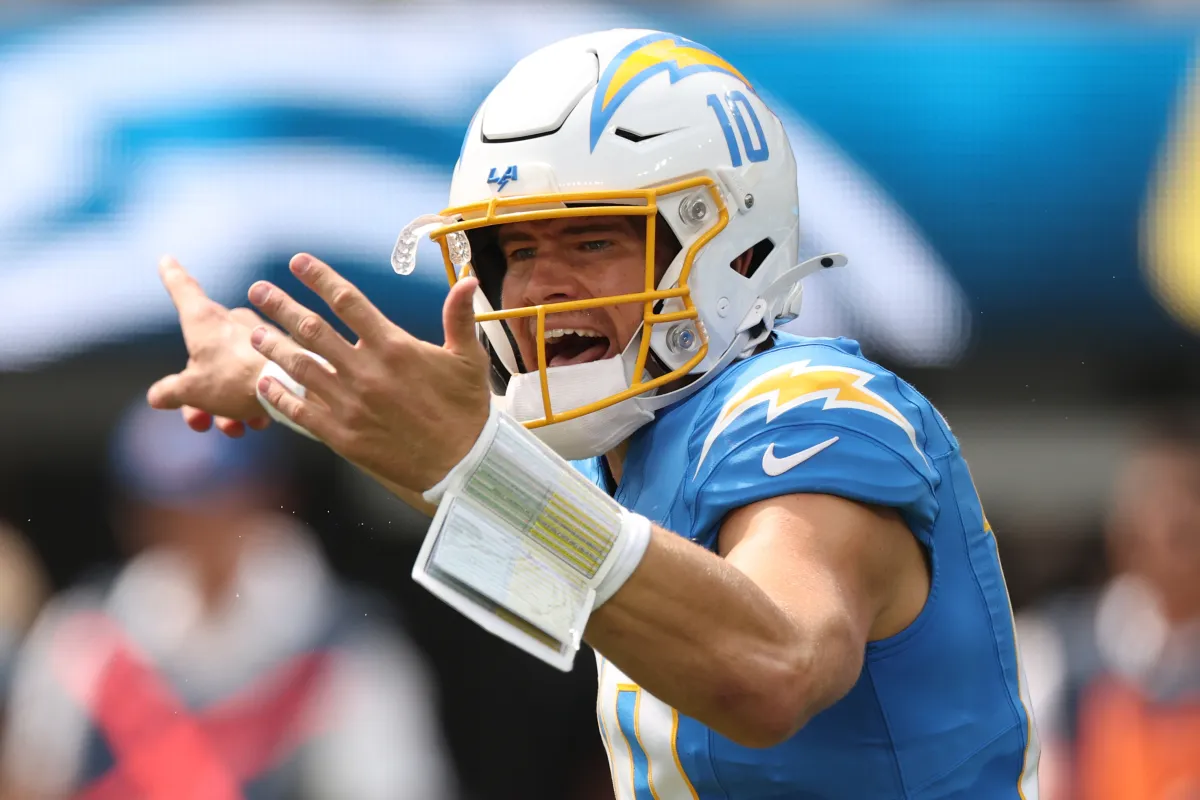
The air in Los Angeles has grown thick with tension, a palpable shift from the unbridled optimism that surrounded the Chargers just a few weeks ago. This was supposed to be the season where everything clicked, where the pieces finally aligned to transform a talented roster into a legitimate AFC powerhouse. The pundits had circled the early slate of games as a golden opportunity for the Chargers to build momentum, to announce their arrival as the conference’s new bullies. Instead, the team finds itself staring into the abyss of an 0-2 start, a record that feels less like a minor stumble and more like a catastrophic fall from grace. The losses themselves are bad enough, but the manner in which they occurred is what truly stings. Falling to the Arizona Cardinals and the Las Vegas Raiders—two franchises that combined for a mere six wins last season—is a bitter pill to swallow. These were not supposed to be the teams that exposed the Chargers’ flaws; they were supposed to be the appetizers before the main course of the season. Now, the main course looks like a feast of nightmares, and the confidence that once radiated from the organization has been replaced by a gnawing sense of doubt. The fans are restless, the analysts are sharpening their knives, and the spotlight has been turned to its brightest setting, all focused directly on the broad shoulders of the franchise’s cornerstone, Justin Herbert.
Paragraph 2: The Offensive Identity Crisis
At the heart of this early-season turmoil is an offense that has completely lost its way. The hiring of offensive coordinator Mike McDaniel was supposed to be a masterstroke, a modern, innovative scheme that would unlock new dimensions of Herbert’s prodigious talent. Instead, it has become a source of confusion and stagnation, a puzzle that the players seem unable to solve. Scoring a paltry 14 points in each of their first two outings is not just a statistical failure; it is a symptom of a deeper disconnect. The rhythm is off, the timing is disrupted, and the explosive plays that defined this offense in previous years have vanished, replaced by a series of stalled drives and futile third-down attempts. Watching Herbert on the field is like watching a brilliant musician forced to play a song he has never heard, his natural instincts clashing with the rigid structure of the new system. The offensive line is struggling to provide protection, the receivers are failing to create separation, and the play-calling seems to be a beat behind the defense’s adjustments. This is a collective failure, a symphony of errors that has left the team’s most valuable asset looking human. The worry is not just about the points; it is about the erosion of Herbert’s confidence and the growing suspicion that the scheme is a poor fit for his skill set, a mismatch that could define the entire season if not corrected immediately.
Paragraph 3: The Question That Stings
In the aftermath of these disheartening defeats, the media circus has descended upon the Chargers’ facility, searching for answers. On Wednesday, ESPN’s Kris Rhim approached Herbert with a question that has been simmering in the minds of fans and analysts alike: Does he need to become a more vocal leader to rally his troops? It is a question that carries a subtle accusation, implying that the locker room might be lacking the necessary fire to pull out of a tailspin. Herbert’s reaction was immediate and telling. He cut Rhim off mid-sentence, a rare display of defensiveness from a quarterback known for his stoic, almost robotic composure. It was a moment of raw human emotion, a flash of frustration that revealed just how much the outside noise is affecting him. By stopping the question in its tracks, Herbert wasn’t just answering a query; he was issuing a rebuke to the very premise of it. He was making it clear that he views the suggestion of a leadership vacuum as an insult to the character of the men standing beside him in the huddle. In that split second, the polished media-trained quarterback vanished, replaced by a fiercely loyal teammate who felt the need to defend his brothers against an external attack on their integrity.
Paragraph 4: The Defiant Stance of a Leader
Herbert’s response, though brief, was loaded with conviction. “So I’m going to stop you right there and say that it’s very present,” he declared, his voice firm. “We’ve got great leadership on this team. I trust those guys in that locker room. And so I don’t think anyone is panicked or worried because that’s not going to be the sentiment. It’s moving on to the next play and understand that we’re close, we’ve made mistakes, how do we fix it?” These words are a powerful insight into the quarterback’s mindset. He is not just talking about X’s and O’s; he is talking about the intangible bond of trust that holds a team together during a crisis. He is rejecting the narrative of panic, choosing instead to project an aura of calm control. But beneath the surface of this defiance lies a fragile hope. When he says “we’re close,” he is clinging to the belief that the gap between their current reality and their potential is small, that a few corrected mistakes will unlock the dominance they expect of themselves. This is the psychology of a leader trying to prevent a shipwreck by convincing the crew that the storm will pass. He is not just telling the media this; he is telling himself, reinforcing the mantra until it becomes a self-fulfilling prophecy. The question now is whether this internal belief can withstand the mounting pressure of an unforgiving schedule.
Paragraph 5: The Gauntlet Ahead
Unfortunately for Herbert and the Chargers, the schedule offers no reprieve, no chance to breathe and find their footing against a weaker opponent. The road ahead is a brutal gauntlet that would test the mettle of even the most seasoned contenders. After facing the Buffalo Bills in Week 3, the Chargers will face a stretch where five of their next six opponents were playoff teams just a year ago. The lone non-playoff team in that mix is the Kansas City Chiefs, who, in a cruel twist of fate, are currently looking like the dominant force they have always been, racing out to a 2-0 start. This is the nightmare scenario. The margin for error is now zero. Every game is a must-win, not just for the sake of the standings, but for the psychological survival of the team. If they cannot right the ship against the Bills, the whispers of a lost season will become a roar. The pressure will intensify with each passing week, and the “we’re close” mentality that Herbert is so desperately trying to cultivate could easily morph into a “we’re broken” resignation. The season is teetering on a knife’s edge, and the next few weeks will determine whether this team is a contender or a cautionary tale of wasted potential.
Paragraph 6: The Ultimate Test of Character
As Sunday approaches, the Chargers find themselves at a crossroads, facing a game that transcends the normal parameters of a regular-season matchup. The clash with the Buffalo Bills is no longer just a test of offensive execution; it is a referendum on the very character and resilience of the team. Herbert’s defiant words in that press conference will ring hollow if they are not backed up by tangible results on the field. The fans are desperate for a spark, for a moment that proves the belief is justified. This is the human drama at the heart of professional sports: the struggle between external chaos and internal conviction. Herbert is the calm eye of the storm, trying to project stability while the winds of doubt howl around him. He trusts his teammates, he believes in the system, and he insists that they are close. But the NFL is a results-driven business, and sentiment does not win games. The only way to silence the critics is to play with the precision and passion that has been sorely missing. Will his confidence translate into a triumphant performance, or will it be exposed as a shield against the inevitable? The answer lies within the hearts of the players as they take the field, carrying not just the weight of a game, but the weight of a season, a franchise, and the unwavering hope of a city that is waiting—just waiting—for their quarterback to lead them out of the darkness.