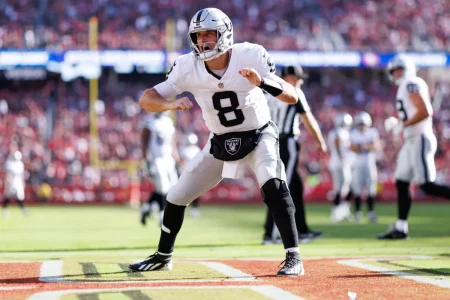




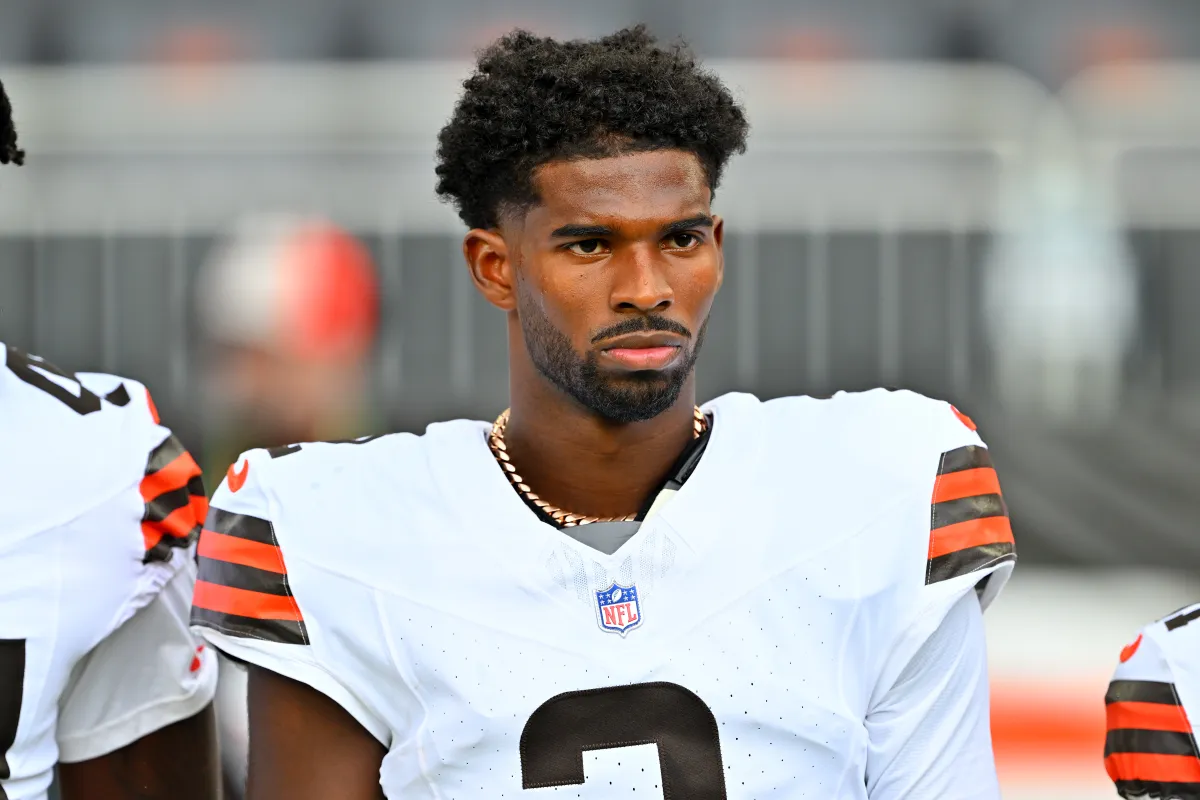
On a damp Sunday in New Orleans, Shedeur Sanders gave the Cleveland Browns something they haven’t had in a long time: a reason to believe. With the game on the line, Sanders played with poise, precision, and a quiet confidence that seemed to say, I belong here. He completed 19 of 31 passes for 297 yards and two touchdowns, and perhaps most importantly, he didn’t throw an interception. It was the kind of performance that makes a franchise rethink everything it thought it knew about its quarterback room. And yet, even after all of that, even after nearly stealing a win from the Saints in their own building, the Browns still aren’t ready to hand him the keys. The 23-22 loss stung, but what’s stinging even more for Sanders is the message his own organization keeps sending: you’ve done enough to make us curious, but not enough to make us commit. That’s a painful place to be for any young quarterback, especially one who has spent his entire football life proving people wrong. Sanders didn’t just play well on Sunday; he played like someone who wanted to make the decision impossible to ignore. But in Cleveland, decisions are never that simple.
Now the quarterback situation in Cleveland has become something of a soap opera. ESPN’s Jeremy Fowler reported that Deshaun Watson is expected to return to the starting lineup once he clears concussion protocol, though offensive coordinator Todd Monken hasn’t officially named a starter. That hesitation says more than any press conference ever could. It suggests the Browns are weighing something bigger than just health or matchup advantages. On Tuesday’s episode of The Tony Rizzo Show, longtime Browns insider Tony Rizzo didn’t mince words. He believes Cleveland is actively trying to trade Sanders before the NFL trade deadline at 4:00 p.m. that same day. “If Andrew [Berry] is trying to trade a quarterback, just say, ‘I’m not ready to name a starter just yet, we’re working through some things.’ It appears that they’re trying maybe to deal Shedeur,” Rizzo said. That kind of speculation doesn’t come out of nowhere. When a front office refuses to commit to a young quarterback who just played the best game of his career, and instead keeps circling back to a veteran who hasn’t been the same player since arriving in Cleveland, the writing starts to appear on the wall. The Browns are in a strange and uncomfortable position, caught between loyalty to a massive investment and the obvious truth that Sanders has brought a spark to the offense that Watson hasn’t been able to ignite.
Let’s sit with the strangeness of it all. Deshaun Watson is 31 years old, on an expiring contract, and arguably one of the most disliked players in the NFL from a fan perspective. The Browns’ fanbase has never fully embraced him, and it’s not hard to understand why. Cleveland handed him a $230 million fully guaranteed contract back in 2022, a deal that drew criticism from every corner of the football world. Ever since, Watson has been battling injuries, inconsistency, and an enormous burden of expectation. There’s almost no scenario where the Browns bring him back after this season. And yet, when a young quarterback like Sanders shows flashes of being the long-term answer, the front office still refuses to fully commit. Sanders is just 24 years old, under contract through the 2028 season, and making an average annual salary of around $1.16 million. In a league where starting quarterbacks command tens of millions of dollars, Sanders is an absolute bargain. He’s also coming off one of the best games of his young career, which means his trade value might never be higher. But instead of celebrating his growth and building around him, the Browns seem to be treating him like a valuable asset to be moved rather than a cornerstone to be kept. That’s a tough pill to swallow for anyone who believes in Sanders’ potential.
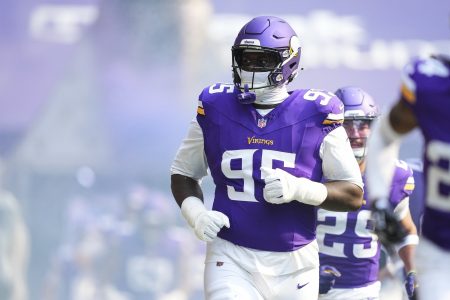
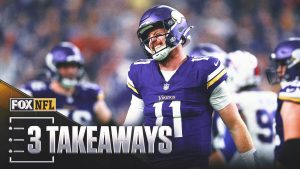
If the Browns are truly trying to trade him, there will be no shortage of interested teams. A quarterback-friendly system like the one in Minnesota under Kevin O’Connell would be an ideal landing spot. The Vikings have made it clear they’re in the market for quarterback help, and Sanders would bring a level of energy and excitement that the fanbase hasn’t felt in years. The original report even references the uneven quarterback play the league has seen this season from names like Carson Wentz and Kyler Murray, and the idea that Sanders could step in and provide a spark is exactly why teams will be making calls. For a young quarterback, landing in the right system can make all the difference. Sanders doesn’t need to be perfect; he needs to be wanted. He needs an organization that will look at his tape, see the arm talent, the mobility, the calm under pressure, and say, “That’s our guy.” In Cleveland, that hasn’t happened. Instead, he’s been treated like an emergency option, a bridge to something else, a piece in a puzzle that doesn’t quite fit. The NFL trade deadline is a pressure cooker, and decisions made in those final hours can reshape careers. For Sanders, the next few hours could determine where he spends the most important years of his career. And for a player who has always thrived when people doubt him, there’s something almost poetic about being traded away from a team that couldn’t see what he was becoming.
But behind all the trade rumors and salary cap math, there’s a human story here. Sanders is not just a statistic or a trade asset. He’s a young man who has spent his entire life in the spotlight, first as the son of Deion Sanders, then as a college star, and now as an NFL quarterback trying to find his footing. He knows what it feels like to be doubted, to be overlooked, to be told that he’s not quite good enough. Sunday’s performance was personal. You could see it in the way he threw the ball downfield with conviction, the way he stood in the pocket and took hits without flinching, the way he rallied his teammates even when things weren’t going perfectly. For Sanders, football has never been just a game. It’s a way of proving his worth. And in Cleveland, he’s been asked to prove himself over and over again, only to be met with more uncertainty. That has to be exhausting. There’s a real emotional toll that comes with being a young quarterback in a toxic situation, constantly looking over your shoulder, wondering if the front office has your back or if they’re secretly making calls to other teams. Sanders has handled it all with maturity, but that doesn’t mean it isn’t weighing on him. He wants a chance to be the guy, not just a fill-in, not just a bargaining chip. And if the Browns can’t give him that, then maybe the kindest thing they can do is let him go.
Ultimately, the Browns don’t technically need to trade Sanders. He’s under contract for two more years, he’s shown he can be a quality backup, and he’s still developing as a player. But the reality of the NFL is that value is fleeting. A quarterback’s stock can rise and fall in a matter of weeks, and right now, Sanders is trending upward. If Cleveland truly believes Watson gives them the best chance to win this season, then keeping Sanders on the bench is a luxury they may not be able to afford. The fairer move, the smarter move, might be to trade him to a team that will actually build around him. For Sanders, the hope is that wherever he lands, someone finally sees him the way he sees himself: a starting quarterback in the NFL, capable of leading a franchise, not just filling in. The trade deadline is ticking, and by 4:00 p.m. on Tuesday, the football world will know more. But no matter what happens, Sanders has already shown who he is. He’s resilient. He’s talented. And he’s ready for the next chapter, whether that’s in Cleveland or somewhere else. Football is a ruthless business, and young quarterbacks often get caught in the crossfire of decisions made by people who will never put on a helmet. But Shedeur Sanders has been counted out before, and he’s still standing. That alone might be the most important thing of all.