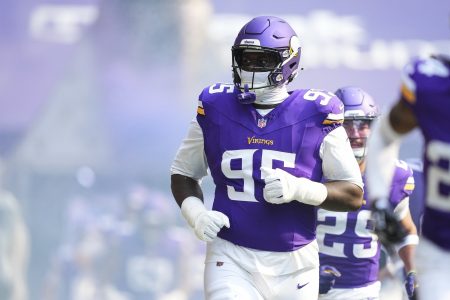


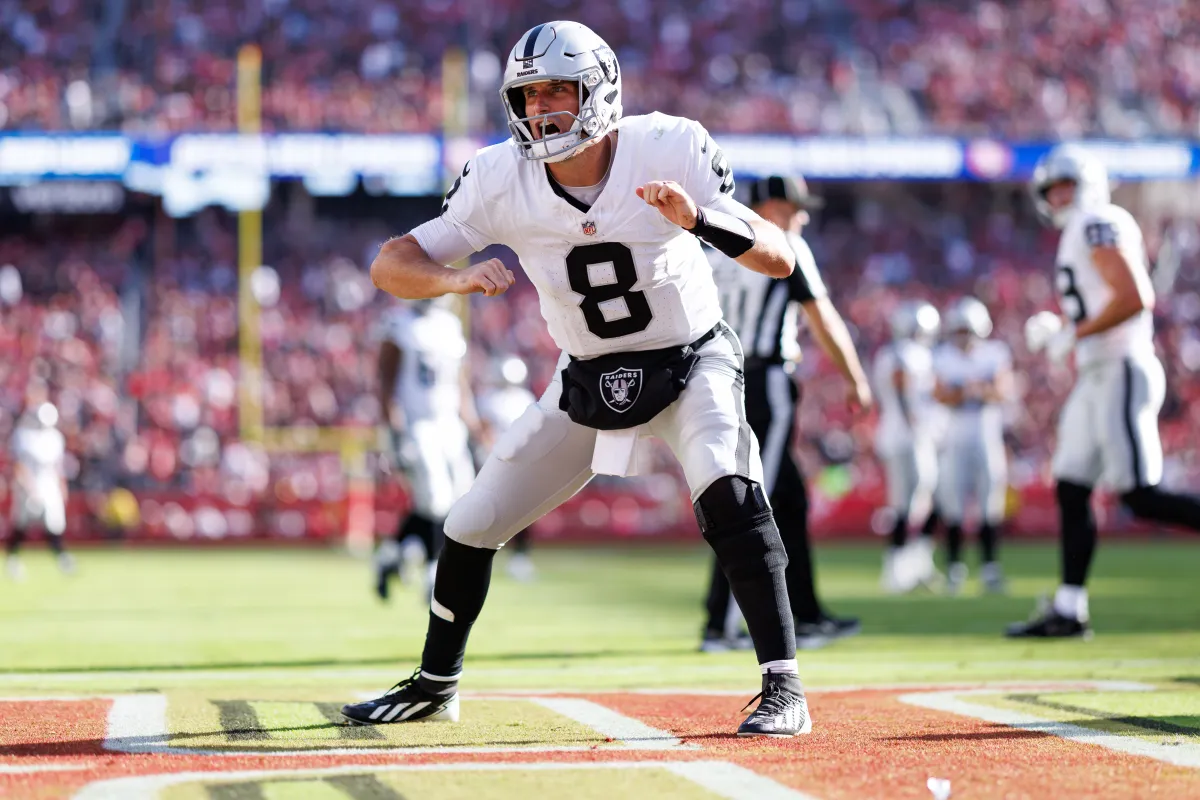
The NFL trade deadline rarely delivers a true gut punch, but Tuesday’s news did exactly that for anyone who has followed Kirk Cousins’s winding, often understated career. According to ESPN’s Adam Schefter and NFL Network’s Ian Rapoport, the Las Vegas Raiders are trading Cousins back to the NFC, sending the veteran quarterback to the Minnesota Vikings in exchange for a 2027 third-round pick. Schefter also reported that rookie Fernando Mendoza will take over as the Raiders’ starting quarterback. For Cousins, this is not just another transaction in a business that treats players like chess pieces; it is a homecoming, a return to the franchise where he spent six of his most productive and emotionally significant seasons. For the Vikings, it is a desperate, hopeful swing at salvaging a season that has somehow felt both successful and broken at the same time. And for the Raiders, it is a clear signal that the future is now, even if that future comes with the painful reality of moving on from a quarterback who gave them steady, if not spectacular, play. The trade is a reminder that in the NFL, the line between loyalty and pragmatism is often crossed with a single phone call.
Cousins had only been in Las Vegas for a short time, but he made an impression. In April, the Raiders signed him to a five-year, $172 million contract, a bold commitment to a veteran whom many believed could be the missing piece for a franchise starving for stability at the most important position in sports. Through nine games this season, Cousins completed 64.1 percent of his passes for 2,340 yards, 20 touchdowns, and eight interceptions, leading the Raiders to a 4-5 record. Those numbers are not elite, but they are solid, especially on a team that has struggled to find consistency around him. Yet the Raiders clearly saw something in Mendoza, a rookie with promise and a future, and decided that the present was no longer worth sacrificing for a player on the wrong side of 38. Behind the numbers, there is a human story of a quarterback who has always had to prove himself, who has been doubted at every stop, and who now finds himself packing his bags again, sent to a place that already knows his name, his habits, and his heart. The trade is a football decision, sure, but it also carries the weight of a man who has spent his entire career being seen as a bridge, a rental, a placeholder, rather than a destination.
For Cousins, Minnesota is not just another stop; it is the place where he became a star. He played for the Vikings from 2018 to 2023, and during that time, he was selected to the Pro Bowl three times and led the franchise to two playoff appearances. Those years were filled with dramatic Sunday afternoons, freezing cold playoff games, and the kind of deep connection with a fan base that is rare in modern sports. Cousins was never the most charismatic superstar, but he was reliable, durable, and fiercely competitive in his own understated way. He threw for thousands of yards, led countless fourth-quarter comebacks, and became the quarterback that Minnesota believed could finally take them to the Super Bowl. He never quite delivered the ultimate prize, but he gave the franchise a sense of relevance and hope. Leaving as a free agent to sign a four-year, $180 million contract with the Atlanta Falcons was a difficult decision, one that left some Vikings fans feeling betrayed and others simply grateful for the memories. Now, after years away, he is coming back, not as a conquering hero, but as a steady hand in a moment of crisis. The emotional reunion with former teammates, coaches, and fans will be powerful, but the real question is whether the Kirk Cousins who returns is the same one who once electrified U.S. Bank Stadium, or simply a shadow of a player who has been through too many battles.
The Atlanta chapter of Cousins’s career was supposed to be the final act of a successful story, but it quickly turned into a complicated mess. Shortly after Atlanta signed him, the Falcons drafted Michael Penix Jr. in the first round of the 2024 NFL Draft, a move that reportedly created a rift between Cousins and the organization. Cousins tried to be professional, tried to be a mentor, but the awkwardness was undeniable. He played in 22 games before the Falcons released him after the 2025 season, leaving him to search for yet another fresh start. That fresh start came in Las Vegas, and now, after just a few months, he is on the move again. Cousins began his NFL career in 2012, when Washington selected him in the fourth round of the draft. He spent years as a backup before becoming the full-time starter in 2015, and he earned his first Pro Bowl selection in 2016 after throwing for 4,917 yards and 25 touchdowns. His career has always been a testament to persistence, a story of a player who was never the most talented guy in the room but who worked harder than everyone else. Now, at 38 years old, he is being asked to reignite a Vikings offense that has lost its way, to step into a familiar locker room and remind everyone what he can do. The odds are stacked against him, but if there is one thing Kirk Cousins has done his entire career, it is defy expectations.
The Vikings are in a strange and urgent position. At 6-2, they have one of the best records in the NFC, but they have failed to score a touchdown in three games this year. That is a staggering statistic for a team with playoff aspirations. On Monday night, the Vikings lost to the Buffalo Bills 23-6, and Carson Wentz got the start at quarterback. Wentz completed just eight of his 25 passes for 81 yards and threw two interceptions, a performance so flat that it forced head coach Kevin O’Connell to acknowledge what everyone already knew: something had to change. The Vikings also have Kyler Murray and Max Brosmer on the roster, but neither has provided the stability the team needs. After the game, O’Connell said, “We’ve had dialogue about a lot of different positions. Tight turnaround, obviously, playing the Monday night game, and we’ll get right to work on any potential moves that can be there. But really just focused on the game tonight, which was not good enough in any way, shape, or form.” That quote now feels like the calm before a storm, because the Vikings were clearly targeting Cousins long before the trade became official. They know him, they trust him, and they believe he can fix an offense that has gone quiet at the worst possible moments. The trade is a gamble, but it is also a reunion between a team and a quarterback who understand each other on a level that new relationships rarely achieve.
Ultimately, this trade is about more than draft picks or statistics. It is about second chances, old wounds, and the strange, circular nature of professional sports. Kirk Cousins is going home, back to a place where he was once celebrated and where he once dreamed of finishing his career. The Raiders, meanwhile, are turning the page to a young quarterback and hoping that Mendoza can be the face of a new era. There will be pressure, there will be criticism, and there will be tears, both of joy and of regret. Cousins is not the same young quarterback who arrived in Minnesota nearly a decade ago. He is older, a little slower, and carrying the scars of a career that has never been easy. But he also has something that few players possess: institutional memory. He knows the offense, he knows the coaching staff, and he knows the city. The Vikings are desperate, and desperate teams sometimes make beautiful mistakes. If Cousins can recapture even a fraction of his past brilliance, Minnesota could become a legitimate contender. If not, this will be remembered as one more sad chapter in a career full of almosts and what-ifs. But for now, the trade feels like fate. Kirk Cousins is a Viking again, and for a brief moment, that is enough to make both a fan base and a tired old quarterback believe that the story is not over yet.