






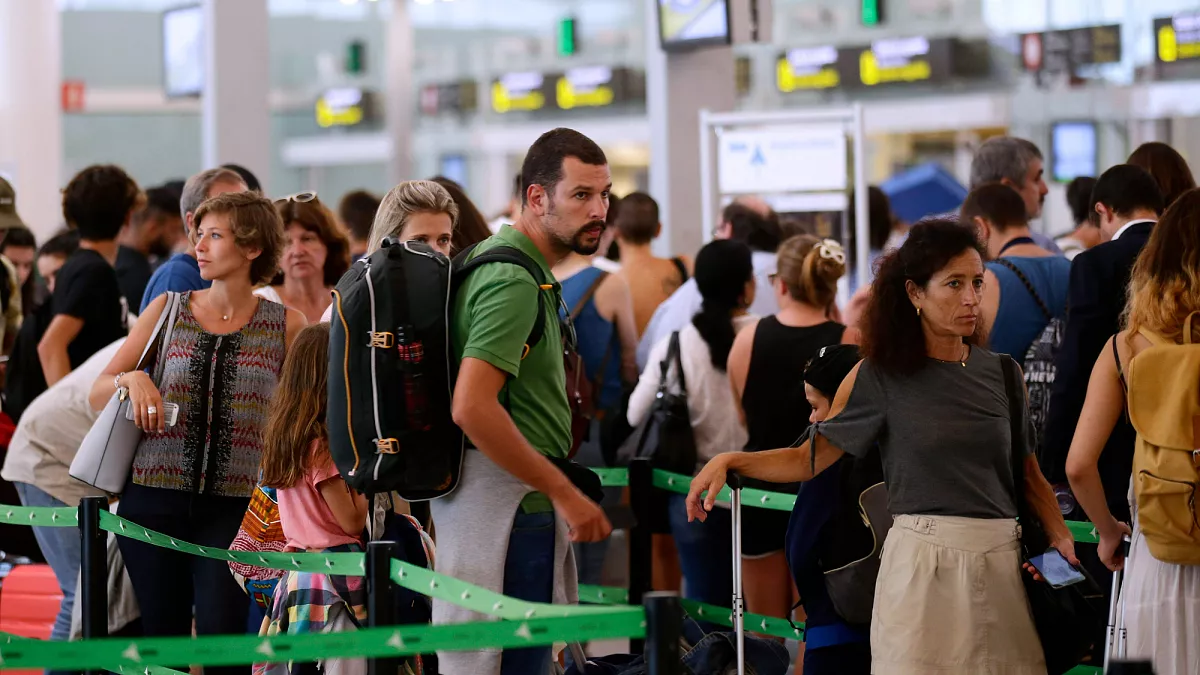
The classic European summer vacation represents a cherished escape for millions of people worldwide—a chance to step off a plane, breathe in the warm air of a historic city, and leave the stress of daily life behind. However, for travelers heading to Europe this year, this dream is threatened by an administrative bottleneck unfolding at airport terminals across the continent. The source of this growing anxiety is the European Union’s newly launched Entry/Exit System (EES). Designed to modernize border security by replacing traditional ink-stamped passports with an advanced digital registry, the system was built to track entries, exits, and stay durations for non-EU travelers. Yet, what sounded efficient on paper has quickly collided with the massive, unpredictable reality of peak international tourism. Since its full rollout, the EES has transformed from a long-awaited technological upgrade into a looming logistics crisis, raising fears of catastrophic delays, endless queues, and a direct threat to the smooth operation of some of the world’s busiest travel hubs.
Nowhere is this tension more palpable than in Rome, a city legendary for both its cultural draws and its dense crowds. Marco Troncone, the chief executive officer of Aeroporti di Roma, which manages both Fiumicino and Ciampino airports, has issued a stark warning about the upcoming travel season. Speaking with the Financial Times, Troncone expressed deep concern, rating his level of anxiety as an “eight or nine” on a ten-point scale. He argued that the rigorous digital checks mandated by the EES are fundamentally incompatible with the massive volume of passengers arriving during peak summer days. Facing the threat of terminal-wide gridlock, Troncone declared that Rome’s airports might have no choice but to unilaterally bypass these biometric protocols to prevent dangerous overcrowding in the sweltering heat. For airport operators, the choice is clear: either “open up the valve” by allowing passengers to skip the digital checks, or watch their award-winning terminals collapse into a state of operational paralysis.
This sense of dread is not unique to Italy; it is a shared nightmare keeping airport executives awake across the map of Europe. In Portugal, regional authorities are taking emergency measures by preparing to deploy hundreds of public security police officers to major national airports to help manage crowds and streamline agonizingly slow border controls. Meanwhile, in Greece, confusion erupted over potential exemptions for British tourists, a vital driver of the local holiday economy. Though the Greek government eventually clarified that no specific nationalities would be exempted from the new protocols, the brief panic highlighted just how fragile the tourism ecosystem becomes when faced with administrative delays. Stefan Schulte, the president of Airports Council International Europe and head of Frankfurt Airport, captured the collective anxiety of the industry when he openly admitted that the messy implementation of the EES is exactly the kind of systematic crisis that keeps airport leaders awake at night, wondering how they will manage the human tide.
To understand why this digital system is causing such panic, one must look at the physical reality of what the EES actually requires from everyday travelers. Under the new rules, first-time non-EU visitors cannot simply receive a quick stamp and proceed on their way. Instead, they must undergo a complete biometric registration process, which demands high-resolution facial scans and digital fingerprinting, alongside a thorough digital input of personal details from their travel documents. While this process may seem quick in a controlled test environment, it becomes a major bottleneck when applied to hundreds of tired, impatient travelers disembarking from a flight simultaneously. Add in the human factors—fidgety children, elderly travelers struggling with automated kiosks, language barriers, and occasional technical glitches—and a process designed for efficiency quickly turns into a frustrating barrier that tests the patience of both travelers and border staff.
Even the institutional bodies responsible for managing Europe’s outer borders have had to confess to the gravity of these early failures. Frontex, the European Border and Coast Guard Agency, recently admitted that collecting biometric data during a traveler’s initial entry into the Schengen Area continues to be the single most challenging aspect of the rollout. Uku Särekanno, a deputy executive director at Frontex, speaking at a travel industry event in London, offered a highly sobering estimate: it could take up to one or two years for the system to fully stabilize as travelers complete their initial enrollments. This long timeline was met with deep dismay by travel sector representatives. Mark Tanzer, the chief executive of the British travel association ABTA, described this projected period of disruption as “very painful,” signaling that the travel industry is facing an extended era of friction rather than the seamless, high-tech future they were promised.
Ultimately, this brewing summer crisis highlights a profound disconnect between the high-level aspirations of digital security policy and the grounded, human realities of international travel. As millions of hopeful vacationers prepare to embark on their journeys, the conflict between rigid computer code and the fluid dynamics of human movement will be fought in airport terminals and border queues. While maintaining secure borders is undoubtedly crucial, the situation serves as a powerful reminder that security must not come at the expense of human dignity, physical safety, and the basic joy of travel. Until the technology matures and the systemic bottlenecks are ironed out, airport operators will have to rely on flexibility and quick-thinking logistics to keep terminal floors safe, while passengers will need to pack an extra measure of patience as they navigate this challenging transitional chapter in global travel.