





For millions of Muslims around the globe, the yearning to visit the holy cities of Mecca and Medina is a deeply personal, lifelong calling that transcends geographical, cultural, and financial boundaries. Historically, undertaking this sacred journey required navigating a labyrinth of rigid logistical hurdles, saving money for decades, and waiting on unpredictable, competitive national visa quotas that often limited travel to once in a lifetime. In a profound move that fundamentally reshapes this landscape, Saudi Arabia’s Ministry of Hajj and Umrah has officially launched a revolutionary multiple-entry visa designed specifically for Umrah pilgrims. Valid for a full 365 days from the date of its issuance, this modern administrative marvel represents a historic shift in how global believers can engage with their spiritual heritage. By allowing travelers to enter and exit the kingdom multiple times to perform the sacred rituals of Umrah for a cumulative stay of up to 90 days, the Saudi government is opening its doors wider than ever before. This historic policy change represents more than just a bureaucratic update—it is an empathetic invitation to the global Islamic community, transforming what was once a highly complex, stressful, and singular life event into a flexible, accessible, and continuous spiritual journey that can be integrated into the rhythms of modern life.
This progressive visa framework is built upon a highly dynamic, security-conscious structure that balances complete travel flexibility with state-of-the-art border control. Once a pilgrim completes their religious rites and departs from Saudi Arabia, the visa automatically deactivates to prevent overstaying and administrative backlog. However, it does not expire; rather, it remains in a dormant state, ready to be reactivated for the holder’s next holy journey once they fulfill the necessary regulatory steps for their subsequent trip. To manage the massive influx of people safely, the ministry has established that the visa remains inoperative during the peak, annual Hajj season, ensuring that the heavy density of the major pilgrimage is handled with maximum security and care. This novel operational agility offers unprecedented lifestyle flexibility for global pilgrims. Working professionals, elderly believers, and families with young children can now thoughtfully plan their spiritual retreats around favorable seasonal weather, localized school holidays, or individual financial cycles, freeing them from the pressure of rigid single-entry windows and the stressful rush of having to reapply for travel documentation from scratch for every unique visit.
At the digital heart of this structural transformation is the Nusuk platform, Saudi Arabia’s self-styled, comprehensive, digital “one-stop shop” that is redefining the entire travel ecosystem for pilgrims. Under the newly enacted regulations, travelers can only utilize this flexible multiple-entry visa if they purchase an official Umrah service package through an approved provider registered on this centralized government portal for each planned visit. This highly organized mandate guarantees that visitors have pre-arranged, high-quality accommodations, reliable transportation, and verified flights before they ever leave their home countries, shielding them from the potential fraud and price gouging that historically plagued independent religious travelers. Furthermore, a pilgrim’s package duration must not exceed the remaining valid days on their visa, and they must secure a formal Umrah permit via Nusuk before crossing Saudi borders. This integrated digital process aligns perfectly with the grand vision of Saudi Vision 2030 and the Pilgrim Experience Program, a national initiative dedicated to facilitating arrival, enriching the spiritual experience, and boosting operational efficiency through cutting-edge technology. By converting complex bureaucratic processes into user-friendly digital experiences, the kingdom is minimizing anxiety and ensuring that visitors can focus their minds entirely on prayer, reflection, and spiritual healing.
The immediate global impact of these travel reforms is vividly reflected in the skyrocketing pilgrimage statistics for the year 2026. Within the first half of the year alone, Saudi Arabia has welcomed a staggering 931,500 pilgrims traveling on Umrah visas, representing an impressive 22.5 percent surge compared to the exact same timeframe in 2025. This massive boom in arrivals represents a beautiful, living mosaic of global humanity, with the vast majority of international visitors arriving from Pakistan, Indonesia, and Iraq—nations with deep-rooted religious traditions and massive populations of dedicated believers. By removing traditional barriers to entry, the newly simplified visa process has unleashed a massive wellspring of latent demand, particularly among growing middle-class communities in South Asia and Southeast Asia. The bustling streets of Mecca and the serene courtyards of Medina are now vibrant centers of international brotherhood and sisterhood, where diverse languages, cultural garments, and culinary heritages converge in peaceful worship. These numbers highlight the success of Saudi Arabia’s strategic vision, proving that when administrative processes are simplified and digitized, the spiritual bond drawing the global community together naturally grows stronger and more dynamic.
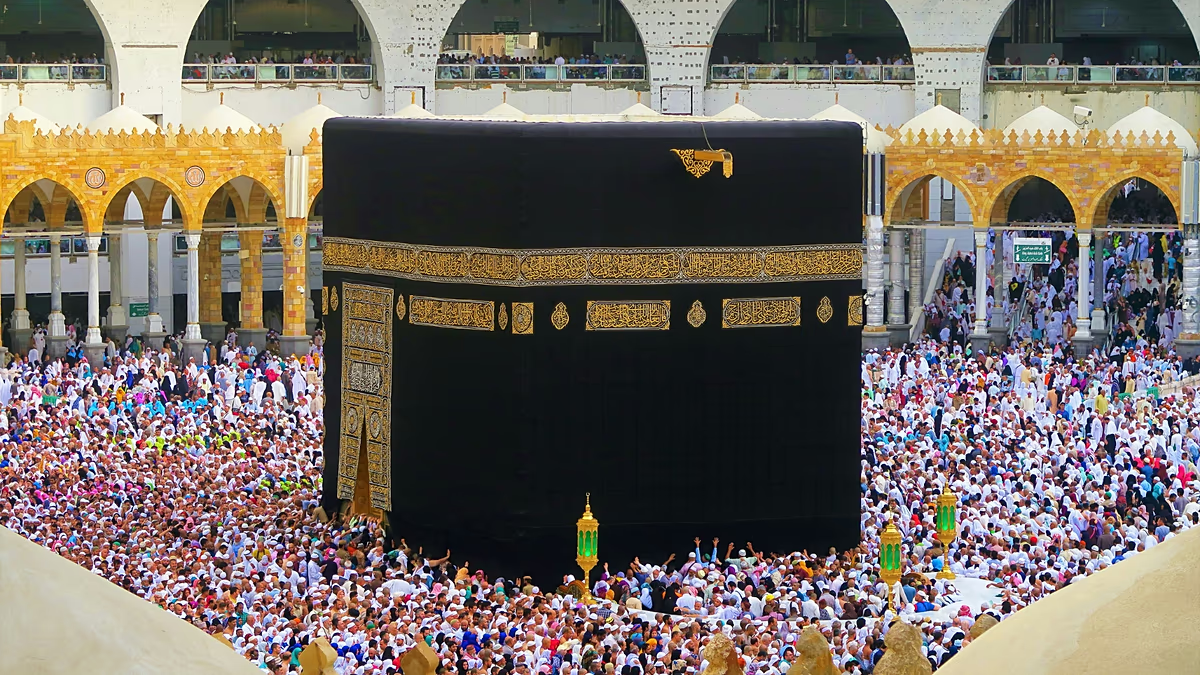
To fully appreciate the profound impact of these new visa regulations, one must understand the distinct theological and practical differences that separate the two main Islamic pilgrimages: Umrah and Hajj. Umrah, often referred to as the “lesser” or “minor” pilgrimage, is a highly personal, voluntary act of deep devotion that can be undertaken at any time of the year, usually taking only a few hours to complete through a series of focused, sacred rituals within the confines of the Grand Mosque in Mecca. Hajj, conversely, is an absolute, non-negotiable spiritual pillar of Islam that every physically and financially capable Muslim must perform at least once in their lifetime during a highly specific window in the Islamic lunar month of Dhul Hijjah. Unlike the brief, solitary nature of Umrah, Hajj is a physically grueling, deeply communal undertaking that spans five to six days of continuous, intensive rituals across several holy sites, including the plains of Arafat and Muzdalifah. Because Hajj is an enormous, coordinated global event requiring the synchronized movement of millions of people within a tight timeframe, the Saudi government must tightly regulate entries, which explains why the flexible, year-round Umrah visa is paused during this sacred period to preserve public safety and operational order.
Looking to the future, this masterfully crafted visa policy highlights Saudi Arabia’s historic role and evolving identity as the generous custodian of Islam’s most sacred sanctuaries. The magnitude of this responsibility is clearly reflected in historical data, such as in 2025 when the kingdom successfully hosted over 1.5 million foreign Hajj pilgrims alongside hundreds of thousands of domestic worshippers, bringing the grand total to over 1.6 million people. By creating a modern, safe, and highly intuitive travel environment where ancient devotion meets state-of-the-art 21st-century technology, Saudi Arabia is establishing a new gold standard for religious tourism and spiritual hospitality. These continuous regulatory changes ultimately showcase a profound truth: as the world becomes faster and more digital, the human need for reflection, spiritual quietude, and divine connection only grows deeper. Through the thoughtful harmony of compassionate policy and digital innovation, the kingdom is successfully ensuring that every single pilgrim who answers the ancient spiritual call is met with warm hospitality, maximum safety, and a seamless journey to the doorsteps of the divine.