






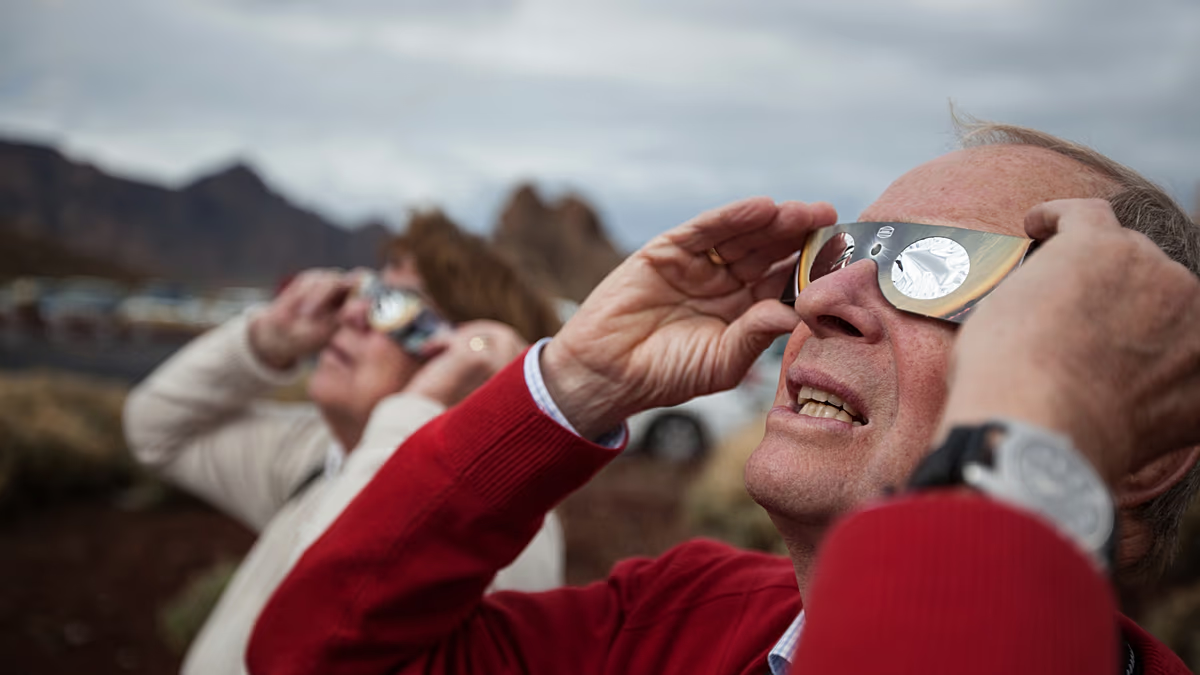
The anticipation is building across southern Spain, and it’s not just for a summer festival or a football final. The celestial event of the decade—a total solar eclipse set to grace the skies on August 2, 2027—has already ignited a frenzy of bookings and a significant spike in prices, turning the regions of Andalusia, Ceuta, and Melilla into the most coveted destinations on the planet. With nearly a year still to go, the economic ripple effect is being felt acutely, transforming the region into a goldmine for property owners, hoteliers, and tour operators. This is not merely a scientific phenomenon for astronomers; it has become one of the most influential economic drivers the Spanish tourism sector has seen in years, proving that the allure of the cosmos is a powerful motivator for modern travel.
The astronomical reality is that while a partial eclipse will be visible from much of Spain, the full, breathtaking “ring of fire” effect—where the Moon completely obscures the Sun—will only be visible from specific pockets of the country. The prime viewing zones are concentrated in the provinces of Cádiz, Málaga, Granada, and Almería, along with the North African territories of Ceuta and Melilla. This exclusivity is the primary driver of the astronomical prices. In the coastal gem of Tarifa, a hotspot for windsurfers and now eclipse chasers, spectators can expect a total darkness lasting 4 minutes and 38 seconds—an eternity for those seeking an otherworldly experience. The spectacle is even more generous in Ceuta, where the sun will be fully hidden for 4 minutes and 48 seconds. However, for those truly dedicated to maximizing their time in darkness, the world’s best vantage point will be Egypt, where the eclipse will reach a staggering 6 minutes and 23 seconds of totality, making it the prime target for the most serious celestial tourists.
The rush to secure a prime viewing spot is already visibly distorting the accommodation market, with prices that seem more suited to a luxury yacht than a night’s stay on land. The burning demand is most evident in smaller coastal communities where the experience promises to be unobstructed and awe-inspiring. For instance, in El Palmar, a charming village known for its beaches and surf culture, a single villa for six people, located just 600 meters from the ocean, is being listed for a staggering €33,129 for one night. While this price could theoretically be split among the six guests at roughly €5,522 per person, it still represents an extraordinary premium. The situation is equally dramatic in Tarifa, where searches for two adults staying between August 1st and 2nd return properties at jaw-dropping nightly rates of €13,260, €12,500, and €11,090. These figures are the clearest indication yet that the eclipse is being treated as a once-in-a-lifetime event, for which travelers are willing to pay extraordinary sums, and property owners are capitalizing on the scarcity of space in the narrow band of totality.
This current scramble is not without precedent. The economic impact of celestial tourism was brilliantly showcased just recently, when a total solar eclipse crossed Spain and generated a colossal economic windfall of €347.6 million. That event attracted approximately 446,000 international tourists who came specifically to witness the phenomenon. The demographics of these travelers revealed a fascinating global interest, with the United States leading the pack outside of Europe, followed closely by Canada and Argentina. The influx also included a notable surge of British visitors, lured by the promise of reliable weather and spectacular views, and a significant number of Japanese tourists, for whom astrotourism has become a substantial cultural and travel niche. This previous success has not only validated the economic power of eclipse tourism but has also provided a robust blueprint for how the industry can prepare for the even larger influx expected in 2027.
The tourism sector, now well-versed in the logistics of cosmic events, is already in a state of high alert and strategic preparation. The demand has become so overwhelming in certain areas that some hotels in Cádiz have taken the unprecedented step of temporarily closing their online booking systems. This is not a sign of reluctance but rather a calculated move to manage the sheer volume of requests and, in some cases, to reassess their pricing structures for the high-demand period. Meanwhile, the concept of “astrotourism” is gaining more traction than ever before, transitioning from a niche interest to a mainstream travel motivator. Destinations that offer clear skies, low light pollution, and longer durations of totality are being marketed aggressively worldwide. The industry is realizing that this is not just about a single night; it’s about creating an entire experience—combining the natural beauty of the Andalusian coast with the celestial spectacle, offering guided astronomy tours, special dinners, and educational opportunities that elevate the event into a holistic travel package.
In the end, the 2027 eclipse is shaping up to be far more than a moment of astronomical alignment; it is a collective, global event that underscores a deep human desire for wonder and connection to the universe. The staggering prices and the frantic booking rush are a testament to the enduring power of nature’s most dramatic displays. As the date draws closer, the speculation is not whether the crowds will come, but how the region will cope with the immense pressure on its infrastructure, and whether local businesses can balance astronomical profits with the need for sustainable and responsible tourism. For now, if you haven’t secured your spot in the path of totality, you may be left to enjoy the 90% partial eclipse from a less exclusive—and substantially cheaper—location, watching the world’s most spectacular show from the periphery. The countdown has well and truly begun, and the stars have aligned for Spain’s economy, if not for the casual traveler’s budget.