






There’s something undeniably exciting about the annual reveal of The World’s Best Hotels, and this year’s edition has delivered plenty to talk about. For 2026, Europe has once again emerged as the dominant force in global hospitality, with 21 properties across the continent earning a spot on the prestigious 50 Best Hotels list. Asia followed closely behind with 18 entries, while North America secured six places, South America and Africa each took two, and Oceania rounded things out with a single standout property. The list, now in its fourth year, has become one of the most closely watched rankings in the travel world, celebrated not just for the names at the top but for the incredible diversity of destinations and styles it represents. There are grand old European palaces, sleek Asian skyscrapers, intimate boutique hideaways, and bold new desert icons. It’s a global snapshot of where luxury travel is headed, and this year it feels more varied and competitive than ever.
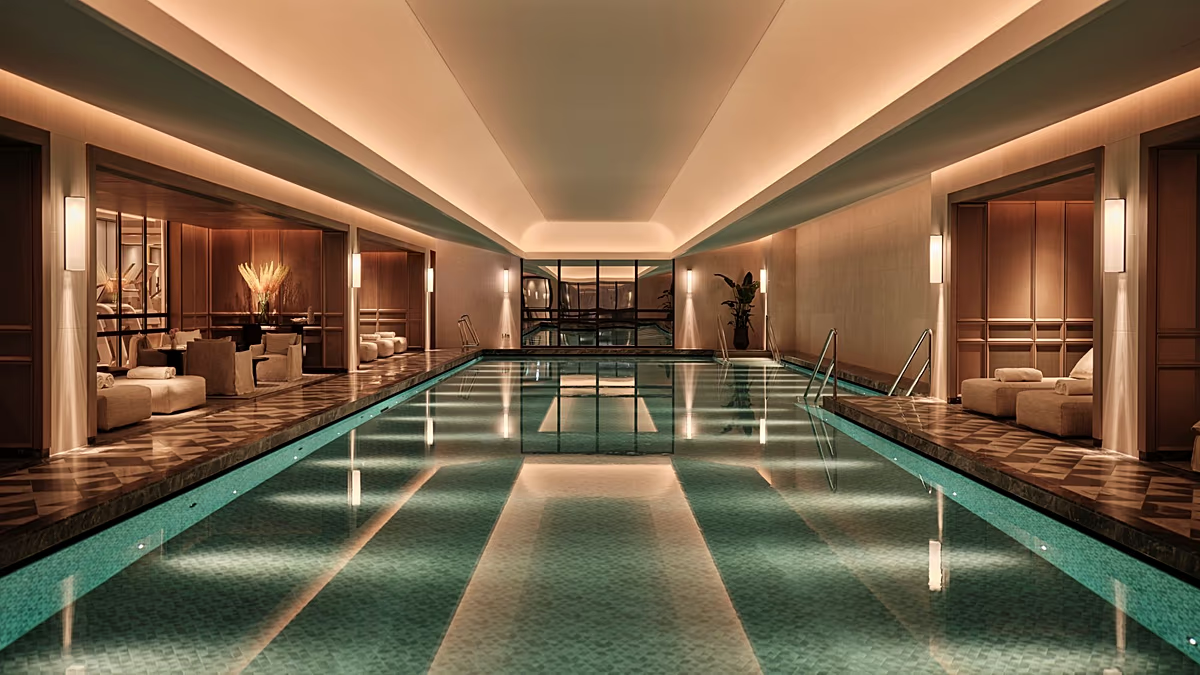
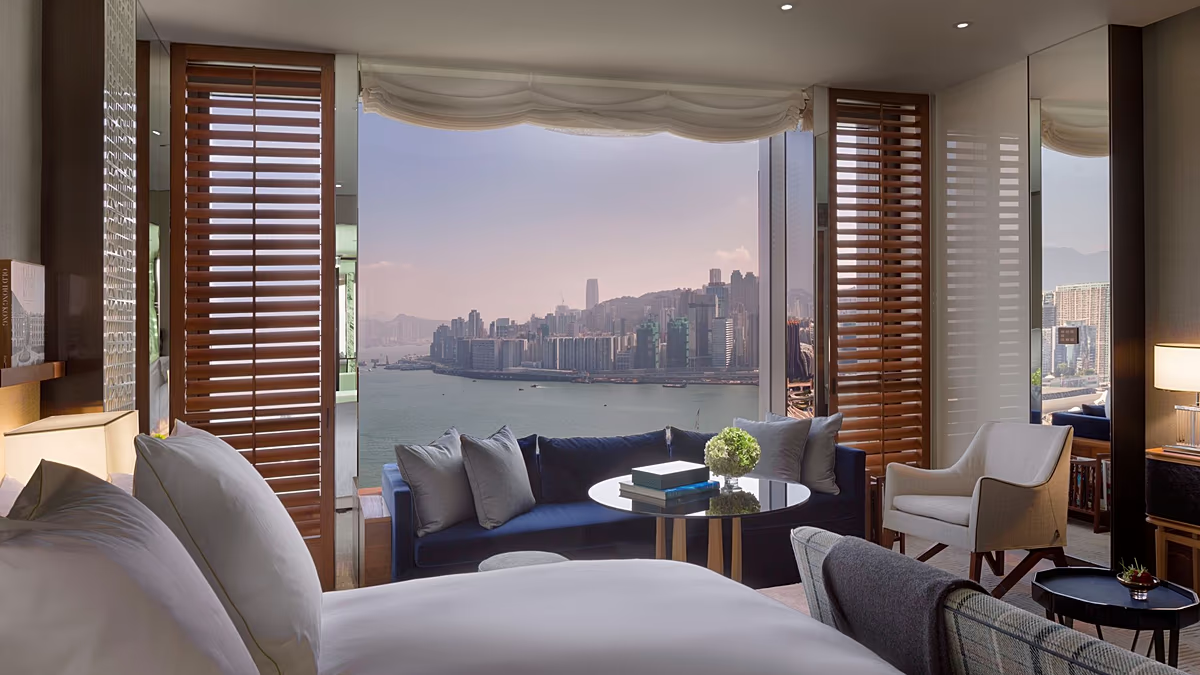
At the very top of the pile sits Rosewood Hong Kong, which has done something quite remarkable: it has held onto the number one spot for a second consecutive year. The hotel, which first claimed the title last year after placing third in 2024, towers above Victoria Harbour with 413 keys spread across 65 storeys, and it has clearly won over voters with a combination of culinary firepower and serious wellness credentials. The property is home to 11 restaurants and bars, making it a true foodie destination in a city already famous for its dining scene, while its multi-level Asaya spa and a 25-metre-long infinity pool offer a sense of calm and luxury that feels a world away from the bustling streets below. It’s the kind of place that understands modern travellers want more than just a beautiful room—they want experiences, flavours, and a chance to reset. Faye Huggett, director of community for The 50 Best Hotels, captured the mood perfectly when she said: “Rosewood Hong Kong retaining its No.1 position for a second consecutive year underlines Asia’s continued influence at the very highest level, while Europe’s strong representation and this year’s 10 new entries point to a dynamic, diverse and competitive global hotel landscape.” She added, “As The 50 evolves, our ambition is to continue to champion the people, places and ideas setting the agenda for the future of hospitality.”
Europe’s strength on the list runs deep, and leading the charge for the continent is Lake Como’s Passalacqua, which claimed the top spot in 2023 and remains the highest-ranked European hotel for the second year in a row. This time it comes in fifth, just one place lower than its 2025 position, but it continues to charm voters with its 18th-century grandeur and intimate scale—there are only 24 rooms, which is precisely what makes it feel so special. Passalacqua was also handed the Best Boutique Hotel Award for the third consecutive year, a testament to its enduring appeal. Right behind it among European entries is Four Seasons Firenze in Florence, which took 12th place. Italy and France both have six hotels on the list, making them the most heavily represented European countries. The remaining Italian properties are Casa Maria Luigia in Modena (18th), which also happens to be the highest new entry on the entire list, Bulgari Roma (32nd), Portrait Milano (39th), and San Domenico Palace in Taormina (50th), a name that may ring a bell for television fans—it served as the filming location for the second season of The White Lotus. There’s something for every kind of traveller here, from countryside hideaways to city chic, and it’s clear that Italy’s hospitality scene is in remarkably good shape.
France’s presence is equally impressive, and Paris, unsurprisingly, dominates the country’s showing. Four of France’s six hotels are in the capital: Hôtel de Crillon (14th), Le Bristol (19th), Cheval Blanc Paris (20th), and Plaza Athénée (41st). These are names that have defined Parisian luxury for generations, and they continue to set the standard for service, style, and savoir-faire. But France’s appeal extends well beyond Paris. Hôtel du Couvent in Nice ranked 38th and also won the Johnnie Walker Art of Design Award, recognition for a property that clearly understands the power of atmosphere and aesthetics. Hotel du Cap-Eden-Roc, the legendary retreat on the French Riviera, came in 44th, reminding everyone that the Mediterranean coast remains a magnet for those seeking glamour and relaxation. Across the Channel, the United Kingdom also made a strong showing with four hotels on the list, three of them in London: Claridge’s (13th), Raffles London at The OWO (28th), and The Connaught (49th). The lone UK entry outside the capital is Estelle Manor in Witney, which secured 43rd place and offers a very different kind of British escape—one that feels at once rural and refined. Together, these properties show how Europe’s hotel scene is thriving not just in the obvious capitals, but also in smaller towns and more unexpected settings.
Beyond the headline names, the rest of Europe’s entries paint a wonderfully varied picture of the continent’s hospitality landscape. Four Seasons Astir Palace in Greece took 27th place, The Peninsula Istanbul in Türkiye came in 31st, Badrutt’s Palace in Switzerland claimed 36th, Hôtel de Paris Monte-Carlo in Monaco secured 40th, and Hotel Sacher Vienna in Austria rounded out the European contingent in 42nd place. Each of these properties brings its own distinct character, from the alpine elegance of Badrutt’s to the imperial charm of Vienna’s famous Sacher. And when you look at the full top 20, it reads like a world tour of the most extraordinary places to stay. Rosewood Hong Kong leads, followed by Capella Bangkok in Thailand, Four Seasons Bangkok at Chao Phraya River, and Atlantis The Royal in Dubai. Then come Passalacqua in Italy, Rosewood São Paulo in Brazil, Mandarin Oriental Qianmen in Beijing, Upper House in Hong Kong, Chablé Yucatán in Mexico, and Mandarin Oriental Bangkok. Aman Tokyo represents Japan in 11th, Four Seasons Firenze takes 12th, Claridge’s London is 13th, Hôtel de Crillon Paris is 14th, and Jumeirah Marsa Al Arab in Dubai comes in 15th. Capella Sydney in Australia is 16th, Raffles Singapore is 17th, and the final three in the top 20 are Casa Maria Luigia in Italy, Le Bristol in Paris, and Cheval Blanc Paris. It’s a list that celebrates both timeless icons and exciting newcomers, and it proves that luxury travel is no longer confined to any single region or style.
So how exactly does a hotel earn a place on this coveted list? It’s all down to a remarkably rigorous voting process. The 50 Best Hotels ranking is decided by an 800-strong academy, led by 13 chairs who each oversee one of 13 geographical regions. These chairs assemble a diverse voting panel made up of hoteliers, travel journalists, hotel educators, business travellers, and consumer travel aficionados—people who genuinely know the world of hospitality from every angle. Each academy member casts seven votes for hotels they have personally stayed in anywhere in the world, ranking them in order of preference, and they must have visited the property within the last three years. To keep the process fair and free from lobbying, all voters remain anonymous except for the academy chairs themselves, and the entire results are independently adjudicated by Deloitte. It’s a system designed to reward genuine excellence rather than popularity contests, and it gives the list a credibility that few other rankings can match. For travellers, it’s more than just a countdown—it’s a source of inspiration, a guide to the places that are truly shaping the future of hospitality. Whether you’re dreaming of a serene lake in Italy, a sky-high spa in Hong Kong, or a desert palace in Dubai, this year’s 50 Best Hotels list is a reminder that the world is full of remarkable places waiting to be discovered.