





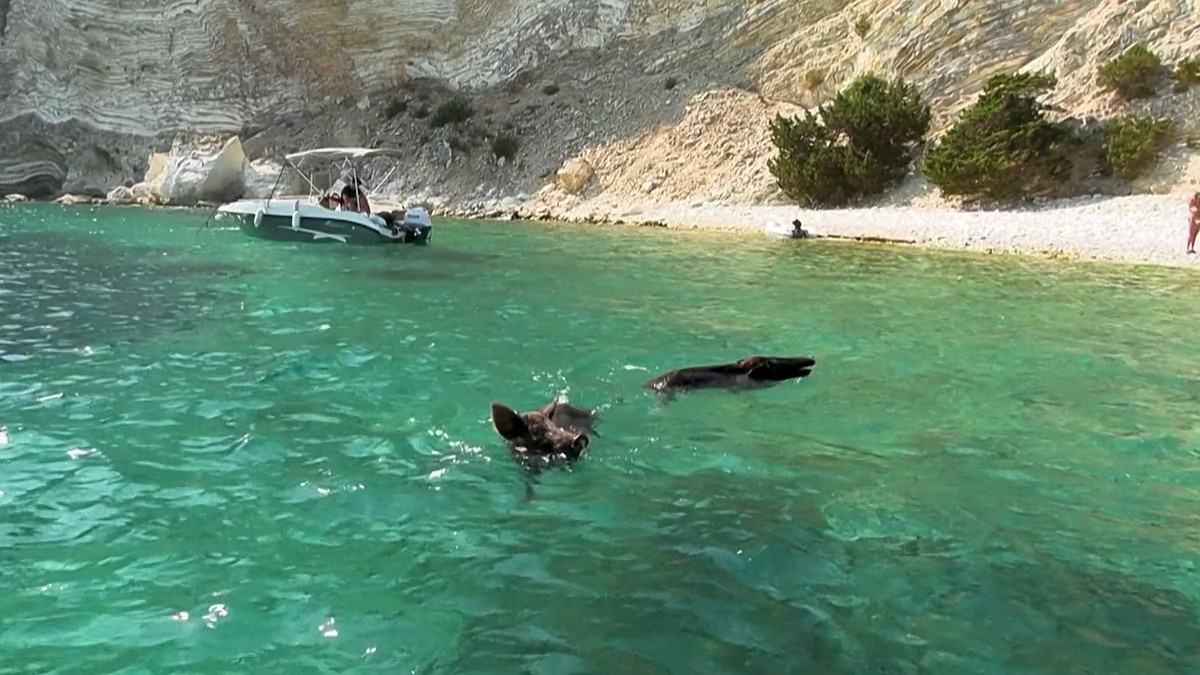
Just off the coast of Ithaca, in the quiet blue waters of the Ionian Sea, lies a small island called Atokos. For most of its history, it existed in the shadow of its more famous neighbors, a private patch of land that few travelers ever thought to visit. It had no hotels, no bustling ports, no souvenir shops. What it did have was wild beauty: steep rocky slopes, olive-green hills, secluded coves, and stretches of sand where the sea lapped gently in shades of turquoise and deep sapphire. It was the kind of place people might pass on a ferry and wonder about, then forget. But in recent years, Atokos has been thrust into the spotlight for a wonderfully unexpected reason. The island has become famous not for its landscape alone, but for its unusual residents: a herd of black pigs that roam freely along the shore. The sight is so surprising and so endearing that it has transformed the island into a viral sensation. Travelers now come from across the globe, not just to swim in the crystalline water or bask in the Mediterranean sun, but to meet these pigs. The animals wander along the beach as if they own the place, and in a way, they do. Their presence gives the island a personality, a living heartbeat, a story that no guidebook could have predicted. What was once a hidden gem is now widely known as a place where nature and charm collide in the most delightful way imaginable.
The story of Atokos and its pigs is a reminder that sometimes the most wonderful travel experiences are the ones we never plan. The island is privately owned, and for years it remained largely unvisited. There were no public facilities, no crowds, no signs of modern tourism. The few people who did come were sailors, fishermen, or curious travelers looking for a quiet anchorage. They may have noticed the pigs, but the animals were simply part of the local scenery, wild and unbothered. Then came social media. Photos and videos of the pigs padding along the sand, splashing into the sea, and sniffing at visitors began to circulate on Instagram and TikTok. The footage had an irresistible quality: it was funny, heartwarming, and utterly unexpected. People shared it, commented on it, and asked where this place could possibly be. The answer, Atokos, began appearing in travel captions and bucket lists. The island’s viral moment changed everything. Boat operators in nearby islands started to take notice. Travelers who had never heard of Atokos suddenly wanted to go there. The pigs, who had spent generations living quietly on the island, became international celebrities. Their story spread across language barriers and time zones, carried by the simple joy of watching animals enjoy the sea under a warm Greek sun. It was a kind of fame no one could have planned, and it gave the island a new identity.
What makes the encounter so special is how natural it feels. The pigs have grown accustomed to human presence, and they move among visitors with an easygoing confidence. They are not confined or trained; they are simply living their lives, and the tourists are the ones who have entered their world. In the morning, the pigs wander along the shore, their snouts low to the ground as they search for food. They explore the rocky edges of the beach, poke at seaweed, and trot across the sand with surprising energy. When the sun grows too hot, they do what any sensible creature would do: they head for the water. Visitors watch in delight as the pigs wade into the sea, swimming with a comfortable paddle that seems both natural and amusing. They cool off in the shallow waves, sometimes snorting and shaking their heads, before returning to the beach to continue their lazy routines. For the people who come to see them, this is a rare and personal glimpse of animals living freely, without fences or fear. Some travelers choose to feed them, offering fruit or other treats held carefully in their hands. Others swim nearby, keeping a respectful distance while still sharing the same blue water. There is something deeply joyful about the interaction, a moment of connection between species that feels unforced and genuine. The pigs do not perform. They do not pose. They simply exist in their island home, and that is exactly what makes them so captivating.
Getting to Atokos is an adventure in itself. There is no dock, no regular ferry schedule, no ticket office. Access is mainly by small tourist boats that depart from nearby islands, especially Ithaca. One of the local excursion organizers, Renato Bisa, has seen demand grow dramatically as word has spread. He now makes several trips to the island each day, shuttling visitors who are eager to see the pigs for themselves. What started as a modest side trip has turned into a busy route, with boats crossing the sparkling water throughout the day. The journey itself is part of the charm: the gentle rocking of the boat, the salty breeze, the view of the Ionian coastline unfolding in the distance. As the boat approaches Atokos, the passengers scan the shoreline, hoping to catch sight of the dark shapes moving along the sand. When the pigs appear, a wave of excitement passes through the group. Phones come out, cameras are raised, and the air fills with laughter and exclamations of delight. The demand has become so strong that excursions now also run from Lefkada and Kefalonia, bringing even more visitors to the little island. The boat operators have adapted to the phenomenon with good humor and local practicality. Some even use fruit to lure the animals a little closer to the boats, giving passengers a better view and a more memorable experience. It is a simple trick, but it works, and the pigs seem more than happy to oblige for a tasty reward.
The island’s newfound fame has given rise to an entire tourist experience centered around its porcine locals. Atokos is now jokingly referred to as “Piggy Island,” a name that is both affectionate and fitting. Social media has played a huge role in shaping this identity. Travelers pose with the pigs in the background, film their swimming antics, and share clips that rack up thousands of views. The hashtags and comments are full of delight: “The best day ever,” “I can’t believe this is real,” “Pigs at the beach!” The pigs have become mascots, ambassadors, and local celebrities all at once. For many visitors, meeting them is the highlight of their trip, an unexpected encounter that feels almost magical. Some come specifically because they saw a viral video and knew they had to see it in person. Others stumble upon the sight while on a boat tour and are caught completely by surprise. Either way, they leave with memories that last far longer than a typical beach day. The sudden attention has changed the character of Atokos. What was once a quiet, overlooked island has become a major draw for thousands of tourists, particularly during the summer months. The pigs have not changed, but the world around them certainly has. They are now part of a living story, one that continues to grow with every passing season.
There is something wonderfully human about the way Atokos and its pigs have captured our imagination. In a world filled with crowded attractions and carefully curated experiences, there is a simple and refreshing pleasure in watching animals live freely in a beautiful place. The pigs do not care about followers or fame. They do not know that they have become internet stars. They just live their lives on a sunny Greek island, snuffling along the beach and swimming when the heat becomes too much. And perhaps that is why people are so drawn to them. They represent a kind of freedom that feels increasingly rare, a connection to nature that is honest and uncomplicated. For the local boat operators, the sudden popularity has brought new opportunities and a steady stream of curious visitors. For the travelers, it has brought unexpected joy and a story worth telling. And for the island itself, it has brought a new chapter in its long history. Atokos may be private, but it has become, in a way, a shared treasure, a place that belongs to the imagination of everyone who has seen a video of a pig swimming in the clear green sea. The summer crowds will come and go, the viral posts will fade, but the pigs will still be there, wandering along the shore as they always have, reminding us that the best moments are often the ones we least expect.