



For generations, the global wanderlust collective has shared a remarkably uniform bucket list, a glittering roster of iconic destinations that promise romance, adventure, and unparalleled beauty. We have all dreamed of drifting along the quiet canals of Venice, sipping espresso beside the deep blue waters of Lake Como, or dancing the night away under the neon lights of Saint-Tropez. Yet, the harsh reality of modern travel has begun to tarnish these dreams, as overtourism transforms once-magical sanctuaries into congested, overpriced caricatures of themselves. Travelers who do not have the luxury of planning their getaways during the quiet shoulder seasons often find themselves trapped in a sea of selfie sticks, navigating endless queues, and paying exorbitant prices for watered-down cultural experiences. In response to this growing frustration, a transformative and highly conscious travel trend has emerged: the “destination dupe.” Far from being a cheap imitation or a compromise, a destination dupe is a thoughtful, intentional alternative that captures the very soul, architecture, and landscape of a famous hotspot, but without the suffocating crowds and the heavy ecological footprint. By redirecting our footsteps to these under-the-radar locales, we not only reclaim the slow, authentic magic of discovery but also distribute much-needed tourism revenue to communities that genuinely welcome it, easing the immense pressure on fragile, oversaturated ecosystems. To help travelers navigate this exciting shift, the innovative team at eSIM provider Holafly developed a comprehensive Travel Dupe Index. Rather than relying on superficial comparisons, they carefully analyzed global destination pairs based on rigorous cultural and visual similarities, average peak-season accommodation savings, tourist density, infrastructure accessibility, and growing interest across social media and search engines. To ensure a truly global perspective, the index stipulates that all alternatives must reside in a different country than their famous counterparts, with no more than two substitutes selected from any single nation. The result is a curated guide to the world’s best-kept secrets, offering high-value, low-crowd adventures that prove you do not have to follow the herd to find paradise.
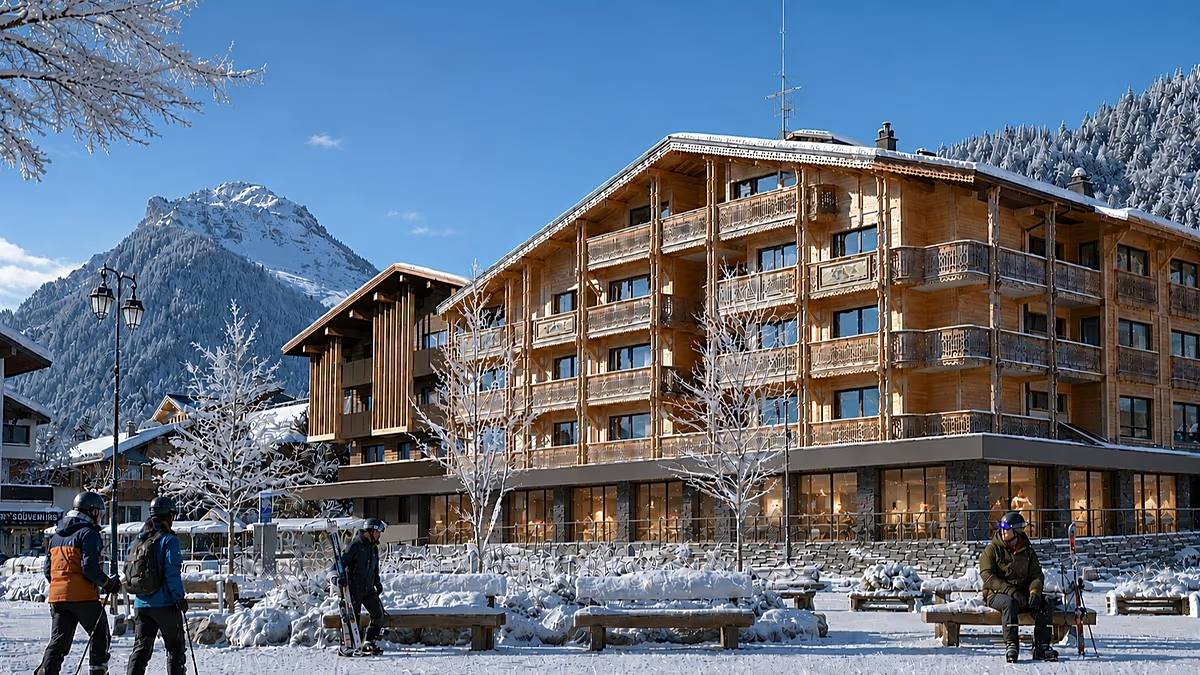
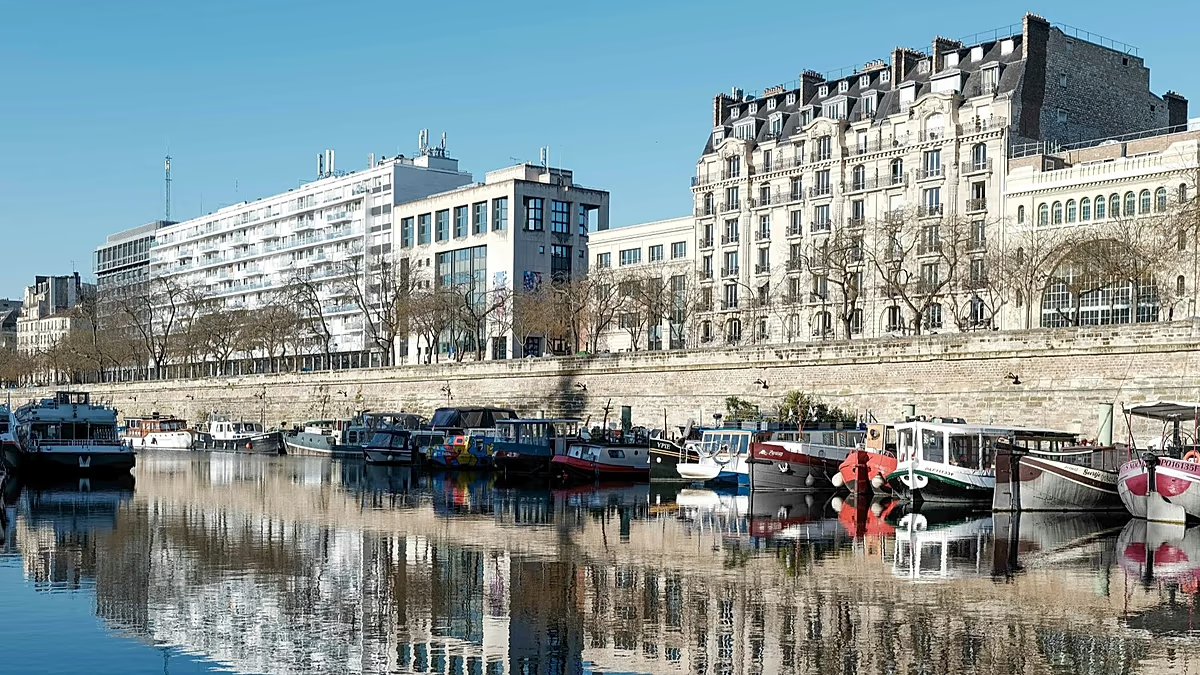
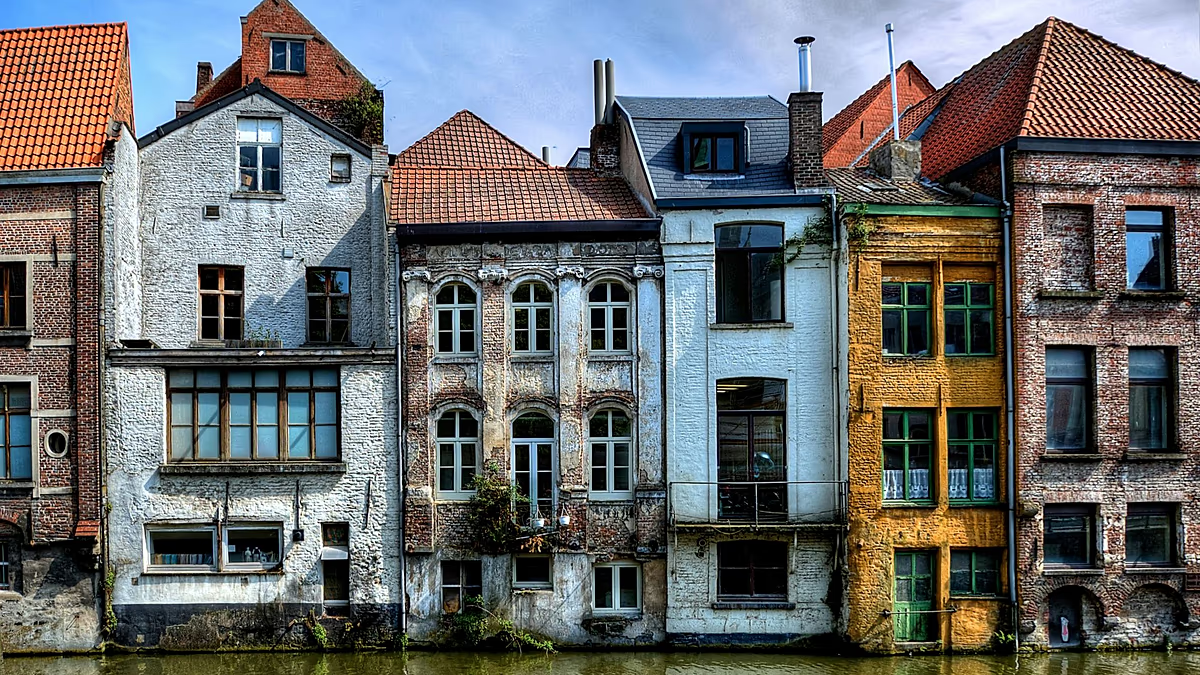
Standing proudly at the pinnacle of this index is the breathtaking city of Ghent in Belgium, crowned as the ultimate alternative to the over-congested waterways of Venice, Italy. While Venice struggles under the weight of day-trippers and controversial tourist taxes, Ghent quietly sparkles with its own intricate network of medieval canals, soaring Gothic architecture, and vibrant, artistic waterfronts. Wandering through Ghent’s historic center feels like stepping into a living painting, where beautifully preserved guild houses reflect off the shimmering water and locals gather along the Graslei harbor to share drinks and conversation. Here, you can admire masterpieces like the Adoration of the Mystic Lamb or climb the towering Belfry for panoramic views of the city, all without having to elbow your way through hordes of tourists on the Rialto Bridge. Across the Atlantic, the index turns its gaze toward the snow-capped peaks of North America, highlighting Banff in Canada as the perfect, down-to-earth surrogate for the ultra-exclusive slopes of Aspen, Colorado. While Aspen has become synonymous with astronomical price tags and celebrity-spotting, Banff offers a wilder, more majestic slice of the Rocky Mountains that remains deeply accessible to everyday nature lovers. Nestled within Canada’s oldest national park, Banff boasts jaw-dropping glacial lakes, pristine pine forests, and world-class ski resorts like Lake Louise and Sunshine Village. It provides all the adrenaline-fueled excitement, cozy alpine charm, and dramatic scenery of its American neighbor, but with a warm, welcoming Canadian hospitality and a focus on raw, untamed wilderness rather than high-end commercial luxury.
For those dreaming of the ancient mystique of East Asia, the index offers a profound alternative to Japan’s cultural capital, Kyoto, which has recently taken drastic measures—including massive hikes in visa fees and neighborhood closures—to combat severe overtourism. The perfect solution lies in Jeonju, South Korea, a city that offers a deeply authentic journey back in time without the crushing crowds of Kyoto’s Gion district. Jeonju is home to one of Korea’s largest and most beautifully preserved Hanok Villages, where over eight hundred traditional slate-roofed houses whisper stories of the Joseon Dynasty. As you stroll down quiet, stone-paved alleys, you can visit the historic Gyeonggijeon Shrine, admire the ancient artifacts at the Jeonju National Museum, and fully immerse yourself in a culture that values slow preservation over rapid commercialization. Furthermore, Jeonju is widely celebrated as the culinary capital of South Korea and the birthplace of bibimbap, offering food lovers an incredibly rich, sensory experience where every meal is a labor of love rather than a rushed tourist menu. Meanwhile, in Southeast Asia, the teardrop-shaped island of Siargao in the Philippines emerges as the ultimate sanctuary for those seeking refuge from the traffic jams and crowded beaches of Bali, Indonesia. While Bali’s rapid development has left many searching for the spiritual, laid-back island vibe of decades past, Siargao remains a pristine haven of coconut palm forests, hidden tide pools, and crystal-clear lagoons. Known globally for its legendary Cloud 9 surf break, Siargao maintains an effortlessly cool, bohemian atmosphere where the pace of life is dictated by the ocean tides, allowing travelers to connect deeply with nature and a warm, welcoming local community.
Europe’s sun-drenched coastlines have long been the epicenter of summer travel, yet the dream of a Mediterranean escape can easily turn into a logistical nightmare of crowded beaches and long waits for reservations. The Travel Dupe Index elegantly solves this dilemma by presenting Budva, Montenegro, as a stellar alternative to the legendary nightlife and sun-soaked shores of Ibiza, Spain. Budva boasts a spectacular medieval Old Town jutting out into the sparkling Adriatic Sea, surrounded by defensive stone walls and blessed with sandy beaches that rival any in the Balearics. During the day, travelers can explore quiet cobblestone squares and ancient churches, while the warm summer nights bring a pulsing, energetic nightlife scene that offers all the excitement of Ibiza’s world-famous clubs at a fraction of the cost. Further west along the Iberian Peninsula, the elegant town of Cascais, Portugal, serves as a sophisticated, wind-swept counterweight to the hyper-expensive, yacht-filled harbor of Saint-Tropez on the French Riviera. Once a favored summer retreat for Portuguese royalty, Cascais seamlessly blends historic charm with cosmopolitan flair, offering rugged Atlantic coastlines, world-class golf courses, and exquisite seafood dining. It captures the very essence of coastal luxury, allowing visitors to cycle along scenic seaside cliffs, explore contemporary art museums, and relax on golden sands without the pretentious atmosphere and inflated prices of the Côte d’Azur.
The pursuit of scenic tranquility often leads travelers to the dramatic, villa-lined shores of Lake Como, Italy, but the reality of bumper-to-bumper tour buses on narrow cliffside roads can quickly shatter the illusion of peace. The index offers a breathtaking, soul-stirring alternative in Lake Ohrid, nestled quietly on the mountainous border between North Macedonia and Albania. As one of Europe’s deepest and oldest lakes, Ohrid is a UNESCO World Heritage site that exudes a timeless, spiritual beauty, with its pristine, emerald waters framed by dramatic cliffs and historic Byzantine churches. Visitors can enjoy a slow-paced boat ride to the iconic Church of Saint John at Kaneo, swim in crystal-clear waters, and dine on fresh lake trout at quiet, family-run tavernas, experiencing a level of serene, untouched romance that has become increasingly rare in Northern Italy. For the more adventurous soul, the index tackles the challenge of visiting Machu Picchu, Peru’s crown jewel, which has understandably implemented strict visitor caps and rigid, timed trails to protect its ancient ruins from erosion. Instead, travelers are invited to trek into the dense, misty jungles of Colombia to discover Ciudad Perdida, the “Lost City.” Built by the Tayrona people some six hundred and fifty years before Machu Picchu, this archaeological wonder can only be reached via a challenging, multi-day trek through the Sierra Nevada mountains. The journey is an active pilgrimage, guiding you through indigenous villages, roaring rivers, and lush rainforests, culminating in a breathtaking ascent up twelve hundred stone steps to a majestic, crowd-free ancient city that feels like a true reward for your physical endeavor.
To round out this inspiring collection, the index turns to the Caribbean, highlighting the sleepy, palm-fringed town of Las Terrenas in the Dominican Republic as a refreshing alternative to the commercialized, eco-chic trap of Tulum, Mexico. While Tulum struggles with seaweed crises, massive crowds, and high-priced beach clubs, Las Terrenas offers miles of wild, undeveloped beaches where golden sands meet calm, turquoise waters and wild coconut groves. The town boasts a unique, charming blend of local Dominican culture and French expatriate influence, resulting in a vibrant culinary scene where you can enjoy authentic Creole dishes alongside freshly baked croissants right on the beach. Ultimately, embracing these destination dupes is not about compromising on our travel aspirations; rather, it is a powerful reclamation of the true spirit of exploration. It is a conscious choice to seek out places where our presence as travelers is seen as an opportunity for genuine cultural exchange rather than a burden on local infrastructure. By stepping off the well-worn path, we allow ourselves to be surprised by the world again, discovering that the most unforgettable travel memories are often found not in the places everyone is talking about, but in the quiet, unexpected corners where the magic of discovery still burns bright.