


Planning a last-minute getaway across Europe often feels like a financial gamble, a race against the clock where your spontaneity is punished with inflated prices. The common assumption is that impulsive travel is a luxury reserved for the wealthy, with sky-high airfare and premium hotel rates waiting to ambush the unprepared. However, a revealing new study suggests this doesn’t have to be the case. By shifting your gaze away from the continent’s most famous hubs and towards its hidden gems, you can discover a Europe that is not only culturally rich but remarkably easy on the wallet. A recent analysis conducted by the virtual card provider Getsby has delved into travel cost data from the website Budget Your Trip, scrutinizing the daily expenses for two people traveling on a mid-range budget across 100 cities. By comparing the typical costs of accommodation, meals, and local transportation, the study has unearthed the best-value destinations for a weekend break, proving that you can have a memorable escape without breaking the bank.
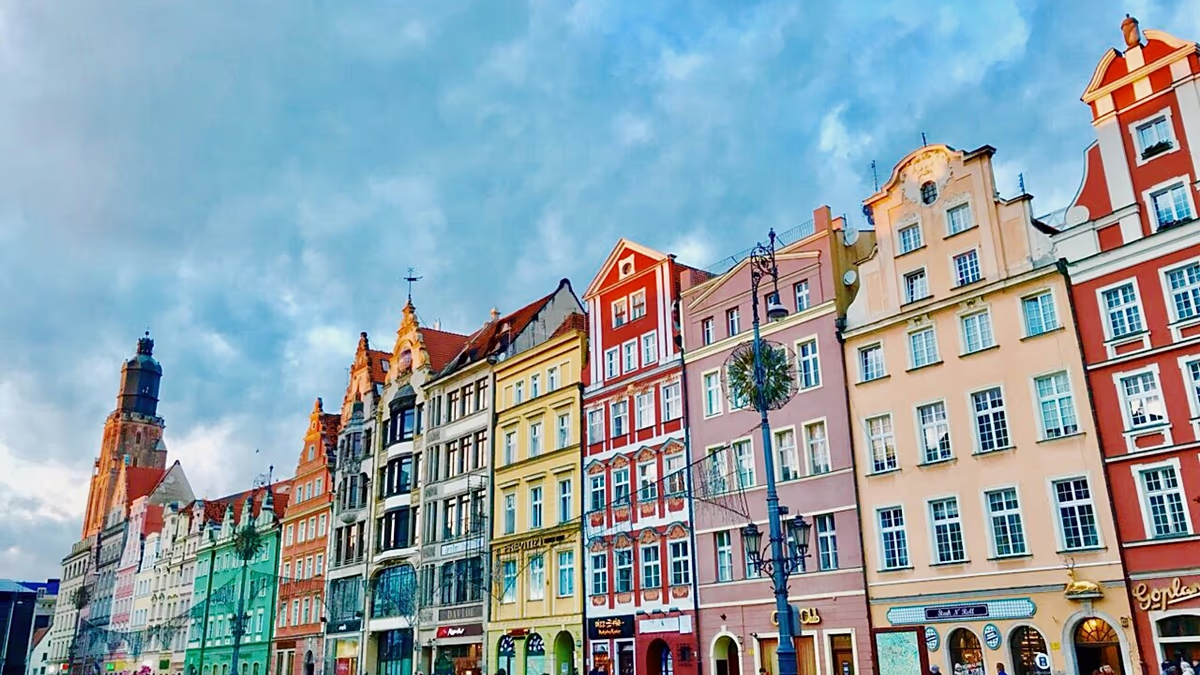
The findings paint a clear picture, and the map is overwhelmingly colored by one nation: Poland. This Slavic country hasn’t just made a few appearances on the list; it has completely dominated the rankings, securing six of the top ten spots and an astonishing clean sweep of the entire top five. This means that if you’re looking for the absolute best value for your money, your search should begin and end in Poland. Topping the list is Wroclaw, a stunning city known as the City of Bridges. For a couple, a weekend here costs an average of just €163 in total, which breaks down to a meager €41 per person per day. This budget covers a daily spend of roughly €18.75 on food, allowing you to indulge in hearty Polish cuisine at local milk bars and restaurants, and a mere €5.85 on local transport. The affordability doesn’t come at the expense of experience; Wroclaw is brimming with attractions, from the sprawling Rynek, one of Europe’s largest medieval market squares, to the Centennial Hall, a striking UNESCO-listed architectural masterpiece. It’s a destination that proves you can have a rich, historic, and flavorful break for less than the cost of a single night in a luxury hotel in London or Paris.
Just a short distance away, Poznań secures the second-place position, offering an equally compelling value proposition. A weekend trip for two here costs around €168.50, translating to approximately €42 per person per day. With daily food costs averaging €18.75 and accommodation around €34, it presents another incredibly budget-friendly option. The city rewards visitors with a wealth of sights that won’t cost a cent, including the vibrant, colorful Old Market Square and the famous Poznań Town Hall, where a pair of mechanical goats famously butt heads every day at noon, a charming tradition that draws crowds of onlookers. For history buffs, Cathedral Island is a must-see, often regarded as the very birthplace of the Polish state. This historical depth, combined with such low living costs, makes Poznań a perfect choice for travelers who want to immerse themselves in authentic Polish culture without the financial stress. It demonstrates a common thread across these Polish cities: daily costs remain low without sacrificing the rich cultural and historical experiences that make travel so rewarding.
The third and fourth positions continue the Polish theme, showcasing the country’s diverse appeal. Katowice takes the bronze medal, costing around €239 for a weekend for two, or about €60 per person daily. While food and hotels are slightly higher here—averaging €32.75 and €37.50 per day respectively—the total is still remarkably low. This industrial city has reinvented itself as a hub of culture, with its standout attraction being the Silesian Museum. Built on the site of a former coal mine, the museum masterfully blends art and history, with its observation tower offering panoramic views of the city and its industrial past. Meanwhile, Gdańsk, the beautiful Baltic port city, lands in fourth place with a weekend for two costing roughly €275.25. Visitors spend about €35 a day on food and €54 on accommodation, which is a small price to pay for exploring the picturesque Long Market, a postcard-perfect square lined with colorful townhouses. The historic waterfront around the iconic Gdańsk Crane also offers a fascinating glimpse into the city’s rich maritime history, making it a fantastic choice for a weekend of exploration and relaxation by the sea.
Capping off the top five is the ever-popular Kraków, which also proves to be a budget-friendly champion. A weekend here for two people costs around €295, or roughly €73.75 per person per day. While it’s the priciest of the top five, it still represents phenomenal value. The total is driven primarily by accommodation, which accounts for about €83 of the total, but local transport is incredibly cheap at just €7 on average. The city itself is a treasure trove of history and culture, offering visitors an atmospheric journey through time. You can explore the somber and thought-provoking Jewish Quarter of Kazimierz, browse for souvenirs and local crafts in the historic Sukiennice Cloth Hall, and stand in awe before St. Mary’s Basilica, where a lone trumpeter plays a famous call from the top of its tower every hour. Kraków remains a testament to how a world-class destination with immense historical significance can still be accessible to travelers on a modest budget, offering a rich tapestry of experiences that rival any of Europe’s more expensive capitals.
While Poland is the undisputed champion of value, the rest of the continent offers plenty of other affordable alternatives for those who have already explored its cities or simply want more variety. In sixth place is Sofia, the capital of Bulgaria, where a weekend trip costs around €77 per person per day, making it a fantastic and culturally distinct choice. Following closely is Zagreb, the charming capital of Croatia, with an average daily spend of about €95. Further down the list, Sweden’s Malmö offers a Scandinavian experience at a more reasonable price point at €105 per day, followed by Budapest in Hungary at €111. The top ten concludes with a return to Poland, this time to the capital, Warsaw, where visitors can expect to spend around €112 per person each day. These cities collectively show that affordable travel opportunities are scattered across the continent, from the Balkans to Northern Europe, each offering its own unique flavor and vibe, proving that you don’t have to sacrifice cost for culture or comfort. They provide ample evidence that “budget-friendly” and “memorable” are not mutually exclusive terms.
On the opposite end of the spectrum, the study also highlights the destinations that will take a significant toll on your savings, serving as a stark reminder of the vast price differences across the continent. Taking the unenviable top spot is Zurich, Switzerland, where a weekend away for two people costs an eye-watering €1,325 – more than eight times the cost of a trip to Wroclaw. This translates to around €331 per person per day, with food alone devouring about €112 of that daily allowance and hotels costing a staggering average of €359. Switzerland’s reputation for high living costs is well-earned, and the ranking confirms it, as Bern and Basel take second and third place, with weekends costing €1,240 and €1,189 respectively. The list is rounded out by tourist magnets outside of Switzerland, with Venice and Paris completing the top five most expensive cities. A two-person weekend in Venice costs around €1,180, while a similar trip to Paris comes in at €1,133. These figures underline the importance of destination choice, especially when you’re planning a spontaneous getaway. Ultimately, this study makes one thing crystal clear: a memorable European city break is less about how much you spend and more about where you choose to go, and the smartest travel plans might just be found in the beautiful, historic, and wonderfully affordable cities of Poland.