
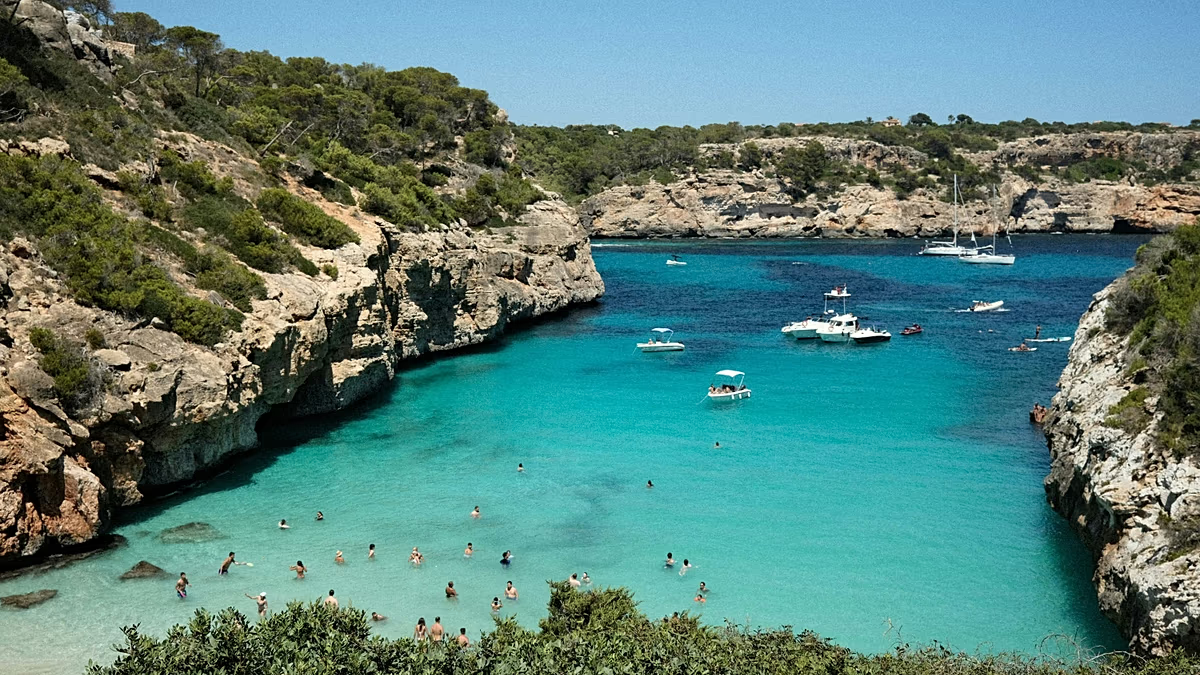





Picture this: you’re standing on a balcony somewhere in the Mediterranean, a cup of coffee in hand, the morning sun already warm on your skin. Below you, the sea is impossibly blue, and in the distance, a coastline of golden cliffs, pine trees, and hidden coves stretches as far as you can see. This is the promise of the Balearic Islands, a sun-soaked corner of Spain that has been drawing travellers for decades. Majorca, Menorca, and Ibiza are the three best-known names of the group, and while they share the same sparkling sea, reliable sunshine that lingers well into autumn, and a wealth of beautiful beaches, they are far from interchangeable. Each island has its own personality, its own rhythm, and its own idea of what a holiday should be. Choosing between them can feel a little like choosing between old friends: you know you’ll have a good time with any of them, but the experience will be completely different depending on who you pick. So which one is calling your name? Are you after non-stop action, lazy beach days, cultural discoveries, or nights that stretch until sunrise? The answer will point you in the right direction. Let’s take a closer look at what makes each of these three islands special, and how to decide which one deserves your next holiday.
If you want plenty of choice, Majorca is difficult to beat. As the largest of the three islands, it can feel like several different holiday destinations rolled into one, and that is exactly what makes it so appealing. One day you could be hiking through the dramatic Serra de Tramuntana mountains, a UNESCO-listed range dotted with stone villages, olive groves, and winding trails; the next you could be stretched out on a long sandy beach backed by a lively resort, and by evening you might find yourself wandering the narrow streets of Palma, the island’s elegant capital. The coastline alone offers an incredible variety, from wide, family-friendly stretches of sand to tiny coves hidden among pine trees, such as Cala Mondragó, Cala Varques, and Formentor. The north-western coast becomes increasingly rugged and beautiful as it rises into the mountains, and villages like Deià and Valldemossa are among the prettiest in all of Spain. Sóller, with its historic tram that carries passengers down to the port, feels like something out of a gentler era. Palma adds a proper city-break element to the mix, with its Gothic cathedral, historic old town, excellent restaurants, and a cultural scene that includes Fundació Miró Mallorca, where the artist Joan Miró lived and worked. This is one of the reasons Majorca works so well as a year-round destination: even in winter, when the beaches are quieter, the island still has plenty to offer. In fact, the winter sun can be surprisingly strong—I once got sunburned there in November. Accommodation options are just as varied, from large family resorts to rural fincas and boutique hotels, so whether you’re travelling with young children, a group of friends, or as a couple, you’ll find a place that fits. Food is another highlight, with traditional Mallorcan dishes like tumbet, a slow-baked vegetable stew of potato, aubergine, red pepper, and tomato sauce, and arròs brut, a hearty rice stew with meats and seasonal vegetables. At night, you can choose between the infamous energy of Magaluf or the more sophisticated cocktail bars and restaurants of Palma. In short, Majorca is best for people who want a bit of everything: beaches, mountains, culture, food, nightlife, and the freedom to change their mind every day.
Menorca, by contrast, feels like a deep breath of fresh air. It has a noticeably slower pace than its larger neighbour to the west, and its appeal lies not in big resorts or frantic nightlife, but in its natural landscapes, traditional towns, and unspoilt coastline. With more than two hundred kilometres of shoreline, Menorca is home to dozens of beaches and coves, ranging from broad sandy stretches to tiny calas hidden between cliffs and woodland, many of which remain gloriously undeveloped. The island has been a UNESCO Biosphere Reserve since 1993, a recognition of the careful balance it has struck between human activity, traditional rural life, and rich natural heritage. For active travellers, the Camí de Cavalls is a real highlight: a historic coastal path that circles the entire island, offering endless opportunities to walk or cycle between beaches, viewpoints, and rolling countryside. You can also kayak along the coast, go sailing, or simply find a quiet spot and listen to the waves. The two main towns, Ciutadella and Mahón, sit at opposite ends of the island and are both worth exploring for their historic streets, churches, buzzing squares, and countless restaurants. Menorca also has an extraordinary prehistoric heritage—more than 1,500 ancient sites, one of the highest densities of monuments anywhere in the world, making the island feel like an open-air museum. Food here is all about fresh ingredients from land and sea. You must try the local Mahón-Menorca cheese, and if you’re feeling adventurous, Caldereta de Langosta, a rich lobster stew that originated in the fishing village of Fornells, is a true taste of the island. Nightlife exists, but it’s not the reason people come here; evenings tend to revolve around long dinners, a glass of wine, and slow strolls through old towns. Menorca is best for those who want to switch off, breathe deeply, and reconnect with nature, beautiful coves, and a simpler way of being.
Now, Ibiza. Let’s be honest: for most people, the first thing that comes to mind is nightlife. This is one of Europe’s most famous clubbing destinations, with enormous venues like Pacha and Amnesia, and internationally known DJs such as David Guetta and Calvin Harris drawing crowds all summer long. The island has earned its reputation as a place where the party never really stops, and if that’s what you’re looking for, you will not be disappointed. But Ibiza is so much more than that, and one of the best-kept secrets about the island is how beautiful and peaceful it can be outside the club season. I visited in October, when the weather was still warm enough for swimming but the clubs had already closed for the year, and it was the perfect time to discover Ibiza’s pine-covered hills, rural villages, traditional farmhouses, and rugged coastline. The beaches here range from busy stretches with seasonal beach clubs to small, quiet coves where the main attraction is simply the perfectly clear water. Cala Saladeta, on the west coast, is a particular favourite, with fine white sand and turquoise water that looks almost too good to be true. If you have time, take the short thirty-minute ferry to Formentera, the smallest of the Balearic Islands, and a dreamy escape of dunes, pine trees, and endless blue. Ibiza is also famous for its sunsets, and for good reason: the western coast faces out over the Mediterranean, and there are countless spots to watch the sky turn pink and gold as the sun sinks into the sea. Café Mambo in San Antonio is iconic for exactly this reason. Perhaps surprisingly, there is also a rich cultural side to Ibiza. The old quarter of Ibiza Town, known as Dalt Vila, sits within historic fortifications and is part of the island’s UNESCO World Heritage listing. You can explore archaeological sites like the Phoenician settlement at Sa Caleta and the Puig des Molins necropolis, or wander through the bohemian north, where relaxed hotels, villas, and hippie markets give the island a more laid-back vibe. For families, areas like Santa Eulària offer a calmer atmosphere, while still being close to the beauty of the coast. And the food is wonderful too: don’t miss bullit de peix, a stew of rockfish and potatoes simmered in saffron and garlic broth, or ensalada payesa, a hearty salad of boiled red potatoes, tomatoes, green peppers, and onions. Ibiza is best for those who want a legendary party scene, but also for curious travellers who know there is plenty of culture to uncover if you look beyond the clubs.
So how do you choose? It really comes down to what kind of holiday you’re dreaming of. If you want variety, excitement, and the freedom to do something different every day, Majorca is your island. It’s the safest bet for first-time visitors, because it has a little of everything: mountain hikes, city culture, beach days, family-friendly resorts, and a lively but not overwhelming nightlife. If your idea of paradise is a quiet cove, a good book, and the sound of waves instead of music, Menorca will steal your heart. It’s the island for slow mornings, long walks, and evenings spent watching the sunset with a plate of local cheese. And if you want the best of both worlds—incredible energy and nightlife, but also beautiful landscapes, historic villages, and a bohemian spirit—Ibiza is the one. It’s also worth thinking about the season. In summer, all three islands are busy, but Menorca feels more relaxed and less crowded than Majorca, while Ibiza reaches its peak of party intensity. In spring and autumn, the weather is still lovely, the sea is warm, and the islands are far more peaceful. Majorca, thanks to Palma and its cultural attractions, is the best year-round option, but Menorca and Ibiza also have their charms outside the main summer months. For families, Majorca probably offers the most choice in terms of accommodation and activities, while Menorca is ideal if you want your children to experience nature and space. For couples, Menorca’s romantic coves and Ibiza’s sunset bars are both hard to beat. For groups of friends, Ibiza is the obvious choice if partying is the priority, but Majorca’s mix of beach clubs, restaurants, and nightlife makes it a strong contender too. And for solo travellers, all three are welcoming, safe, and easy to explore, though Menorca’s gentle pace might be the most restorative.
In the end, there is no wrong choice. The Balearic Islands are one of those rare places that somehow manage to be both familiar and magical at the same time. You can fly in, drop your bags, and within an hour be floating in warm, clear water, feeling the stress of everyday life melt away. Whether you find yourself hiking through Majorca’s mountain villages, cycling along Menorca’s coastal paths, or watching the sun set over Ibiza’s western shore, you’ll understand why these islands have captured the hearts of travellers for generations. The trick is not to try to do everything, but to let the island set the pace. If you choose Majorca, allow yourself to be pulled in many directions and enjoy the richness of choice. If you choose Menorca, slow down, breathe, and let the quiet beauty work its magic. If you choose Ibiza, give yourself permission to dance until dawn, but also to explore the hidden corners that most visitors never see. And if you really can’t decide, there’s always the option of island-hopping by ferry, which is easy and adds an extra layer of adventure. Whichever you choose, you’ll come home with sand in your shoes, a tan on your skin, and a feeling that the Mediterranean has left a little piece of itself in your heart. So go ahead—pick your island, pack your bags, and get ready for a holiday that will remind you exactly why travel is so wonderful.