





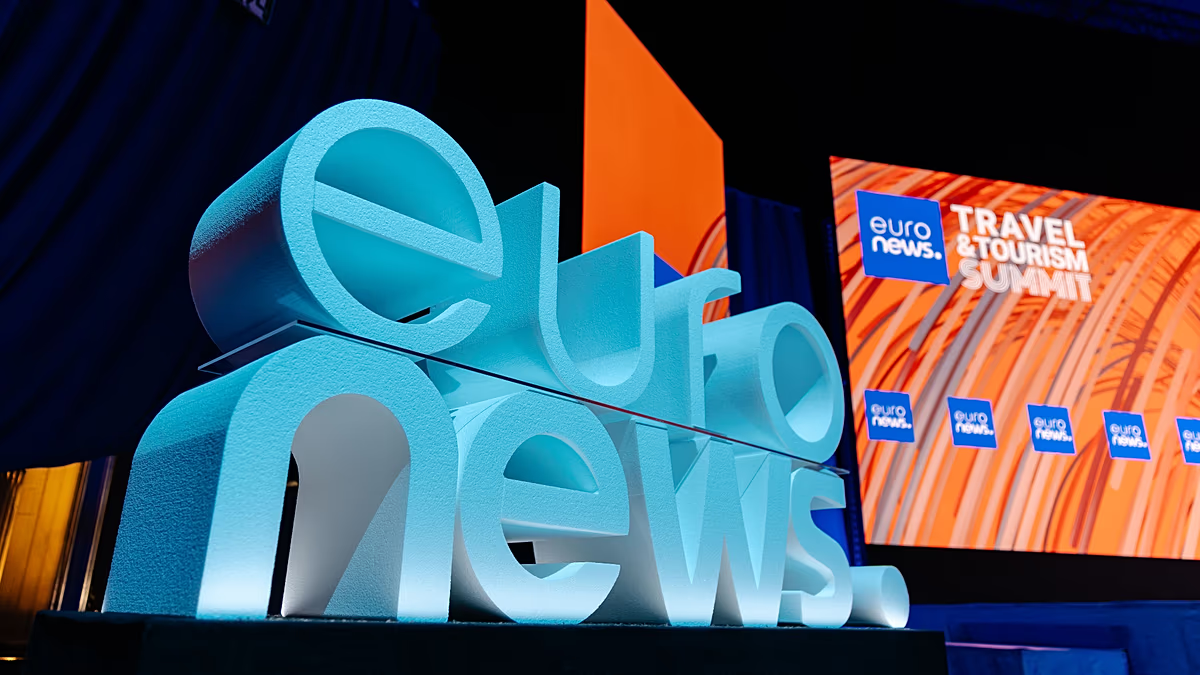
The Albert Hall in Brussels is buzzing with a familiar airport-style energy—but instead of departure gates and boarding calls, the crowds are here for the future of travel itself. The Euronews Travel & Tourism Summit 2026 has opened its doors, and for a full day the Belgian capital is the heartbeat of Europe’s travel industry. It’s a moment of reckoning. This has not been an ordinary year for tourism. Geopolitical disruption, sudden airspace closures, and a summer of unrelenting extreme weather have all thrown the industry into a kind of stress test nobody asked for. And yet, here we are: industry leaders, policymakers, journalists, and curious travellers gathering to ask what comes next. The summit is not just a talking shop. It’s an attempt to understand how a sector that makes up roughly ten percent of Europe’s economy can stay standing—and even thrive—when the ground beneath it keeps shifting. From the moment the doors opened at 9 a.m., the schedule has been packed with honest conversations, and the tone, at least so far, is refreshingly direct. There’s no hiding from the uncomfortable truths behind tourism’s glossy brochures. The challenge is to turn those truths into action before the next summer of chaos arrives.
The first major wake-up call came from Eduardo Santander, the CEO of the European Travel Commission, who didn’t mince words when he sat down with moderator Mared Gwyn-Jones. “Climate change is the biggest threat to tourism right now, by far,” he said. Let that sink in. Not overtourism, not economic instability, not another pandemic—climate change. And he had the receipts from this summer to prove it. Remember the images of trains grinding to a halt across Europe? Santander explained that rails physically expand in extreme heat, making train travel unsafe or impossible. Remember the cruise lines on Europe’s rivers that suddenly couldn’t sail because the water levels had dropped too low? That wasn’t a scheduling glitch; that was a drought. The kind of summer that used to feel like a freak occurrence is becoming the new normal, and Santander argues that we need to prepare for it in a “much more coordinated and comprehensive way.” He talked about resilience becoming “one of the engines of European tourism”—meaning the industry has to adapt to whatever is next, not just in a crisis, but as a permanent strategy. And he made it personal for anyone who packed a suitcase this summer: travelling is becoming much more expensive. You noticed it in your pockets, didn’t you? The cost of flights, the price of a hotel room, the bill at a restaurant in a touristy square—all of it is climbing, driven by the very climate pressures that are also making travel less predictable.
But Santander also pointed to something hopeful, and a little surprising: the rise of the “coolcation.” This isn’t just a trendy hashtag; it’s a genuine shift in traveller behaviour. Instead of chasing the hottest sun in August, more people—especially from southern Europe—are actively seeking out “cool locations” where summer temperatures are manageable and the weather feels more predictable. Think Denmark instead of Andalusia, or the Scottish Highlands instead of the Amalfi Coast. It’s a quiet revolution in how we imagine the perfect holiday. And alongside this cultural shift, Santander stressed the sheer economic weight of tourism. We’re not talking about a niche industry. It’s a massive chunk of the European economy, and in some nations it accounts for fifteen to twenty percent of GDP. That means the decisions made here in Brussels ripple out to small coastal towns, mountain villages, and city streets all over the continent. Which brings us to his most interesting, and almost defiant, point. A lot of people worry that Europe is becoming a kind of theme park—a “playground” or “museum” for global tourists. Santander’s response? He basically shrugged and said: what’s wrong with that? A museum is a beautiful thing. A well-run attraction park is a place where things work: there are clean toilets, nice restaurants, sensible management. If Europe can be that—an unforgettable, well-organised experience that people treasure—then maybe that’s not a failure. It’s a success. The key is making sure it’s also a place where locals can live and thrive, not just a stage for visitors.
Mid-morning, the summit shifted from climate to customer service, and the mood got even more candid. Ambassador Bill White, the United States’ envoy to Belgium, joined host Jane Witherspoon for a conversation about the special relationship between the two countries. White is clearly fond of Belgium—he praised it for having far more to offer than “waffles, chocolate and beer,” which felt like a genuine compliment rather than a tourist-board slogan. But then he took a swing at one of the most immediate pain points for anyone arriving in the country: the queues at Brussels Airport. Let’s just say he didn’t hold back. “They suck,” he said, and the audience visibly perked up. “They’re really bad.” He linked this directly to the transatlantic alliance, arguing that if the US and Belgium want a genuinely strong relationship, you can’t start it off by making people stand in line for hours. “If we want people to come to Belgium, we have to fix this problem. It must get better immediately.” It was a blunt moment, but also a human one. The summit had been talking about big abstract forces like climate change and geopolitical disruption, and suddenly here was a diplomat talking about the simple misery of baggage claim. It’s a reminder that tourism, for all its complexity, often comes down to small details: a smooth queue, a friendly face, a kiosk that works.
And then, right after the criticism, White delivered some genuinely good news. He announced that President Donald Trump had approved a plan to allow Belgian citizens to apply for the US Global Entry programme. If you’ve never used Global Entry, it’s a bit like a VIP fast pass for international travel. You register, pay a fee, get vetted by the authorities, and then when you land at JFK or anywhere else, you skip the long line. Instead of awkwardly shuffling toward a border agent after a ten-hour flight, you walk up to a kiosk, smile—or don’t, as White joked—and get waved through in seconds. “Whoop! Right through,” as he put it. Then you grab your bags and go spend your money. It’s the kind of frictionless travel that most of us only dream about, and White was clearly excited about it. He urged Belgian citizens to get the paperwork going, telling them to “write to your congressman or your parliament person” and make it happen. His message was simple: travel should be seamless—one, two, three, done. For an American ambassador to be publicly pushing a programme that makes Belgian visitors feel welcome in the United States is a strong signal that, despite all the diplomatic noise on the other side of the Atlantic, the ties between these two nations remain warm, practical, and deeply personal.
The summit is far from over, and there’s still a packed schedule ahead. One of the most anticipated conversations is with Albanian Prime Minister Edi Rama, who is sitting down with Euronews’ Maria Tadeo to talk about his country’s growing role as a European travel destination. Albania has been quietly becoming one of the continent’s hidden gems, and Rama’s presence speaks to how tourism is now a serious geopolitical and economic matter for the region. Meanwhile, two of Euronews’ flagship programmes are joining the summit for live audiences. The Big Question is going to dig into whether Europe’s cruise industry can actually become greener, with MSC Cruises CEO Gianni Onorato facing tough questions about sustainability on the high seas. And The Ring, hosted by Méabh Mc Mahon, is bringing its head-to-head political debate format to Brussels, which should make for some lively afternoon television. Throughout the day, Euronews is broadcasting live from the Belgian capital, and you can catch interviews, panels, and debates that span everything from connectivity to the future of sustainable travel. The overarching theme is unmistakable: Europe’s tourism industry is no longer just about holiday photos and souvenir magnets. It’s about resilience, climate readiness, diplomatic ties, and the very way we live and move in a changing world. If the first few hours of the summit are any indication, the conversation is going to be honest, uncomfortable, and ultimately hopeful—just like the future of travel itself.