





College football has always been a sport defined by its rhythms—the cadence of a Saturday, the roar of a stadium, the storylines that twist and turn like a well-run route. But in recent years, a new rhythm has taken center stage: the transfer portal. It’s a constant hum in the background, a source of both hope and heartburn for fans and coaches alike. Some see it as the downfall of loyalty, a mercenary marketplace where players chase bags instead of legacies. But if you look closer, there’s a more human story at play. Sometimes it’s about finding the right fit, a place where a player can finally breathe and be the version of themselves they always knew they could be. This season, we’re seeing a fascinating wave of veteran quarterbacks who have packed their bags, changed their colors, and are proving that a fresh start, a new uniform, and a different city can be the exact spark a career needs. These are the same faces we’ve watched for years, but they’re making their mark in new places, and the results are reshaping the landscape of the sport.
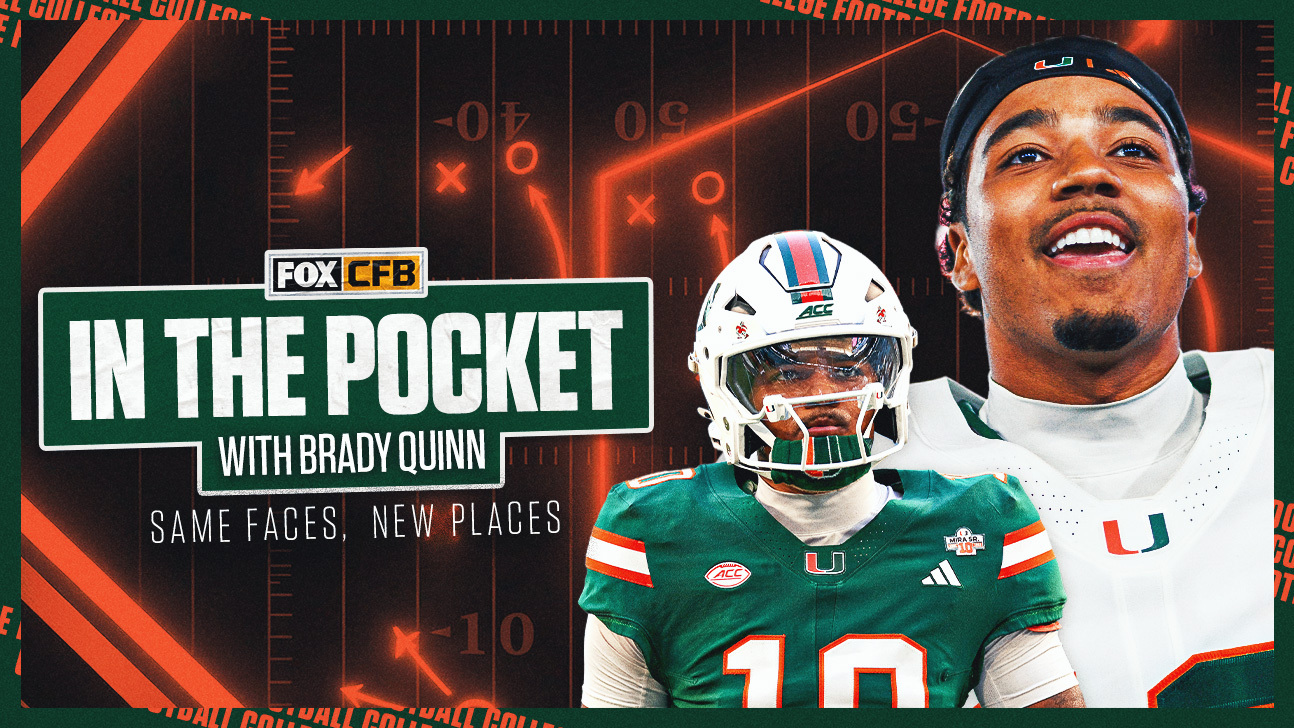
Take Darian Mensah, for example. He left the relative quiet of Durham, North Carolina, and the Duke program for the neon lights, palm trees, and electrifying atmosphere of Miami. It’s the kind of move that feels like a scene from a movie—the talented but understated gunslinger heading to the big stage. The Hurricanes found themselves with a void under center after Carson Beck, himself a transfer, exhausted his eligibility, and it was clear they needed a conductor for their high-octane offense. Offensive coordinator Shannon Dawson must have felt like a kid in a candy store when he realized what he had in Mensah. It’s easy to assume the move was all about money or NIL deals, but for Mensah, it seems so much deeper than that. It was about opportunity—the chance to sling it for a blue-blood program, to play on the biggest stage, and to compete for a national championship. And let’s be honest, it doesn’t hurt having a weapon like Malachi Toney, arguably one of the best wide receivers in the nation, running routes for you. The two of them have developed a chemistry that looks almost telepathic, the kind of connection that makes defenders give up before the play even starts. Mensah has always been gifted, a true dual-threat who can make plays with his legs, but he’s not a reckless runner. He’s patient, calm in the pocket, and only uses his athleticism as a last resort. What truly separates him is a lethal, almost surgical accuracy from the pocket. Miami’s offense last season was missing that ability to extend plays, to keep the down alive when everything broke down. With Mensah, that problem has evaporated. He’s a smooth operator under pressure, a guy who feels the heat without panicking, slipping through the creases and delivering strikes that leave you shaking your head. The numbers are absurdly good—through the first four weeks, he has thrown more touchdown passes (14) than incompletions (12), and he hasn’t thrown a single interception. That’s not just playing well; that’s playing in a video game on easy mode. More importantly, he’s logged 31 career starts, and as the article points out, recent national championship-winning quarterbacks like J.J. McCarthy, Will Howard, and Fernando Mendoza have all had a wealth of experience under their belts. There’s a comfort and a composure that comes with having seen it all, and Mensah has it in spades. The skeptics will point to the schedule—Miami hasn’t faced a ranked opponent yet—but the road win over Wake Forest is looking more impressive by the week. Mensah has all the tools to pass every test that comes his way, and the next one is a big trip to Death Valley, where the Hurricanes hope to keep their perfect 4-0 record alive. This is a quarterback who looks destined for greatness, and Miami is the perfect stage for him to prove it.
Then there’s Sam Leavitt, a name that feels like he’s been around forever, yet he’s still just a junior. His journey has been a winding road that started at Michigan State, where limited playing time and a coaching change sent him packing back West to Arizona State. There, under the energetic guidance of Kenny Dillingham, Leavitt found his footing, leading the Sun Devils to a Big 12 championship and a playoff berth that electrified the college football world. That Texas game in the CFP quarterfinals was legendary, a 4th-and-1 stand that made ASU fans believe in miracles. But this past season was a struggle, marred by frustration and a foot injury that required season-ending surgery. It was a disappointing encore, and when the dust settled, Leavitt found himself drawn to the Bayou and the raucous atmosphere of LSU. The early returns in Baton Rouge have been a mixed bag, a tantalizing blend of brilliance and baffling mistakes. He led the Tigers to big wins over Clemson and Texas A&M, showing the kind of clutch gene that makes you believe anything is possible. Yet, in the very next breath, he threw three picks in a win over Louisiana Tech and followed that up with a choppy performance in a loss to Ole Miss. The kid with the flowing locks, who looks like he stepped right off the set of a “Remember the Titans” reboot as Ronnie “Sunshine” Bass, has all the physical talent in the world. He can extend plays with his legs, he has a cannon for an arm, and he can make defenders miss in the open field. The problem is that he often trusts his athleticism too much. When his first read is covered, his instinct is to escape the pocket and scramble, rather than keeping his eyes downfield and working through his progressions. It’s that bugaboo that has plagued him since his days in Tempe. When the game starts to speed up and pressure arrives, he’d rather trust his legs than his eyes. But this past week, we saw the ceiling. He was efficient, decisive, and on time, stepping up in the pocket like a seasoned pro and hitting his targets in stride. The coaching staff clearly got in his ear, and the small things—the subtle step-up, the unwavering downfield focus—allowed LSU’s offense to blossom. His connection with Winston Watkins Jr. is becoming a real weapon, and if Leavitt can find that consistency, LSU can beat anyone in the country. He’s still a first-year starter in a new system, and patience is warranted, but the flashes of his potential are so bright they’re blinding. It’s a delicate balance, teaching a stallion like Leavitt to be a racehorse and not just a runaway. If Charlie Weis Jr. and Lane Kiffin can unlock that full potential every single week, the SEC better watch out. The upcoming game against McNeese State won’t tell us much, but it gives him another chance to develop a rhythm and build that muscle memory for success.
Out in Eugene, Oregon, there’s a different kind of situation brewing, one that highlights the ultimate depth-chart luxury. Dylan Raiola, the former Nebraska quarterback, transferred to the Ducks knowing full well he would be the backup to star quarterback Dante Moore in 2026. It was a strategic move, a chance to sit, learn, and develop in a program built for championships, enhancing his NFL stock after a couple of lackluster seasons in Lincoln. But as the saying goes, the best-laid plans can change in the blink of an eye. After a brutal hit to the head from USC’s Desman Stephens II, Moore’s status became uncertain, and suddenly Raiola was thrust into the spotlight at the Los Angeles Memorial Coliseum, in a crucial game against the Trojans. And he delivered, leading the Ducks to a massive win. It was a moment that reminded everyone why he was such a highly-touted recruit in the first place. Raiola’s arm talent has never been in question. He can make every throw, squeezing the football into windows that don’t seem to exist. His issues in the past were about balance and decision-making—forcing throws when he should have thrown them away, or spinning out of a clean pocket. But in that small sample size, we saw a quarterback who looked composed, who processed the field with a calm authority, and who only used his athleticism when it was absolutely necessary. What really makes Raiola special, aside from the golden arm, is his vision downfield. He has an almost sixth sense for anticipating receivers becoming open, allowing him to stretch the field vertically. He sees the game at a different speed, understanding coverages and knowing when to take his check-down. It’s that maturity and football IQ that makes Oregon fans breathe a sigh of relief as they await Moore’s recovery. Coach Dan Lanning says Moore is “doing much better” and in “recovery mode,” but the Ducks are being cautious. Oregon has a bye week before facing a surprising 4-0, Top-25-ranked UCLA team, giving Raiola time to prepare. We might not see Raiola again for a while if Moore returns, but if we do, the Ducks won’t miss a beat. He’s the ultimate insurance policy, and he proved in that Coliseum win that he’s more than just a talented quarterback—he’s a reliable leader. It’s a testament to the new era of college football where even the backup can be a former five-star starter, making teams like Oregon incredibly dangerous.
While these established names are making headlines, there’s a new phenom rising in Starkville that demands attention: Kamario Taylor of Mississippi State. Coming into the season, he was an under-the-radar name, a kid from Macon, Mississippi, with a world of talent but no spotlight. That has changed in a hurry. Taylor, a true sophomore, has taken the Bulldogs by storm, leading them to a perfect 4-0 record and a spot in the AP Top 25 Poll for the first time since 2022. Just let that sink in. This kid has completely revitalized a program. Standing at 6-foot-4 and 230 pounds, Taylor is the physical prototype of a modern superstar. He’s built like a linebacker but throws the ball with a velocity that might make a Dodge Challenger jealous. His release is smooth, effortless, generating so much spin and speed on the football that receivers have to adjust their hands just to hold on. But what’s even more impressive is his athleticism. He’s got the kind of twitchiness that makes defensive coordinators lie awake at night, dreaming of blitzes that won’t work. He can escape the pocket, buy time, and launch a missile downfield while on the move. After a freshman season where he barely saw the field until late in the year, he has exploded onto the scene in 2025. He led his team to tough road wins over Minnesota and South Carolina, and then, just last week, he pulled off a top-25 upset of Missouri that sent shockwaves through the SEC. It was a statement game, a coming-out party on national television. If that didn’t grab your attention, this week certainly will. The Bulldogs host No. 7 Alabama, and Taylor will go head-to-head with Keelon Russell, another top quarterback from the 2025 recruiting class. It’s a showcase of the future of the position, two young gunslingers trading strikes in what promises to be a shootout. Given how porous both pass defenses have looked, this game has all the ingredients for a classic: fireworks, splash plays, and a level of excitement that leaves fans gasping for air. NFL scouts are already salivating, even though they’ll have to wait until the 2028 NFL Draft to get their hands on Taylor. He’s that special, a generational talent who is just scratching the surface of his immense potential, and the rivalry between him and Russell could become one of the defining battles of the decade.
Beyond the big names and the playoff contenders, there’s a beautiful undercard this weekend that deserves your attention, a game that might fly under the radar of the casual fan but is a goldmine for quarterback purists. I’m talking about the undefeated Cincinnati Bearcats traveling to Tucson to take on a 3-1 Arizona team. On paper, this might not look like a marquee matchup, but when you dig deeper, it’s a spectacular duel between two veteran signal-callers who are quietly having phenomenal seasons. First, there’s Noah Fifita for Arizona. He’s been the starter there for what feels like a decade, a four-year veteran who knows every inch of the field. He’s off to another stellar start, leading the Big 12 in completion percentage, tied for the lead in touchdown passes, and sitting third in passing yards. He’s efficient, smart, and always a pleasure to watch. He doesn’t have the flashy tools of a Taylor or a Raiola, but he’s a pure competitor, a general on the field who dissects defenses with a surgeon’s precision. On the other sideline is JC French IV, a transfer from Georgia Southern who has filled the massive void left by Brendan Sorsby at Cincinnati. French has been the consummate professional, a true leader who has brought stability and a winning mentality to the Bearcats. He came in, learned the system, and took complete command of the offense. He’s a three-year starter who has yet to throw an interception this season while completing almost 75% of his passes. Those are mind-boggling numbers that speak to his decision-making and his mastery of the offense. Both of these guys are game-managers in the best sense of the word, but they can also absolutely light it up. When a rhythm is established, look for some bombs downfield. The defensive secondaries might be in for a long day. This game is a testament to the beauty of college football, where you can find top-tier quarterback play outside the glitter of the playoff chase. Both Fifita and French are playing at a level that demands respect, and their head-to-head battle is a reminder that the sport’s true heart beats in games just like this—between two proud programs, each led by a veteran quarterback who knows exactly what it takes to win. It’s the kind of matchup that reminds us why we love this game so much, and why the transfer portal, for all its chaos, has given us the gift of watching these seasoned pros find new homes and continue to sling it.