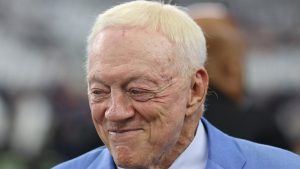





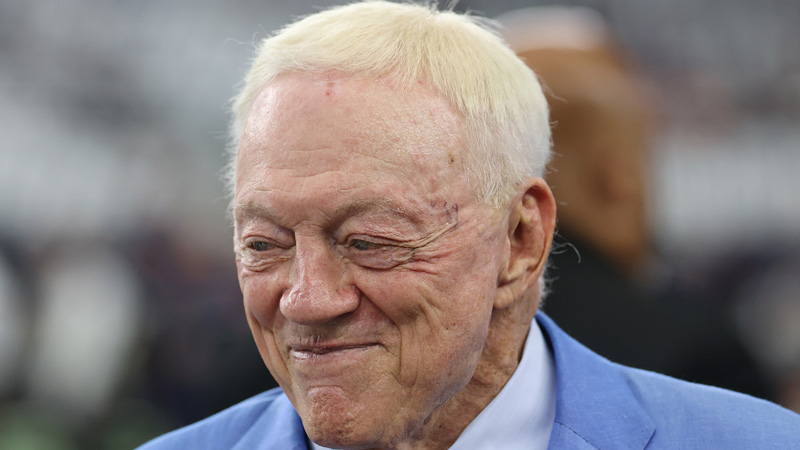
The Dallas Cowboys’ 34-31 loss to the Baltimore Ravens was more than just another game on the schedule; it was a lingering ache that followed the team through the night and into the next morning. Jerry Jones, the Cowboys’ owner and a man not known for hiding his emotions, stepped to the microphone on his radio show and let the frustration spill out. He was asked a simple question: how could the coaching staff leave so many seconds remaining after a tying field goal, allowing the Ravens to move into position for the winning kick? His answer was as blunt as it was honest. “There is no explanation you’re satisfied with. None,” Jones said. “Let’s be sure that we all understand that. They don’t have one that they’re satisfied with. We made mistakes during that time. There’s no question about it. So there is no explanation. But there’s an evaluation of how not to make the same mistakes again.” In those words, you could hear the weight of a franchise that expects greatness, the raw disappointment of a man who has poured decades of his life into the star on the helmet, and the realization that football games are won and lost in the smallest windows of time. For fans, it was the kind of loss that keeps you up at night, replaying every decision, wondering what could have been different. For the players, it was the silence of a locker room where effort and result refused to match. And for the coaches, it was the cruelest part of the profession: there is no acceptable excuse, only the hard work of figuring out how to never let it happen again.
The final sequence was a whirlwind of chaos and missed opportunities, a testament to how quickly a game can slip away. Trailing 31-28, the Cowboys had the ball at the Baltimore 2-yard line with just 23 seconds left. Dak Prescott, the quarterback who has carried so much of the team’s hope on his shoulders, dropped back and threw incomplete into the end zone. The clock kept ticking. Then came a false-start penalty against tight end Luke Schoonmaker, a mistake that felt like a punch to the gut. Prescott scrambled to the Baltimore 5, and head coach Brian Schottenheimer, who also calls the plays, burned the team’s final timeout with 14 seconds remaining. His instructions were clear: throw a quick pass to a receiver or simply throw the ball away, because there was no time to stop the clock. Prescott didn’t hesitate; he chose the throwaway, and the play took just four seconds. Brandon Aubrey’s field goal tied the game, but that left seven seconds on the clock—an eternity when a defense is tired and a quarterback like Lamar Jackson is on the other side. The Dallas defense, perhaps expecting a conservative play, left a gap right where Baltimore needed it. Jackson found Zay Flowers for a 27-yard pass, the Ravens called timeout with one second left, and their kicker drilled a 56-yard field goal. The game was over. The Cowboys had gone from the brink of victory to the agony of defeat in a matter of seconds, and every fan who had been screaming at the television felt the silence of disbelief. It wasn’t just a loss; it was a lesson in how fragile success can be.
As the dust settled, the focus turned to the men in charge of those final decisions. Schottenheimer is in his second season as a head coach after spending 25 years as an assistant in the NFL, a journey that taught him patience, preparation, and the importance of details. But no amount of experience can fully prepare you for the pressure of a two-point game in the final seconds, when the whole world is watching and every choice is magnified. The defensive coordinator, a 34-year-old making his debut in that role, suddenly found himself under the microscope of fans and pundits who wanted to know why the defense left a gap in such a critical moment. Both men will be scrutinized in the days ahead, not just by the media but perhaps by the front office as well. Jerry Jones did not mince words, but he also did not call for anyone’s job. Instead, he spoke about evaluation, about learning, about doing whatever it takes to ensure the same mistakes don’t happen again. There is a human side to this story that gets lost in the stats and the postgame analysis. Imagine the nights spent staring at the ceiling, the silent car rides home, the conversation that replays in your mind over and over. Coaches are often defined by these moments, fair or not. But Jones, for all his frustration, seems to believe that suffering through this kind of experience is part of building something that lasts. “We will be better from this experience,” he said, and those words carry a quiet determination.
There is, however, a thread of optimism woven through Jones’s disappointment. He pointed out that the Cowboys made an impressive comeback, that they fought with their backs against the wall and found a way to put themselves in position to win. That kind of resilience is not something you can coach; it comes from within, from the character of the players and the culture of the team. Jones acknowledged that a win would have made everything feel different, that the same growth and enthusiasm would have been easier to celebrate. But he also sees this as a beginning, not an end. “All of that makes us realize we really are just at the beginning of what I hope is an exciting year for us,” he said. In a way, that’s the beauty and the cruelty of football: a season is a marathon, not a sprint, and every loss, no matter how painful, is an opportunity to learn something about who you are. The Cowboys had shown fight, heart, and the ability to claw back from the edge of defeat. That is not nothing. It is the foundation upon which better endings are built. For the fans, it’s a reason to keep believing even when the final score doesn’t go their way. For the team, it’s a reminder that they are capable of more, that the mistakes that cost them the game are fixable, and that the identity they are building is still very much a work in progress.
Looking around the NFC East, the Cowboys have no reason to panic. The two-time defending champion Philadelphia Eagles lost to the Chicago Bears and a backup quarterback on Monday night, a reminder that no team in this league is invincible. The Cowboys, at 1-2, are not where they want to be, but they are far from out of the race. The New York Giants, tied with the Eagles atop the division at 2-1, are dealing with a devastating blow: their starting quarterback is out for the rest of the regular season with a knee injury. That changes the dynamic of the whole division. Dallas heads to Houston to face the winless Texans, a team struggling to find their footing. It’s the kind of game that could get the Cowboys back on track, but only if they learn from the mistakes that cost them against Baltimore. Jerry Jones understands the bigger picture. “We are very much in the hunt,” he said, and he meant it not just because of what other teams are doing, but because of what he sees in his own locker room. He mentioned health and availability as factors, the unpredictable nature of a long season, and the simple truth that the team is just getting started. There is an opportunity here, a door that has not yet closed. The question is whether the Cowboys can walk through it with the lessons of this painful loss fresh in their minds.
In the end, the story of this game is not just about a field goal or a missed assignment or a questionable decision with the clock running down. It is about accountability, about the willingness to look in the mirror and admit that you came up short. Jerry Jones has done that publicly, with the kind of honesty that can sting but also heal. He hasn’t made excuses for his coaches, and he hasn’t thrown them under the bus either. He has simply said: we made mistakes, we know it, and we are going to be better because of it. That is the message that a team needs to hear after a gut-wrenching loss. It acknowledges the pain without wallowing in it. It demands improvement without erasing the effort. Football is a game of inches and seconds, of split-second decisions that have consequences long after the final whistle. The Cowboys experienced that on the field against Baltimore, and now they must carry that experience forward. The road ahead is long, the division is still up for grabs, and the Texans await. There will be more challenges, more moments that test the team’s resolve. But if there is one thing Jerry Jones has made clear, it’s that this franchise is not content to simply hope for better. They are going to work for it. And in that determination, there is a kind of hope that can turn a painful loss into the beginning of something special. The fans, the players, the coaches—they all felt the sting of this one. But the season is far from over, and the story is still being written.