





Paragraph 1
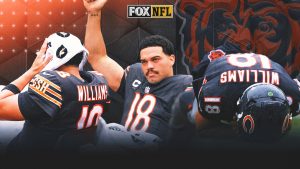
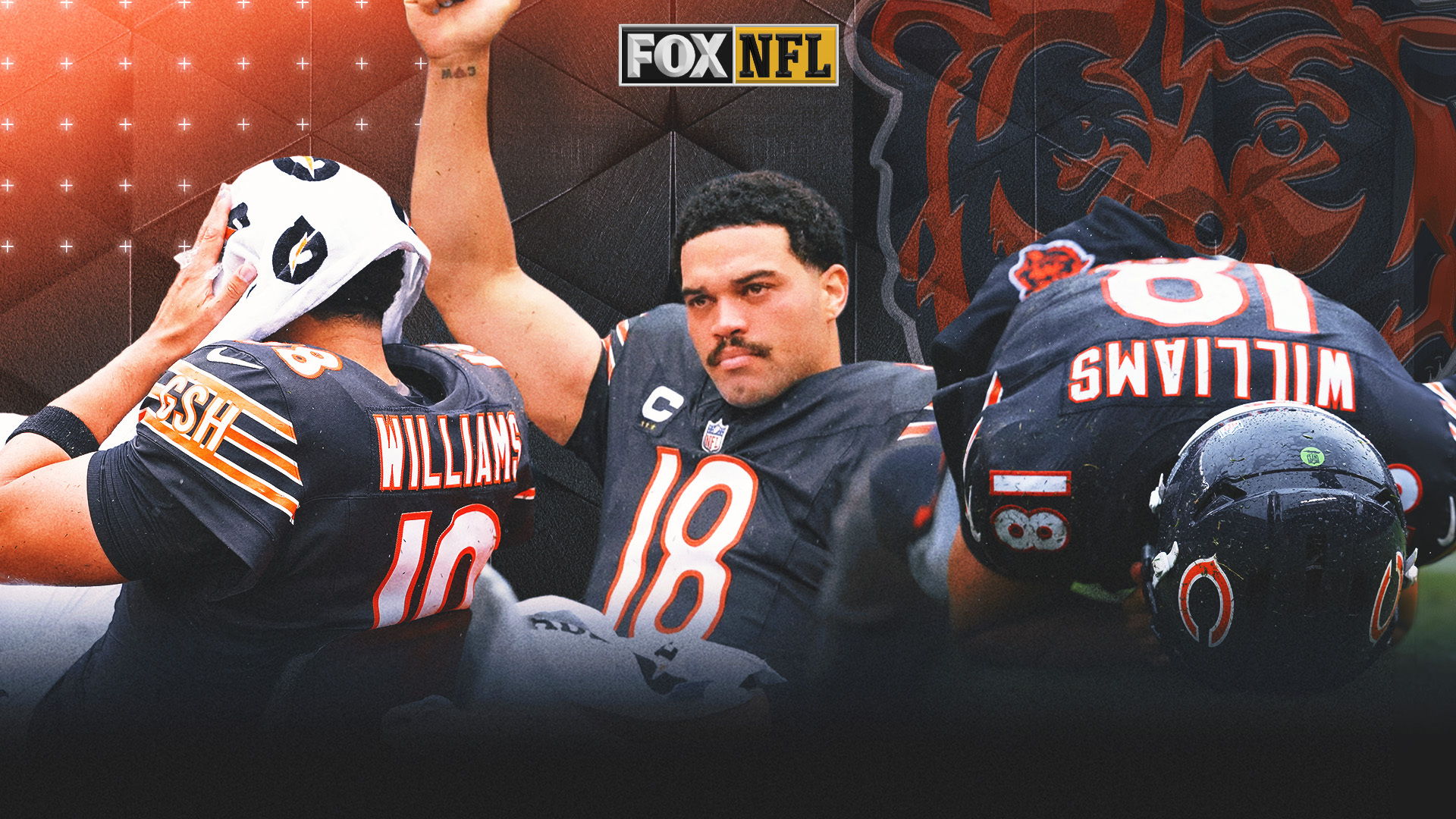
Caleb Williams has a way of making the entire NFL world squirm, and he seems perfectly fine with that. He doesn’t play the game of optics the way most public figures do. He doesn’t spend energy worrying about whether a general manager, a coach, or a million fans on social media will approve of how he reacts in any given moment. He just reacts. He feels things deeply, and he lets those feelings show — sometimes in ways that make people uncomfortable. You don’t see that very often in a league built on toughness, on stoicism, on the idea that a quarterback should be a cold-blooded leader who never lets the world see him bleed. But Williams has never fit that mold. We saw it at USC when he sought out his mother and cried in her arms after a painful loss. We saw it in the little things, like letting his mother paint his nails when he was younger, a small act of trust and vulnerability that said more about his character than any press conference ever could. We saw it in that photoshoot that drew chatter because of the way he positioned himself, sitting in a way that some called vulnerable, others called weird, and many simply didn’t know what to make of. And we saw it again on a Sunday afternoon in Week 2, when Williams sat on the injury cart with tears in his eyes, pumping his fist as if he had just overcome something monumental. That moment broke something loose in the NFL discourse. It became the clip that everyone shared, the image that everyone argued about, and the proof that Williams still refuses to be what we expect him to be. For that alone, I find myself grateful. Not because every emotional display is admirable, but because it is honest. And in a league where so much is rehearsed and so many answers are scripted and so many emotions are buried, honesty is rarer than people want to admit.
Paragraph 2
The incident itself was pure theater, but so is the NFL, and we need to stop pretending otherwise. Late in the fourth quarter against the Vikings, Williams tried to escape a sack, slid awkwardly, grabbed his hamstring, and screamed in a way that the broadcast microphones caught with uncomfortable clarity. He pounded the turf with frustration, as if his own body had betrayed him at the worst possible moment. The Bears brought out the cart, and Williams covered his face with a towel. When he pulled it away, his eyes were red and watery. Then he pumped his fist, Kobe Bryant after an Achilles tear, and the internet lost its collective mind. The memes came fast and hard, and honestly, many of them were objectively funny. Once we learned that Williams could potentially return in Week 3, the silliness was fair game. He is not just a quarterback; he is the league’s rising superstar, a figure who has been fed to fans all offseason through the media, through the Madden cover, through endless debates about whether he could live up to the hype. He has participated in some of that hype, but not all of it. When I visited Bears camp this summer, the team declined a one-on-one interview because the buzz around him had already reached a fever pitch. The attention was becoming too much. So when he does something theatrical, people are going to respond with jokes. That’s fine. What’s not fine is the pearl-clutching, the hand-wringing, the idea that the injury cart is somehow sacred ground reserved only for catastrophic, career-ending injuries. That’s absurd. The NFL is not some solemn institution where suffering must be silent. The NFL is reality television with better lighting and more expensive commercials. It thrives on drama. It sells drama. Caleb Williams is compelling precisely because he brings drama with him wherever he goes. He is fascinating on the field with his improvisational brilliance and his impossible throws. But he is just as fascinating off it because he refuses to hide what he feels. And if that makes people uncomfortable, maybe the problem is not with him.
Paragraph 3
Let’s go back to the moment of the injury and try to understand why Williams was so overcome. Try to put yourself in his shoes, because underneath all the memes and the criticism, there is a human story here. The Bears had just put up 59 points in Week 1. Their offense was supposed to be historic, a machine built to dominate the league. The matchup against the Vikings was the most anticipated game of Week 2, and the entire football world was watching. But the game turned ugly. The Vikings were winning the chess match, stifling what everyone expected to be an unstoppable Bears attack. And still, there was Williams, late in the fourth quarter, driving his team down the field, fighting for a chance at a go-ahead touchdown. He was on the 6-yard line, just a few strides away from the end zone, just a handful of yards from making the game right, from giving his team a win that would silence all the doubters and validate all the hype. And then his body broke down. He slid, felt something grab in his hamstring, and knew immediately that something was wrong. That pain was not just physical. It was the pain of a missed opportunity, a moment stolen by an injury, a season suddenly hanging in the balance. He had to sit there and wonder if his year was over. He had to reconcile with the possibility that everything he had dreamed, everything he had worked for, everything the entire organization had invested in him might have ended in the most anticlimactic way possible. You don’t have to be a superstar to understand that feeling. Anyone who has ever loved something deeply knows what it is to have it ripped away in an instant. Anyone who has ever cared about a goal has felt that sickening collapse of the stomach when it slips through their fingers. And we have no idea what the physical pain was like. We can’t feel the hamstring tearing or straining or whatever it was doing inside his leg. But we can all relate to disappointment on a massive scale. Even coach Ben Johnson seemed to understand the emotional weight of the moment. After the game, he said Williams was initially worried about his knee, and then revealed it was a hamstring, which could be almost as damaging. Johnson said the Bears desperately needed those points at that moment, and it was a shame. It was a brief, human moment from a coach who understood that football is about more than just strategy and execution. It is about emotion. It is about caring so much that it hurts.
Paragraph 4
There is one criticism, however, that I am willing to grant some validity to, and it is the concern that Williams’ emotional display distracted the team at the most crucial moment of the game. Football is a sport that demands focus, especially in the fourth quarter of a tight division game. When your quarterback starts screaming and pounding the turf and crying on the cart, it changes the energy on the sideline. Bears defensive lineman Grady Jarrett acknowledged as much after the game, saying that everyone wanted to keep morale up because Caleb is the guy there, and nobody wants to see him go down. Jarrett said the team needed to rally and finish the game, and they simply did not. That is a real concern, but it is also a bit hypothetical. It is impossible to know whether the Bears would have won if Williams had somehow limped off the field quietly and disappeared into the locker room without a word. Maybe they would have. Maybe not. But if one man’s tears left the other 47 players without resolve, then the team has bigger problems than Williams’ emotions. A football team is supposed to be a collective unit, a brotherhood of players who rely on one another. If they can’t function because their quarterback showed pain and frustration, then they weren’t mentally strong enough to begin with. That is not a criticism of Williams. It is a criticism of the support structure around him. It is unfair to ask a 24-year-old to be a perfect stoic icon in his darkest moment while also expecting his teammates to step up and finish the job. The responsibility should not fall entirely on his shoulders. The Bears could have rallied, could have made a defensive stand, could have found a way to win despite losing their quarterback. They didn’t. And while it might feel better to blame Williams’ tears for the loss, the truth is that football games are decided by thousands of small moments, many of them nothing to do with emotion. Blaming the injury cart is just another way to avoid the harder conversation about why the team couldn’t finish what they started.
Paragraph 5
Much of the discourse around this moment has boiled down to a question of toughness. Football is a sport where toughness is literally written into a player’s scouting report. You hear it in the draft analysis, in the coaching speeches, in the way broadcasters talk about players who play through pain. There is a certain type of NFL player who refuses to show weakness, who gets up off the ground slowly, spits out blood, and walks back to the huddle like nothing happened. That is considered tough. That is rewarded. And Caleb Williams, by crying on a cart, has made people question whether he has that quality. But I think the tears don’t matter. The hamstring matters. If there was a way for Williams to play through the injury, then yes, there is a legitimate problem, because his departure severely worsened the Bears’ chances of winning. But if there was no way for him to get back on the field, then what exactly are we arguing about? Are we arguing about the way he left the field? Are we arguing about whether he should have smiled and waved as he was driven off? Are we arguing about the fact that he allowed his body and his face to show what his body was feeling? That is not toughness. That is performance. And I have no interest in a league that demands its athletes perform their pain away. Vulnerability is not the opposite of toughness. In fact, I would argue that it is a deeper form of courage. It takes more strength to let the world see your tears and not care what they think than it does to clamp your jaw and stare at the ground. The NFL has this strange, masculine culture that worships silence and treats emotional expression as weakness. But that culture is changing. Players speak more openly about their mental health. More people are willing to say that the old way was not sustainable, that bottling everything up leads to destruction. Caleb Williams is not the first player to cry, and he will not be the last. But he has given us an opportunity to examine our own discomfort. Why does it bother us so much to see a grown man cry? Why do we want our quarterbacks to be machines rather than humans? Why do we celebrate passion until it manifests in vulnerable ways? These are questions worth sitting with, even if they are uncomfortable.
Paragraph 6
At the end of the day, this is not really about Caleb Williams and whether he did something wrong. It is about us. It is about the way we consume professional sports, the way we project our own insecurities and expectations onto the athletes we watch, the way we demand that they be superhuman until they show a flash of genuine humanity, and then we turn on them. Williams didn’t play badly because he cried. He didn’t abandon his team because he was emotional. He got hurt. He was devastated. He let the world see it. And then he pumped his fist, because even in his darkest moment, even on the back of that cart, he was refusing to surrender. There is something beautiful in that image if you allow yourself to see it. A young man, vulnerable and uncertain, sitting with the fear that his season might be over, and yet still fighting, still pumping his fist, still trying to coax his body and his spirit into believing that the story wasn’t finished. We should not be embarrassed for him. We should not mock him. We should take a deep breath and try to get comfortable with seeing a grown man cry. We should allow our athletes to be as complex as we are, to feel everything fully and express it openly. The true test of toughness is not whether you hide your tears. It is whether you can experience pain, disappointment, and fear, and still find the strength to pump your fist, to get back up, to keep going. Caleb Williams did that. He may not have been playing football in that moment, but he was fighting. And in a league that sometimes feels overproduced and underauthentic, a young man crying because he loves the game and hates being taken away from it is the most real thing we have seen in a long time. That is not a weakness. That is a reminder of why we watch sports in the first place. We watch because we care. And so does he. That should be celebrated, not criticized.