






Paragraph 1
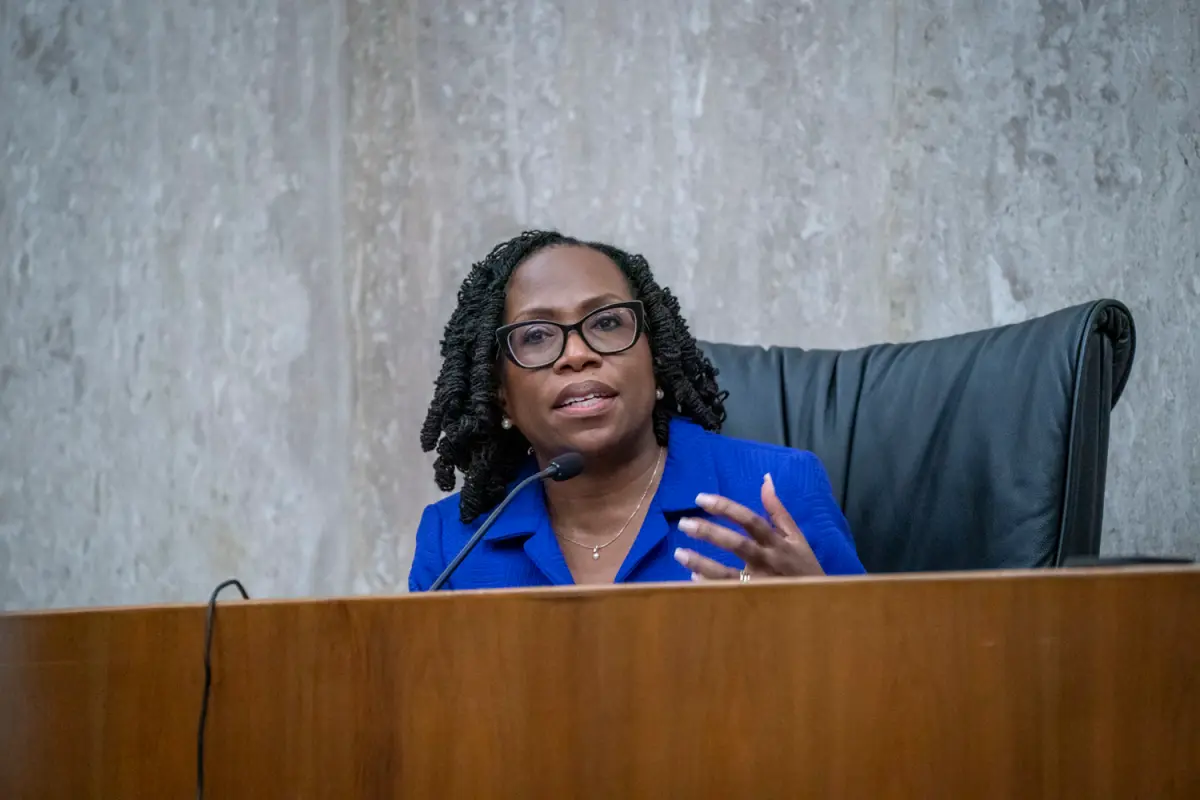
It is a rare and unsettling thing when a Supreme Court justice steps outside the marble halls of conventional legal discourse to voice a deeply personal frustration with the very institution they serve, yet that is precisely what Justice Ketanji Brown Jackson did recently at the University of the District of Columbia, delivering a pointed and unusually candid rebuke of her colleagues’ reliance on the Court’s “shadow docket.” In her address, Jackson did not just quibble over procedural technicalities; she issued a heartfelt warning that the Court is betraying its own foundational promise to the American people. She argued that by rushing to approve controversial and often harmful actions taken by the Trump administration without providing adequate reasoning or a full hearing, the justices are actively dismantling public confidence in the judicial system. “We cannot expect the public to have faith in our judicial system if, without clear explanation, we are consistently green-lighting harmful acts that do real damage to litigating plaintiffs,” she stated, the words hanging in the air with an almost palpable urgency. This is not just a legal objection; it is a human plea for transparency. For those unfamiliar with the term, the shadow docket refers to the Court’s emergency appeals process—a fast-track mechanism where parties can ask the justices to intervene and block or allow a policy to take effect immediately, often without the benefit of oral arguments or a fully briefed merits case. Historically, this docket was reserved for truly extraordinary circumstances, such as capital punishment stays or last-minute injunctions. However, under the current Court, it has morphed into a routine battleground for the most contentious political fights of the era, particularly those emanating from the second Trump administration. Jackson’s critique strikes at the heart of the matter: when the highest court in the land dispenses justice in the dark, hurriedly and with little explanation, it ceases to be a court of law and risks becoming just another political actor pulling levers behind a curtain, leaving ordinary citizens to wonder if the scales of justice have been replaced by the fickle hands of fate.
Paragraph 2
The opaqueness of the shadow docket is precisely what makes it so unsettling to legal scholars and ordinary citizens alike, because unlike a traditional Supreme Court case, where months of briefing, an hour of riveting oral argument, and a detailed published opinion guide the public through the legal reasoning, an emergency application is typically resolved in a matter of days or even hours. The Court grants a stay, denies a stay, or kicks the can down the road, often with no written opinion at all—or with a brief, unsigned line stating simply “application granted” or “application denied.” Worse still, the individual votes of the justices are rarely disclosed, leaving the public completely in the dark about who sided with whom and why. This lack of accountability breeds suspicion, and Jackson, who has served on the bench since 2022, has become a vocal critic of this rushed process, describing its use as “problematic” and arguing that it fundamentally undermines the rule of law. In her recent remarks, she implored her colleagues to return to “first principles”—a phrase that evokes the foundational belief that courts must decide cases based on rigorous legal analysis, not expedience or political convenience. She warned that taking an institution designed to operate “outside of the political realm” and “routinely steering it into the fray” leads to nothing good. The historical contrast she drew was stark: previous iterations of the Supreme Court, even deeply divided ones, generally refrained from injecting themselves so aggressively into pending disputes that carried heavy partisan baggage. They understood that rushing to judgment in the middle of the night, without the benefit of complete arguments, erodes the legitimacy that the Court relies upon to enforce its rulings. The current bench, however, has shown a “noticeably less restrained” appetite for jumping headfirst into these emotional, divisive policy battles. When citizens see the Court as just another wing of the executive branch’s agenda—or an opposition party—they lose the sense that there is any neutral arbiter left to protect them. Jackson’s plea is, at its core, a request for the Court to remember that its power derives not from the barrel of a gun or the ballot box, but from the fragile, yet essential, trust that people place in its judgment, and once that trust is squandered by a series of unexplained, hasty interventions, it is almost impossible to restore, leaving a hollow institution in its wake.
Paragraph 3
To understand the gravity of Jackson’s frustration, one only has to look at the real-world consequences of the shadow docket’s interventions, because in July 2025, the Court used this emergency mechanism to allow the Trump administration to proceed with the mass layoff of more than 1,300 workers at the Department of Education. These were not just numbers on a spreadsheet; they were teachers, loan officers, data analysts, and support staff who dedicated their careers to helping students navigate the complex world of higher education, and their abrupt termination, green-lit without a full explanation from the highest court in the land, sent shockwaves through their families and communities. A month later, the Court again stepped in to permit the cancellation of $783 million in National Institutes of Health (NIH) research grants tied to diversity, equity, and inclusion (DEI) initiatives. Imagine the scene: a brilliant early-career scientist in a lab, perhaps studying health disparities among minority communities, receives a notice that their funding is gone overnight. The equipment is repossessed, the research assistants are laid off, and years of potential breakthroughs—cures for diseases that disproportionately affect marginalized groups—are simply abandoned, leaving the scientist to wonder if the work of their life meant anything to the highest tribunal in the land. Jackson, in her written dissent in that specific NIH case, memorably and puckishly described this kind of fly-by-night, rules-arbitrary justice as “Calvinball jurisprudence,” a reference to the chaotic game from the beloved “Calvin and Hobbes” comic strip where the rules change constantly and are invented on the fly to suit the whims of the players. The analogy is perfect because it highlights the absurdity of a legal system that appears to make up its own rules without respect for precedent, procedure, or plain fairness. When the Court wades into these granular policy disputes via the shadow docket, it is not just making a legal ruling; it is directly controlling the lives and livelihoods of thousands of American citizens, and when it does so without offering a reasoned, published justification, it treats those citizens not as parties before a court, but as pawns in a high-stakes political game. Jackson’s point is that the damage is not merely legal—it is visceral, personal, and deeply human, and the litigants who lose their jobs or their research grants deserve to know why the Supreme Court decided to let that happen.
Paragraph 4
The scope of the shadow docket extends far beyond the halls of academia and federal bureaucracy, as it has directly impacted the lives of immigrants and city residents across the country, and in one stark example, the Court allowed sweeping, militarized immigration raids to proceed across Los Angeles, a move that terrified undocumented communities, separated families, and created a climate of fear that permeated schools, churches, and workplaces. The swift, unexplained god-tier blessing of these raids meant that countless families lived in a state of perpetual anxiety, uncertain if a parent would be torn away at the grocery store or the school drop-off, turning the everyday act of going to work into a gamble with destiny. However, it is crucial to note that the Court has not been a rubber stamp for the administration on this docket, as it has also pushed back in several high-profile instances; in December 2025, the justices blocked the Trump administration from sending the National Guard to Chicago to conduct law-enforcement operations—a decision that arguably prevented a violent federal-local confrontation. More recently, just this month, the Court struck down tighter rules around mail-in voting, effectively striking a blow against voter suppression efforts. So, one might ask, if the Court sometimes rules against the President, why is Jackson so upset? Her frustration lies in the inconsistency and process, not just the outcomes, because the problem is that these decisions are made in the dark, without the rigor of standard appellate review, leaving litigants to guess at the legal rationale. When the Court blocks the National Guard one day and allows mass layoffs the next, without explaining the principles that distinguish the two, it feels arbitrary—like Calvinball, indeed. And this arbitrariness is corrosive, because a court that is unpredictable not because of evolving legal standards, but because of a lack of clear explanation, becomes a source of chaos rather than order. Jackson is not arguing that the Court should never intervene in emergency matters; she is arguing that when it does, it must do so with transparent reasoning and a clear demonstration that it has fully considered the human stakes. Allowing the government to inflict possible severe harm on individuals and communities based on a shadowy, unexplained procedure does real damage to the “litigating plaintiffs” she mentioned—damage that cannot be undone simply because a future opinion might eventually correct the course, leaving scars that go far deeper than any legal remedy could reach.
Paragraph 5
To truly appreciate the weight of Jackson’s rebuke, we must consider the institutional ethos of the Supreme Court over its long history, because traditionally, the Court has operated with a deliberate, almost glacial pace, respecting the separation of powers and the roles of the lower federal courts, understanding that its greatest asset was its impartiality—its ability to stand above the political fray and render decisions based on the Constitution and statutory law. Chief Justice John Marshall, in the early 19th century, established the principle of judicial review, but he also understood that the Court’s power depended on its careful, reasoned, and measured exercise, and the modern departure from this norm is striking. By routinely using the emergency docket to resolve politically charged disputes—like whether the President can fire thousands of workers or amend election laws—the Court is effectively abandoning its role as a deliberative body and assuming the role of a political super-legislature. Jackson’s admonition to return to “first principles” is a direct challenge to this trend, as she is implicitly asking: what is the point of having a full briefing process, oral arguments, and detailed opinions if we are just going to resolve the most consequential issues in the dark? The answer, of course, is that there isn’t one. The harm extends beyond individual cases; it undermines the very legitimacy of the federal judiciary. The public, increasingly cynical about all institutions, is watching, and when they see the Supreme Court issuing unexplained, late-night orders that allow a president to implement controversial policies, they naturally assume the worst—that the justices are simply partisan actors wearing black robes. This perception is not just unfair to the judges who are acting in good faith; it is catastrophic for democracy, because if the people do not believe the Court is a neutral umpire, they will not accept its decisions, leading to a breakdown of the rule of law. Jackson, as a sitting justice, knows this better than anyone, and her public speech was a cry of alarm, a plea to her colleagues to recognize the slippery slope they are riding. She is not asking them to rule a certain way on the merits of any specific policy; she is asking them to respect the process, because without a transparent, principled process, the Court is just a naked assertion of power, and power without explanation is tyranny wearing a blindfold.
Paragraph 6
As Justice Jackson approaches her fourth year on the bench, her place in the Court’s ideological minority—often finding herself in fierce dissent—has given her a unique and somewhat lonely vantage point, and at 56, she represents a generational shift on the Court, one that has so far been largely sidelined by the conservative supermajority. Yet her willingness to speak out so openly, in a public forum, about the internal conduct of her colleagues is a testament to her deep-seated conviction that the Court is drifting dangerously off course, and her criticism is not merely sour grapes from a losing side; it is a principled defense of judicial modesty and procedural fairness. She knows that even when the Court rules in favor of Democratic-leaning positions (like blocking the National Guard deployment or striking down mail-in voting restrictions), the shadow docket process remains fundamentally flawed because it is unprincipled. As the Supreme Court prepares to begin its 2026-27 term on October 5th, the nation is bracing for an even more contentious political climate, as the President has shown no signs of slowing down his aggressive use of executive power, and the Justice Department will undoubtedly continue to escalate emergency appeals on everything from immigration to federal employment to voting rights. Will the Court listen to Jackson’s plea for restraint and transparency, or will it double down on its opaque, accelerated methods? The stakes could not be higher, because for the average American, the shadow docket is not an abstract legal concept; it is the difference between keeping a job or losing it, between having a research grant funded or seeing a cure vanish, between living in safety in a city or under the heel of federal militarization, between casting a mail-in ballot that counts or seeing it voided. Jackson’s speech was a profound humanization of the judiciary—a reminder that behind the black robes and legal jargon are men and women making life-and-death decisions, and she is asking them to look the litigants in the eye, to explain their reasoning, and to act with the care and deliberation that the American people deserve. Her words echo a fundamental truth about justice: it is not enough to be right; it must be seen to be right, and in the shadowy corners of the emergency docket, justice is neither seen nor explained, and the public’s faith—the last bulwark of the judiciary—is quietly bleeding away. The upcoming term will be the true test of whether the Court heeds her call or continues to slide into the political darkness, leaving a generation to wonder if the great experiment of an independent judiciary has finally run its course.