






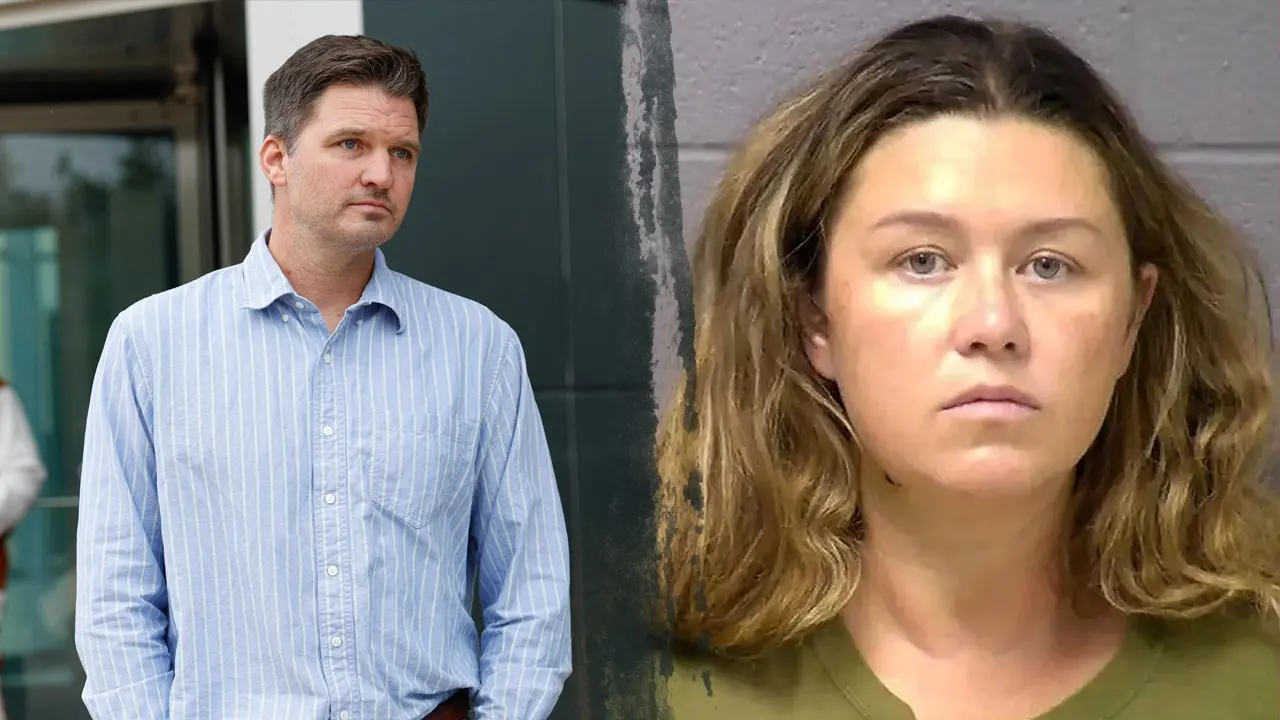
In a quiet courtroom in Illinois, the weight of an unspeakable family tragedy pressed down on every person present. Corie Walsh, a 40-year-old mother, stood before a judge on Thursday to enter a plea of not guilty to charges that she killed her own two-year-old son, Barrett. What made the scene even more heartbreaking was the presence of her husband, Michael Walsh, sitting just feet away. Corie is accused not only of taking the life of their little boy but also of plotting to poison her husband during what her defense says was a psychotic break. The courtroom was not filled with strangers or onlookers; it was filled with family—people who love Corie, who believe she is not the monster that the charges suggest, and who are struggling to reconcile the woman they know with the unimaginable act that has shattered their lives.
The allegations against Corie Walsh are as horrifying as they are difficult to process. According to prosecutors, on September 1, Corie strangled her two-year-old son Barrett and then left him hanging from a rafter in the family’s home. She then attempted to take her own life, an act that authorities say was part of the same violent, delusional episode. The case has drawn widespread attention, not only because of the unbearable loss of a child but because of the eerie parallels to another infamous case—that of Lindsay Clancy, the Massachusetts mother who was accused of killing her three children in 2023. Prosecutors have alleged that Corie was fixated on the Clancy trial, and that this obsession may have played a role in her actions. In addition to the murder of her son, they accuse her of trying to poison her own husband, a man who has reportedly remained by her side even as she faces the most serious charges imaginable. The idea that a mother could harm her child is almost beyond comprehension, but the context of severe mental illness has slowly emerged as a central theme in this case.
Corie’s defense attorney, Andrea Lyon, spoke to reporters after the court hearing, offering a glimpse into the family’s state of mind. Lyon, who previously represented Casey Anthony in her highly publicized murder trial, did not try to minimize the tragedy. Instead, she emphasized that Corie has no history of violence and that her actions on that devastating day were the result of psychosis, not malice. “They love her, and this is not—she’s never been violent. … She was psychotic,” Lyon said, according to the New York Post. “They all know that and want her to get better. This is not who she is.” Those words carry a heavy weight. They suggest a family torn apart by something that feels like a sudden, inexplicable storm—a mental health crisis that turned a loving mother into someone unrecognizable. Lyon also revealed that Michael Walsh, the man Corie is accused of trying to poison, continues to support her. He was in the courtroom, present, watching as his wife entered her plea. That kind of loyalty is hard to understand from the outside, but it speaks to the complexity of human relationships, especially when illness is involved.
Prosecutors, however, paint a different picture. They argue that Corie Walsh was not merely a victim of her own mind, but someone who deliberately planned to harm her family. The alleged plot to poison her husband, combined with her fixation on Lindsay Clancy, suggests to them an awareness and intent that goes beyond a simple psychotic episode. Earlier this month, a judge denied Corie’s request for pretrial release, ruling that she would be “too dangerous” to be set free. Prosecutors said she posed a threat not only to her husband but also to her three surviving children. The children—who have already lost a brother and now face the possibility of losing their mother to prison for life—are at the center of this tragedy. Lyon, however, is fighting for a different outcome. She announced that her team has subpoenaed treatment records from the jail where Corie is being held, and the defense is actively seeking to have her transferred to a hospital for psychiatric care. This is not a typical criminal defense strategy; it is a plea for the justice system to recognize that some acts, however terrible, are symptoms of a broken mind rather than a broken character.
The human story behind the headlines is one of profound suffering. There is a mother who, according to her attorney, was in the grip of a psychotic episode—a state in which reality warps, and the people who love you can become strangers. There is a father who has lost a son and is now caught between grief, anger, and a strange, stubborn love for the woman who caused that loss. There are three surviving children who will grow up with the shadow of this tragedy hanging over them, children who will one day have to understand that their mother killed their brother and tried to kill their father. And there is a wider family—mothers, in-laws, best friends—standing in a courtroom, trying to hold themselves together as they listen to words that no family should ever have to hear. Lyon said, “Her whole family is here today—her husband, mother, mother’s best friend.” Those details matter because they remind us that Corie Walsh is not just a defendant; she is a daughter, a wife, a friend. She is someone’s person, even after the worst possible thing she could do.
What happens next remains uncertain. On Thursday, Corie entered a formal plea of not guilty, a legal move that sets the stage for a long and bitter battle between a defense team arguing for medical intervention and a prosecution seeking justice for a child who can no longer speak. Lyon told Fox News Digital that the defense continues to seek her release so she can receive appropriate psychiatric treatment, and she offered no further comment. Fox News Digital reached out to Michael Walsh, but he did not respond. In the absence of more information, the public is left to wonder what could drive a mother to such an act, and whether mental health systems failed her long before that September morning. The case inevitably recalls Lindsay Clancy, but it also echoes countless other tragedies where mothers suffering from postpartum psychosis or severe mental illness have harmed their children. These cases force us to confront uncomfortable questions: When is someone truly themselves? When does an act become unforgivable, even if committed by a mind that has lost its way? For Corie Walsh, the answer will be decided by courts and doctors, by evidence and expert testimony. But for her family, the answer is already clear. They love her. They want her to get better. They believe this is not who she is. Whether the legal system will agree, and whether the public can ever view her with the same compassion, remains the saddest and most difficult question of all.