






1.
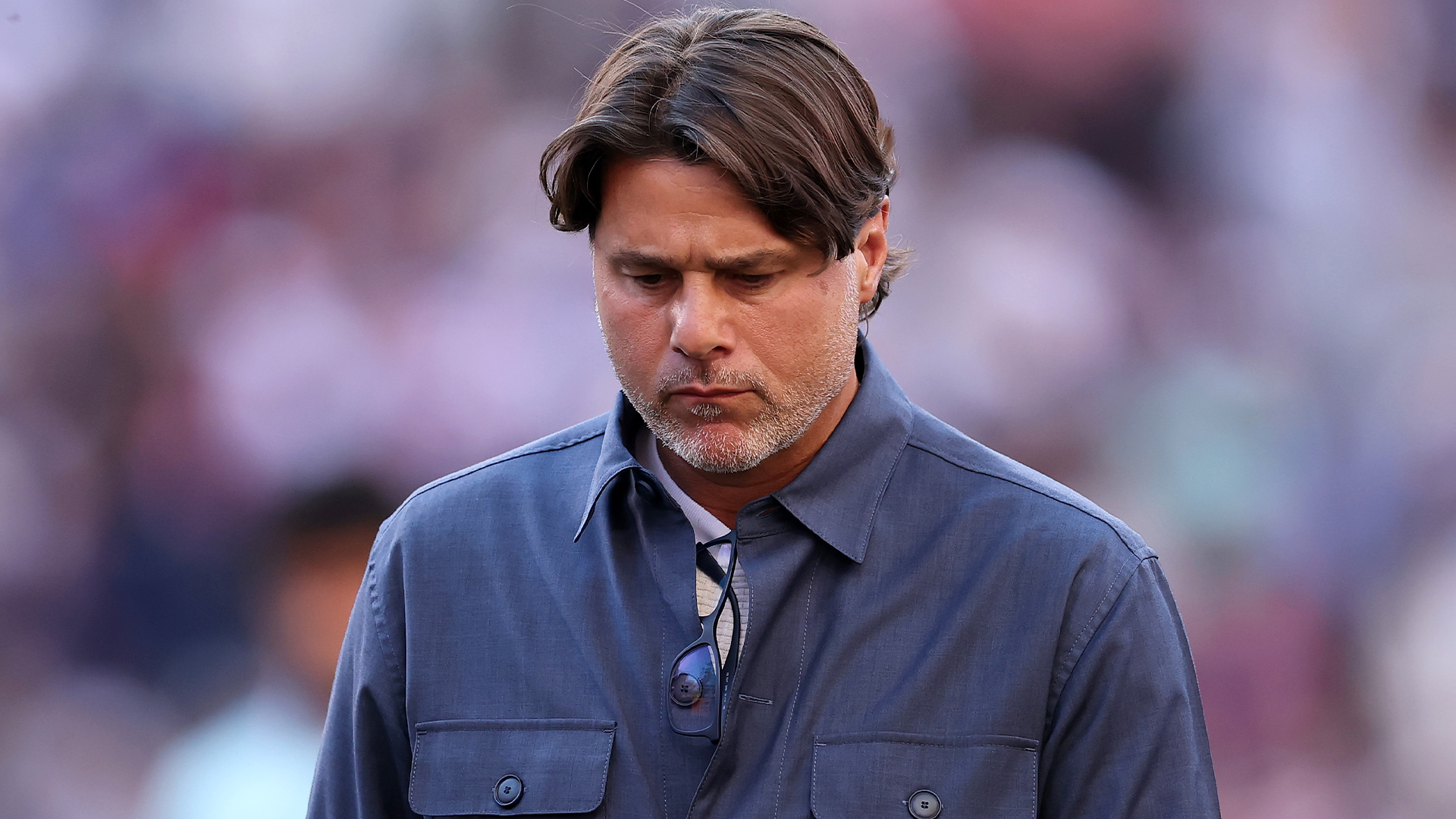
The news that Manchester City has reportedly been found guilty of nearly all of the 115 charges brought against it for alleged financial breaches has sent a tremor through the world of soccer. In the United States, where the sport is still cultivating its own identity and sense of fair play, United States men’s national team coach Mauricio Pochettino offered a response that was less about legal procedure and more about the human heart. He spoke with open sadness, not vindication. He spoke as someone who had been on the pitch, on the touchline, and in the grind of competition during the exact years in question, from 2009 to 2018. That was the period when Manchester City was allegedly bending or breaking the rules to assemble a dynasty, and when Pochettino was at Tottenham Hotspur, building something meaningful with far fewer resources. The Premier League has not yet officially confirmed the verdict, and the reports remain technical; an independent commission has apparently reached its conclusion after a long-running case, but the public has not seen the full reasoning. Still, Pochettino chose not to hide in cautious neutrality. Instead, he let his emotions speak. He said that if it was true that 114 rules were broken, then “we lived through a period of deception.” The word “deception” is heavy. It implies not just financial impropriety, but a betrayal of the basic promise of sport: that what you see is real, that effort is rewarded, and that the rules apply to everyone equally. For Pochettino, this is not a distant corporate scandal. It is the story of his own career colliding with an uncomfortable truth, and his voice cracked with the weight of that collision.
2.
To understand why Pochettino is so personally affected, you have to remember the Tottenham team he built. Between 2014 and 2019, he transformed Spurs into something rare: a club that competed for titles without massive oil wealth, without the kind of spending sprees that defined the modern elite. Tottenham was run on a relatively small budget compared to its rivals. Pochettino did not have the luxury of buying a superstar for every position. He developed players, he trusted young talent, and he created a collective identity that carried the club to the Champions League final in 2019. In the 2017-18 season, Tottenham finished third, while Manchester City won the league with a record 100 points. In 2016-17, Chelsea won the title by seven points over Tottenham. These are not just statistics; they are scars and milestones in a story of trying to climb a mountain with lighter equipment than everyone else. Pochettino knows what it feels like to stretch every pound, to rely on tactical discipline and emotional resilience, to watch opponents buy their way out of problems he had to solve with creativity. So when he hears that Manchester City may have been systematically cheating financial rules for years, he does not think only of spreadsheets and contracts. He thinks of the quiet despair of finishing behind a club that was not playing by the same rules. He thinks of his players, many of whom gave everything they had, and now have to wonder whether the era they competed in was ever fair. He thinks of the fans who sang and traveled and dreamed, not knowing that the mountain they were climbing was tilted in someone else’s favor. “A lot of damage has been done,” he said. That damage is not just to Manchester City’s reputation. It is to the emotional history of everyone who competed against them, and to the integrity of the sport itself.
3.
Pochettino’s sadness deepens when you consider that he has been calling for justice in another case. Earlier this month, he said that Chelsea should be stripped of the 2016-17 Premier League title because the club had committed a total of 74 breaches of Football Association regulations relating to agents, intermediaries, and third-party investment in players. That case was resolved, on appeal, with a fine of 10 million pounds and a suspended two-window transfer ban. Chelsea kept the title. Tottenham kept second place. And Pochettino kept his frustration. For him, the Chelsea case was never just about Chelsea. It was about the principle that a title won with the help of violations is not a legitimate title. It was about the idea that if a club breaks the rules to gain an advantage, the punishment should be meaningful enough to restore fairness. When he raised that point, he was not seeking revenge. He was seeking consistency. If Chelsea’s breaches were serious enough to warrant a fine and a transfer ban but not serious enough to change the record books, what message does that send? And if Manchester City is now found guilty of almost all 115 charges — charges that span a decade and cover deeply serious financial misconduct — what can the football world expect? Pochettino is honest about his uncertainty. He does not know whether the punishment will be a financial penalty, a points deduction, or something else entirely. He says it is very difficult to know what could fix a decade of alleged wrongdoing. But he also knows that no punishment can truly repair the past. You cannot replay matches. You cannot give Tottenham or any other club the points they were denied because the competition was not clean. You cannot restore the sense of wonder that fans felt when they watched a team do something extraordinary, only to learn later that the extraordinary was built on deception.
4.
The full power of Pochettino’s response lies in his acknowledgment that the experience of watching and celebrating football was fundamentally destabilized. He said, “It’s sad. It’s deeply sad. Because, in the end, we’ve entered into a situation where what was celebrated wasn’t really what we thought it was. What seemed so good maybe wasn’t so good. And what didn’t seem good maybe actually was good, but it couldn’t be seen as good because the other ‘good’ was achieved by breaking the rules.” These words are not the language of a man looking for headlines. They are the language of someone who has been forced to reconsider the meaning of an entire era. During the years of Manchester City’s alleged rule breaking, Pochettino was building something beautiful at Tottenham. He was praised for his work, but often in comparison to clubs with more money. His Tottenham team was described as overachieving, as brave, as a project with heart. Now, he wonders whether those comparisons were fair. If City was breaking the rules, then the baseline of success was skewed. The achievements of clubs like Tottenham, which did follow the rules, should have been celebrated even more than they were. Yet they were often framed as lesser because they did not win the biggest trophies. In a fair world, perhaps Tottenham’s consistent top-four finishes, their run to the Champions League final, and their development of young players would have been seen as remarkable victories in their own right. But because other clubs were buying success through violations, the perception of what was “good” was corrupted. What seemed good — the gleaming trophies of Manchester City — was not really good. And what did not seem good enough — Tottenham’s proud but trophy-less achievements — was actually good, but it was overshadowed by the fake good of cheaters. That is the tragedy Pochettino is describing. It is not just about points and fines. It is about the loss of clarity, the loss of a shared understanding of what is true.
5.
There is a broader human dimension to this story that goes far beyond Manchester City and Tottenham. Football is a sport that thrives on belief. Fans invest their identities in clubs. Children wear jerseys of players they admire. Coaches spend sleepless nights trying to find an edge. Journalists write histories that are supposed to be accurate records of achievement. When the integrity of competition is compromised, all of those things are thrown into doubt. Pochettino’s reflection touches on this. He said that “ultimately a lot of clubs followed the rules and others didn’t.” This is not a bitter accusation; it is a simple statement of fact, but one with enormous consequences. If the rules are not enforced consistently, then the entire marketplace of football becomes distorted. Clubs that spend within their means are punished by finishing lower than clubs that cheat. The transfer market is inflated by artificially inflated spending. Player salaries climb because clubs can use money they should not have. Young players may choose to join a club that cheats because they think it offers a better chance of winning. And even the players themselves, the ones who wear the colors of a cheating club, are placed in an impossible position. They may have worked hard and played beautifully, but now their achievements are stained in the eyes of the public. Is that fair to them? It is a difficult question. Pochettino does not claim to have an answer. He only says that the situation is deeply sad. He is not calling for Manchester City to be erased from history. He is not demanding that players be stripped of medals they won on the field. He is asking for the football world to honestly confront what happened, because without honesty, there can be no healing. The phrase “sporting justice” is often used in football debates, but Pochettino uses it in a more profound way. Sporting justice does not mean revenge. It means that the outcome of a match should reflect what actually happened on the field, and the outcomes of a season should reflect what actually happened across all clubs under the same rules. If that foundation is shaken, then the sport loses its soul.
6.
It is important to remember that Manchester City has always denied any wrongdoing. Its chairman, Khaldoon Al Mubarak, was still protesting the club’s innocence on Saturday, just one day after reports emerged that a verdict had been reached. The Premier League has not yet officially confirmed the findings, and the full details may take time to emerge. Pochettino is careful not to treat unconfirmed reports as absolute truth. He says “if” it is true. But even in that conditional, his pain is visible. He knows that the mere fact of these allegations, and the prolonged uncertainty, has already damaged the sport. The process itself has become part of the story. Fans of other clubs have long suspected that something was wrong. Fans of City have defended their team passionately. And the rest of us have been left to wonder what to believe. In such a climate, hope is fragile. Pochettino’s response, however, offers a way forward that is not based on anger or cynicism. It is based on sadness, but also on a deep love for the game. He mourns what was lost, but he also implies that the loss can teach us something. If the football world can look at this moment honestly, perhaps it can build a better future. Perhaps clubs that follow the rules will be recognized for what they are: the true guardians of the sport. Perhaps punishments will be designed not just to punish, but to restore the balance that was broken. Perhaps the next generation of fans will be able to trust what they see again. That is what Pochettino seems to want. He is not celebrating the fall of Manchester City. He is grieving the loss of innocence. And in that grief, he is asking everyone who loves football to remember why we play the game in the first place. The rules are not there to be obstacles. They are there to make sure that the dream is real, that the achievement is genuine, and that the joy we feel when the final whistle blows is not a lie. Until that is restored, Pochettino will keep carrying the sadness, not just as a coach, but as a man who knows that in football, as in life, fairness is the only thing that makes winning meaningful.