


Nestled among the steep granite shoulders of the Pyrenees, Andorra la Vella is a place that seems to float between sky and stone. At nearly 1,023 meters above sea level, it holds the quiet distinction of being the highest capital city in Europe, and that altitude shapes everything about it. The air is clean and sharp, especially in the early morning when the sun has not yet climbed high enough to soften the shadows of the seven parishes that surround the city. It is a small capital — compact enough to wander across on foot — yet it does not feel small in spirit. Instead, there is a sense of intimacy and endurance, as if the city has learned over centuries to hold its ground against the weather and the weight of the mountains. Visitors often arrive expecting only a transit point between ski resorts and shopping streets, but Andorra la Vella reveals itself gradually, through its old stone walls, its surprising public art, and the warm, mineral-scented steam rising from its most famous thermal spa. To walk through its streets is to feel the pulse of a tiny nation that has somehow balanced the demands of the modern world with an older, quieter rhythm of life. There is a charm here that does not shout. It waits, like the mountain climate, for you to slow down and notice.
The historic heart of Andorra la Vella is the Barri Antic, a small maze of narrow, cobblestoned lanes that carries the memory of medieval times. Here, the stone facades are worn smooth by centuries of weather and touch, and the streets bend in ways that make you wonder at the instincts of old planners and builders. The most significant building in this old quarter is Casa de la Vall, a 16th-century manor house that served as Andorra’s parliament for centuries. It is a modest building, as far as parliaments go, but that is precisely what gives it its power: a democratic tradition housed in a living room, where representatives of a tiny mountain nation once gathered for centuries. Inside, visitors can see the wooden closet with seven keys that protected official documents — one key for each parish — a symbol of shared governance that remains touching in its simplicity. Nearby, the Church of Sant Esteve, with its Romanesque roots and later additions, stands as another anchor of continuity. Its simple stone tower and quiet interior remind you that this city has been a place of refuge, worship, and community long before tourism arrived. Walking through the Barri Antic, you can almost hear the echoes of merchants, shepherds, and statesmen. There are small plazas where elderly residents sit in the sun, where children race between fountains, and where the smell of bread and coffee drifts from hidden cafes. It is not a museum piece frozen in time, but a living neighborhood, one that wears its history loosely, without pretension.
What makes Andorra la Vella especially memorable, though, is its unexpected love affair with modern sculpture. This is a city that has chosen to place art directly in the path of daily life, not tucked away in galleries. On street corners, in roundabouts, outside glass office buildings, towering pieces of metal, stone, and bronze rise against the sky, many of them created by internationally recognized artists. One of the most striking is by the Catalan sculptor Jaume Plensa, whose ethereal, elongated human figures seem to dissolve into the mountain air. There is something both delicate and monumental about these works, and they create a fascinating dialogue with the ancient peaks that surround them. The city’s remarkable public art program, often referred to as Andorra la Vella Monumental, has transformed the urban landscape into an open-air museum, inviting both locals and travelers to pause and reflect. Seeing a bright, whimsical sculpture against the backdrop of a rugged cliff, or a sober bronze figure standing in the middle of a busy square, reminds you that this is no ordinary mountain town. It is a place that has decided to embrace beauty and imagination as part of its identity, even while grounded in practical trading and tourism. These sculptures also tell stories of Andorra’s own evolution — from a remote, isolated territory to a modern European state that hosts visitors from all over the world. They add a layer of emotional resonance to the streets, making every corner a place where the old and the new, the natural and the artistic, meet and converse.
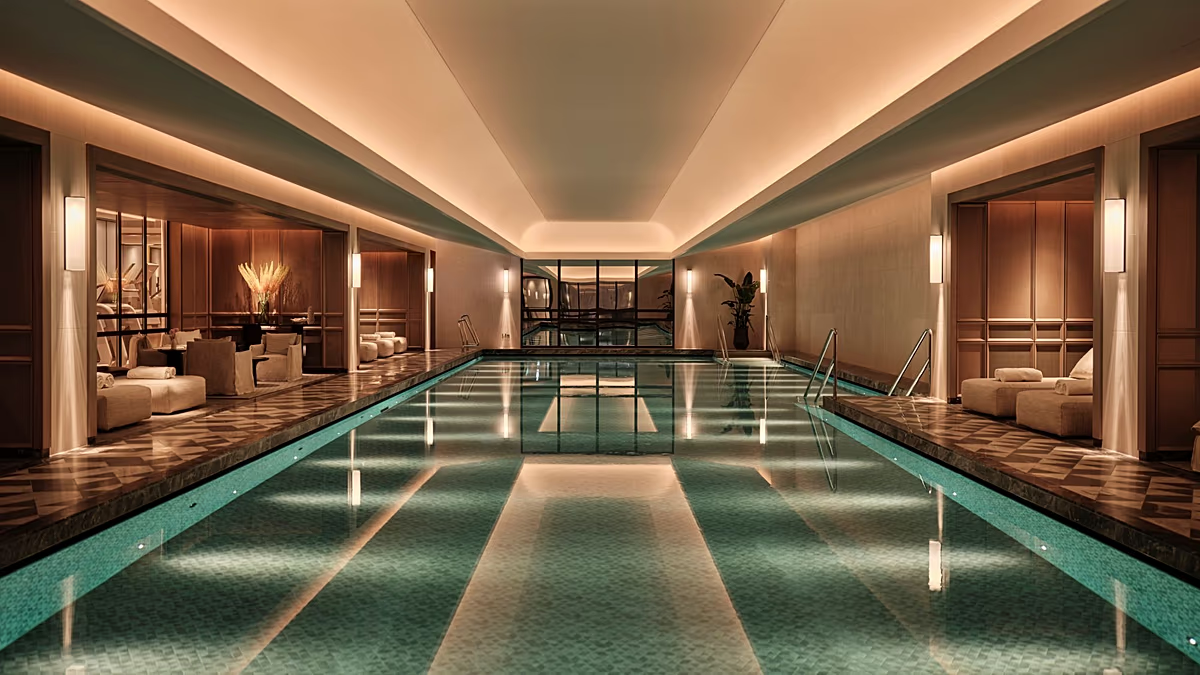
Then there is the water, and the ritual of warmth and renewal that draws so many people to Caldea, the largest thermal spa in southern Europe. Located just beside the city, in the neighboring parish of Escaldes-Engordany, Caldea rises from the hillside like a glittering crystal cathedral, its glass spire and pyramid reflecting the ever-changing colors of the sky. Inside, the atmosphere is hushed, humid, and golden. The thermal waters, which emerge from certain deep sources at temperatures of nearly seventy degrees Celsius, are cooled and directed into a series of pools, indoor lagoons, outdoor Jacuzzis, saunas, and steam rooms. To slide into one of these warm pools while the mountain air cools your face and the lights of the city begin to twinkle below is to feel completely alive. The heat seeps into your muscles, loosening the tension of traveling, of altitude, of whatever worries you brought with you. There is also something ancient and human about soaking in hot springs — a practice that predates cities, nations, and even history itself. For centuries, the people of these mountains have known that the waters held a special power, and Caldea simply gives that old knowledge a modern, luxurious expression. But it is not only a place for rest. It is a place for connection: families splashing together, couples sitting quietly in the steam, solo travelers closing their eyes and letting their minds wander. In the evening, the building glows like a lantern, and from certain angles it looks as if a piece of the future has landed on the edge of the past. The experience of Caldea is essentially Andorran — a marriage of natural beauty and human design, an invitation to slow down, breathe deeply, and feel the earth’s warmth rising beneath you.
Beyond the monuments and the spa, Andorra la Vella lives as a vibrant, everyday place, shaped by the routines of its residents. The main artery, Avinguda Meritxell, is lined with shops, banks, and cafés, and during the day it hums with pedestrians, many of them carrying shopping bags from the duty-free stores that made the country famous. But just a block away, life becomes quieter, and you find hidden squares with plane trees, benches, and old men playing backgammon or reading newspapers in Catalan. The official language, Catalan, is spoken with a distinctive mountain accent, and street signs reflect a culture that is proud, resilient, and deeply tied to its traditions. People here celebrate winter festivals, folklore gatherings, and the unique national holidays of Andorra, often with parades, traditional dances, and giant papier-mâché figures. The city also serves as the administrative and political heart of the principality, with the parliament, government offices, and foreign embassies all within a short walk of each other. Yet the atmosphere is not stiff or bureaucratic. In many ways, Andorra la Vella feels like a town rather than a capital: your baker knows your name, the bus driver waits if he sees you running, and neighbors chat across balconies in the evening air. The seasons mark the rhythm of life profoundly. In winter, the city is filled with skiers passing through on their way to Grandvalira, their boots clacking over the pavement and their cheeks flushed with cold. In summer, hikers and cyclists arrive to explore the high trails, and the cafés spill out into the streets. In spring and autumn, there is a quieter, more contemplative mood, when the clouds drift low over the peaks and the city seems to draw its coat closer around itself. Through all this, the sense of community persists, making Andorra la Vella not just a destination, but a home for those who live here.
In the end, the highest capital city on the continent is more than a geographic oddity. It is a living testament to the human ability to create warmth and meaning in even the most unforgiving landscapes. The altitude is not an inconvenience; it is a perspective. From the viewing points above the city, you can look down at the rooftops, the Romanesque towers, the modern glass buildings, and the great mass of the mountains pressing in from all sides, and you feel a strange sense of peace. This is a place where people have always had to work together, to share space and resources, to trust one another. That history is visible in the stone of Casa de la Vall, in the keys of the seven parishes, in the faces of the sculpture figures that gaze forever toward the horizon. Andorra la Vella asks its visitors to adapt, to breathe a little deeper, to walk a little slower. In return, it offers a rare combination of elegance and authenticity. You come for the shopping or the skiing, maybe, but you stay for the quiet moments: a cup of hot chocolate in a centuries-old square, the sudden sight of a sculpture emerging from the mist, the warmth of a thermal pool as the snow falls silently outside. It is a city that does not need to raise its voice to be heard. Held high in the Pyrenees, touching the clouds, it simply exists — beautiful, resilient, and full of stories, waiting for anyone willing to climb up and listen.